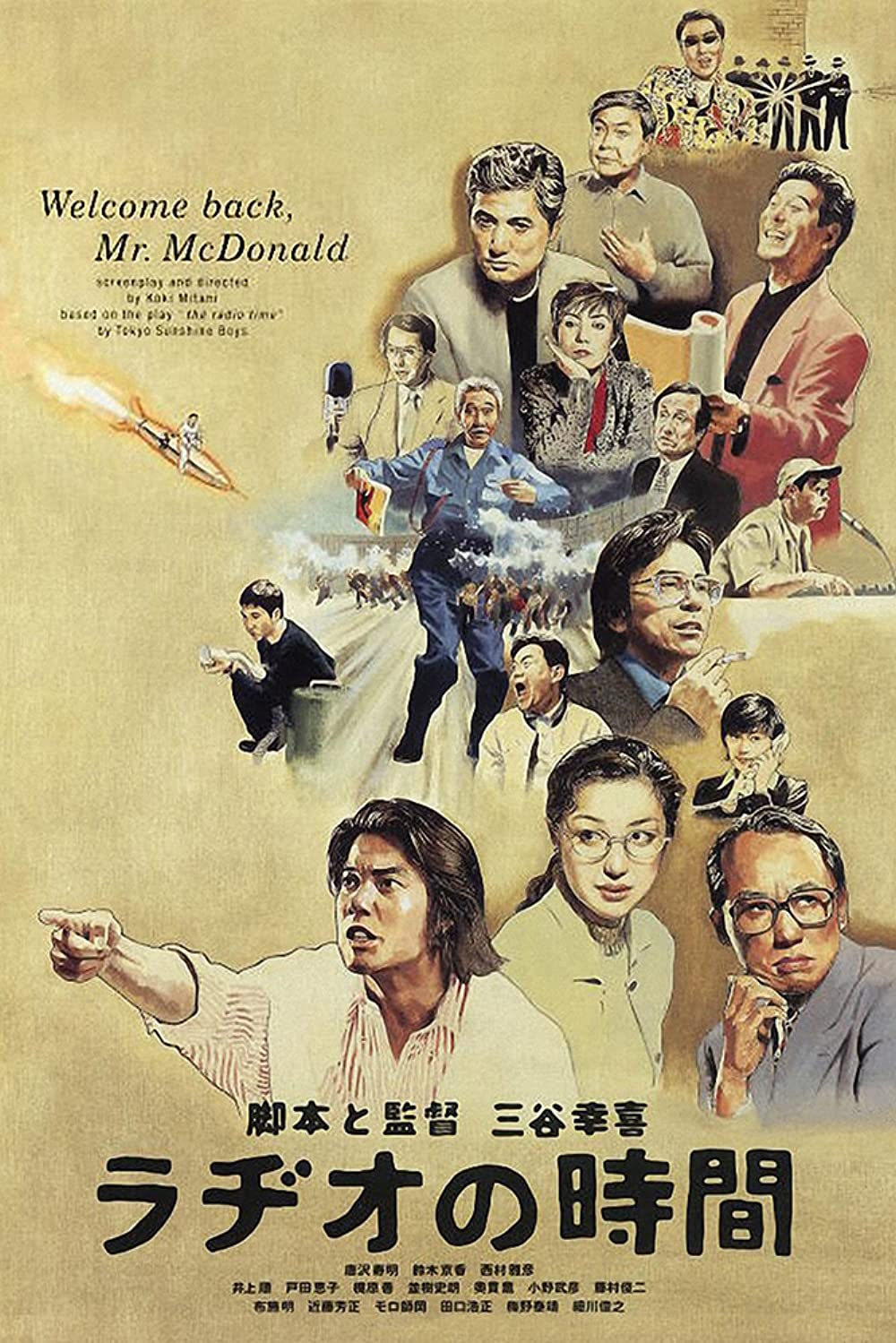
ラヂオの時間

ラヂオの時間

Radio Time" is a comedy film written by Koki Mitani. The film is Koki Mitani's first film as a director, and was released in November 1997. The film won the 21st Japan Academy Prize, and Mitani won the Best Screenplay Award. The story is a slapstick comedy in which the staff and performers gather at a radio station recording studio to deal with a scenario that takes two or three turns in a live radio drama. Toshiaki Karasawa plays the role of Manabu Kudo, the director of the radio station, and Kyoka Suzuki plays the role of Miyako Suzuki, a housewife whose own scenario is turned into a radio drama.

Reviews, Ratings and Comments on ラヂオの時間

ラヂオの時間
8

feeling of tired relief or accomplishment after effort or perseverance

I thought it was a story about the ideas of people who make things. I think I was able to write this because I have experienced how things change for various reasons when making dramas. The characters are all unique and interesting, and there are many lines that make you think, "Oh, this person would say something like that! The announcer who is so square and square, but then does something clever, the actors who have their lines cut off, and the good things that happen to the actors. I thought it was a happy ending with everyone being somewhat kind. I thought that the housewife writer's cry from the heart was very true, but the director also had a good point, and I thought that everyone has a hard time. When I see movies and dramas that I don't understand, I think, "What in the world is this? The story of the play within a play in this film is kind of a ridiculous story from my point of view, but there was a driver who was touched by it, and I think it was a good story. It was like a drama, where the real voices don't get heard as quickly (I don't think that's true now with Twitter), so I think the staff was happy to see people moved by the story like that. There were some unpleasant people in the movie, but after watching it, I felt relieved.

ラヂオの時間
9

The origin and the apex

A live broadcast of a radio drama. The script was selected in a scenario contest, but only one entry was actually submitted to that contest. It is a comedy piece, in which the selfishness of a less-than-enthusiastic actor leads to the script being rewritten more and more for the convenience of the sponsors and the inconvenience of the sound system.
The scenario chosen for the contest was a romantic love story about a housewife with a husband who has a forbidden love affair with a wonderful man, but as the script was being rewritten on the spot, the dam broke, the man she is having an affair with went missing in space, and the whole thing became a mess. The use of radio as a medium for the story stirs the imagination.
Mitani was well known in the theater world at the time, but was still a novice writer in the film and television industry. He was in charge of the screenplay for "Look Back and You'll See Him," but the script was rapidly rewritten for the trendy drama-oriented scenes that were popular at the time. Yes, this is a film based on Mitani's own experiences. This may be one of the reasons why every line of dialogue and action of the characters is filled with soul, and the final scene is very moving.
Masahiko Nishimura, who became famous for his role in "Furuhata Nosaburo," plays the main character, and Kyoka Suzuki, who usually plays beautiful women, plays the role of a housewife who entered a contest, which is strangely fitting.
This is the origin and masterpiece of Koki Mitani's works.