
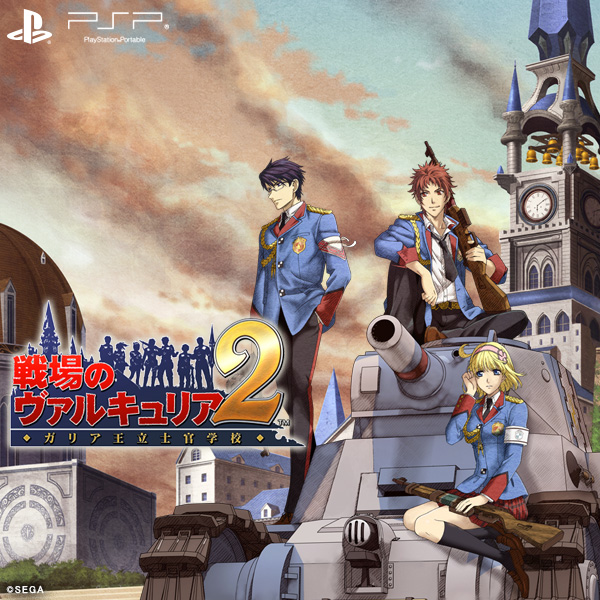

Second in a slightly disappointing series
With this title, the hardware has been changed to PSP.
The main characters are cadets who have been deployed in actual battles, giving the game an atmosphere of "students sent to war.
The characters and storyline are less appealing than in the previous title, and the overall impression is one of disappointment. The "change of occupation system" added in this title, which allows players to change to a different type of soldier, also seems to have diluted the individuality of the characters.
However, this does not mean that the level of character design is low, and the heroine and male students are attractive. Unlike the "attractive protagonists who seem to have no personality but actually do," as in the first, third, and fourth entries in the same series, the characterization of the hot-blooded protagonist in the shonen manga series may be a bit disconcerting in this series.
The "Sword Armor Soldiers," added in this work, were powerful soldiers who used shields to block enemy fire while slashing with swords at close range, and were reassuring when they were on your side and terrifying when they were your enemy.
Morale" is also a system that indicates a unit's will to fight, and it decreases when a unit is defeated or its base is overrun; it increases when the opposite is true, and when it reaches zero, the operation fails. This system may have been introduced because there are no unit deaths in this work.