
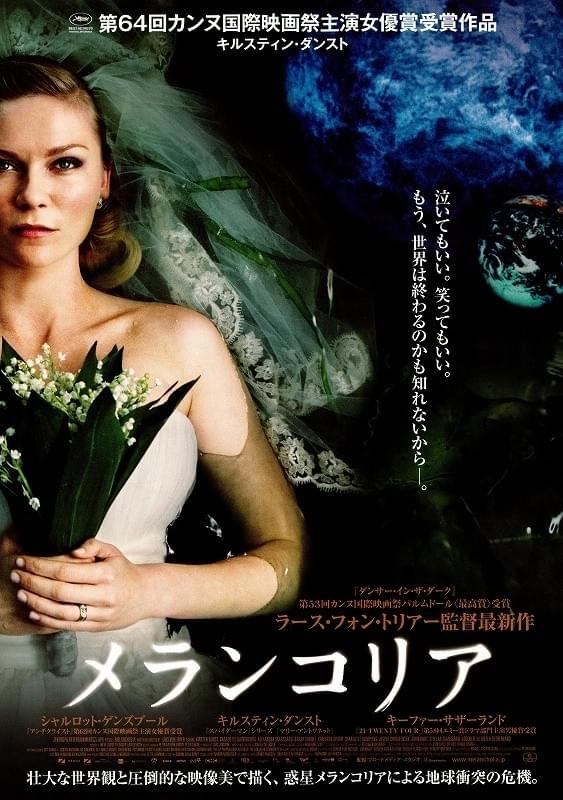

Science fiction film by Lars von Trier
Known for such films as "Dancer in the Dark" and "Dogville," Danish director Lars von Trier's "Melancholia," a film with a fin-de-siècle ending, is a rare work of science fiction that depicts the anxiety, fear, and salvation that swirl around the threat of a celestial collision. The film, with a fin-de-siècle ending, is a rare work by director Lars von Trier based on the subject of science fiction.
Like Trier's other films, "Melancholia" ends on an unhappy note, but the internal changes of the protagonist and the people around him are polar opposites, which I think makes the film interesting. Another highlight of the film is the beautiful, poetic, painterly images depicted at the beginning.
The protagonist is a woman about to get married, and the story begins with her and her fiancé heading to the wedding venue. The story progresses in a tranquil and quiet atmosphere that makes it hard to believe that the celestial bodies will soon collide, but at the wedding site, the people around her are taken aback by her unrestrained attitude, especially her own sister who is in charge of the ceremony.
The protagonist herself begins to doubt her own life, and later that night she swears at her boss, a guest at the wedding, and is fired on the spot, and even rejects her fiancé, ruining the ceremony.
The protagonist looks up at the night sky with a somewhat cheerful look on his face and sees an unfamiliar point of light. It is the "melancholia" that will eventually collide with the earth.
In the latter half of the film, the protagonist, who has lost his job and marriage, has suddenly developed a severe depression and is unable to take care of himself, barely surviving with the support of his sister and her family. Meanwhile, the world was expecting the celestial show of the century, as a mysterious celestial body called "Melancholia" was gradually approaching the earth, and was taking a course that just barely grazed the earth.
The protagonist, too, is intrigued by the celestial body, but he also begins to expect that it will destroy the earth.
Interestingly, this is somewhat opposite to the reactions of the people around him, including his sister, who is growing anxious about the approaching celestial body, and the protagonist, who regains his vitality and even finds salvation in this situation, is a symbol of the film itself. What is particularly impressive is the protagonist's line, "The earth is evil. The director's idea that the earth is evil, and therefore it would be fine if it were to disappear, may be a reflection of his own disillusionment and despair with the world.
As the celestial collision becomes decisive and the world falls into chaos, the protagonist, together with his sister and nephew, faces the moment. While his sister was dismayed to the end, the hero and his nephew simply closed their eyes and were engulfed by the flames. The story ends with the protagonist and his nephew simply closing their eyes and being engulfed by the flames, their faces perhaps peaceful in their ecstasy and relief.
The film does not contain extreme descriptions typical of the director, but is a mysterious work in which the protagonist, who has despaired of his life, finds hope as the world comes to an end.