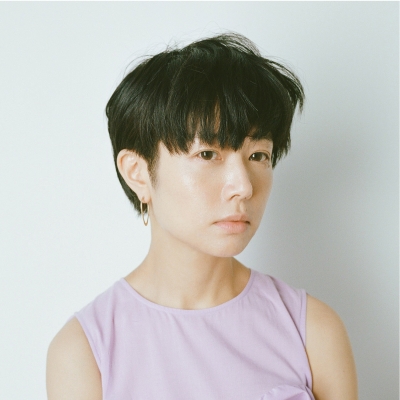
Salyu / サリュ

Salyu / サリュ

Salyu is a female singer and vocalist born on October 13, 1980 in Kohoku-ku, Yokohama, Kanagawa Prefecture, Japan.The name Salyu comes from the French word "Salut" (meaning toast, a friendly greeting). She has an older brother who is a former Japanese national rugby player.
Salyu has been taking piano lessons since she was a child and has always been familiar with music. Inspired by a friend's band's live performance when she was in high school, she decided to become a singer and started her professional career at the age of 17. She then made her major debut as the vocalist of the music unit Lily Chou-Chou. Later, in 2004, she made her solo debut as Salyu.
Her representative songs include "Bokura no Kekkatsu Kobo (Where We Met)," the theme song for the movie "Nigare, Gunsei" and "Hoshi no Kuzu α (Hoshi no Kuzu α)," the ending song for the anime "TRIGUN STAMPEDE. The only one, the only one, the only one," and so on.

Reviews, Ratings and Comments on Salyu / サリュ

Salyu / サリュ
10

Diva of Yokohama Salyu

Salyu is a singer-songwriter from Yokohama, Japan.Born in 1980, Salyu made her major label debut at the age of 17. In her early years, she made a name for herself as the vocalist of Lily Chou-Chou.
Her solo debut came seven years later in 2004. Her dynamic voice, which she sings with her throat fully open, gradually penetrates the hearts of listeners.
This is a unique singing style that I have not heard from any other singer of this type. Her songs are mainly bright ballads, which can be described as contemporary.

The song produced by Takeshi Kobayashi, which led to her debut, was performed in the movie "All about Lily Chou-Chou," directed by Shunji Iwai, and became a topic of conversation in the subculture.
The good relationship with Takeshi Kobayashi continued, leading to the release of the single "to U" as Bank Band with Salyu, sponsored by Mr. Children. This project brought her recognition as one of the best singers in the major music scene, and on March 10, 2010, she released a song called "New YES," which reached No. 1 on Billboard's "Adult Contemporary Airplay" chart and became the culmination of her career. The album "Maiden Voyage" was released in the same year.

Although she has not been active since 2010 due to marriage and other reasons, there are still many fans who are waiting for her songs. We hope you will give her a listen.

Salyu / サリュ
8

About the instrument Salyu.

It was Salyu who played and sang the role of the fictional diva Lily Chou-Chou in the movie "All About Lily Chou-Chou" directed by Shunji Iwai. The movie was released in 2001, so she will soon celebrate the 20th anniversary of her debut.
I went to a few of her live performances and thought her clear voice was amazing. Although some of her songs are shady like Lily Chou-Chou's songs, I think that producer Takeshi Kobayashi realized early on that her essence is probably better in songs with the theme of "hope. Those of us who were strongly influenced by the Lily Chou-Chou era films always felt a certain discomfort, but now I think this was a good thing.
It was very fresh to try something like "Salyu x Salyu," and listening to her voice, I strongly felt that it was already one instrument. So the tone can change as much as possible depending on the player, and she can even create wonderful music. One thing that bothered me was that the way she sings, which emphasizes higher notes, is different. There is no doubt that he is one of the best artists in Japan in terms of range. I am more attracted to the lower tones. The same can be said for Kazutoshi Sakurai of Mistill.