
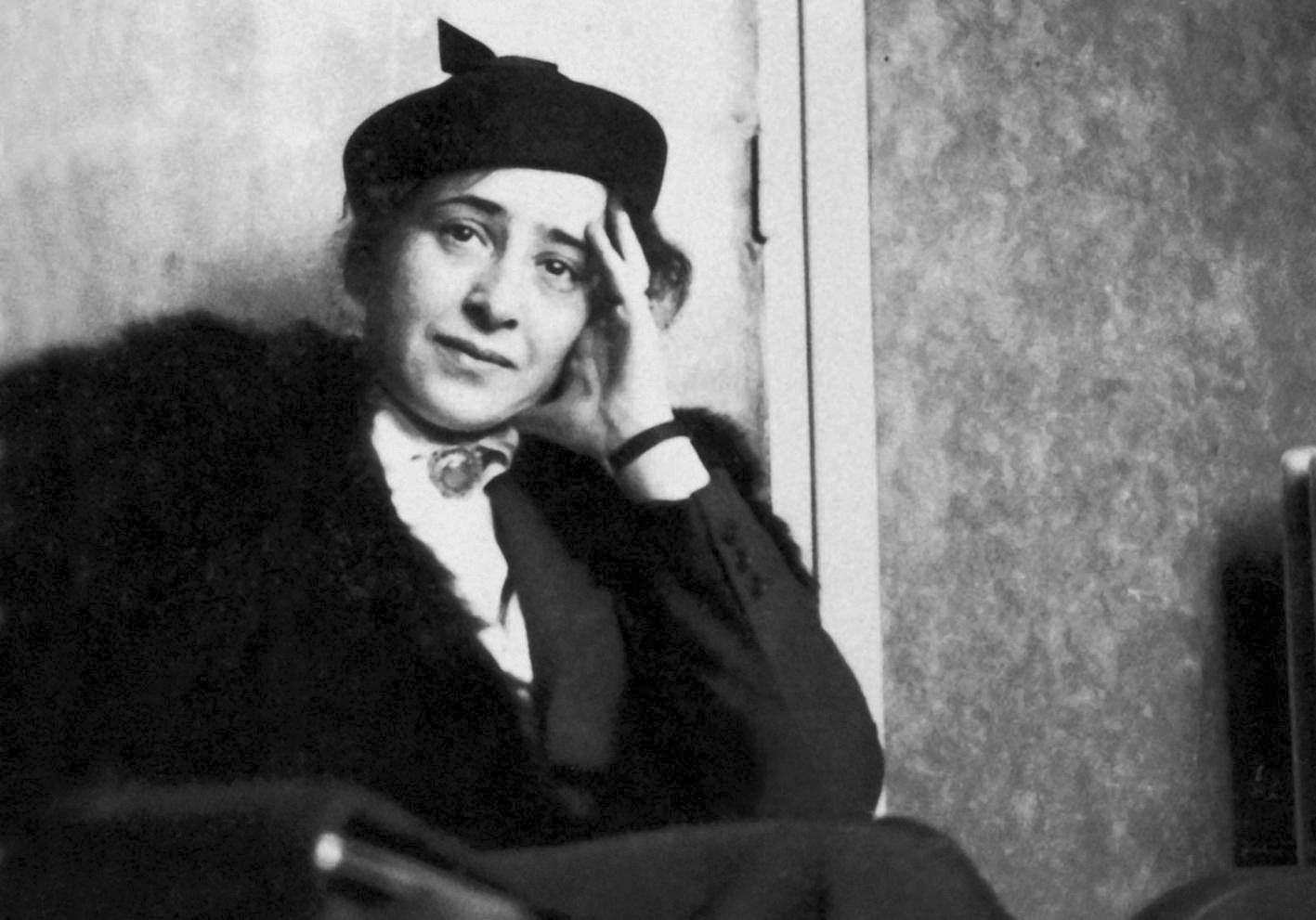

Von Trotta's shocking and problematic film: was the underwriter of the Jewish murders a mediocre character? Hannah Arendt.
Hannah Arendt is a 2012 German-Luxembourg-French co-production biopic directed by Margarete von Trotta and starring Barbara Skova.
The film is based on the life of Jewish-German philosopher and political theorist Hannah Arendt.
It was distributed in the U.S. by Zeitgeist Films and was released in the U.S. at the end of May 2013.
The film by German director von Trotta depicts Arendt's reaction to the 1961 trial of Adolf Eichmann.
She covered the Eichmann trial in her magazine, The New Yorker.
Arendt's portrayal of Eichmann and the Jewish Council sparked controversy.
Arendt introduces the now famous concept of the "banality of evil.
The film review website Rotten Tomatoes gave the film high marks for "achieving the tour de force of dramatizing the life of a public figure of complex character through a powerful performance by Barbara Skova."
The New York Times gave the film a positive review, saying that it "conveys the fascination, mystery, and esoteric nature of a certain German thought.
Ms. Skova's energetic, understated, and not overly realistic performance reveals not only Arendt's fearless strength, but also her warmth and, above all, the inner, uncompromising curiosity that drives her.
The Paris Review wrote, "It is such a challenge to make us think through a work of cinema, and even a triumph if we can do so in an accessible and moving way.
It would be surprising to learn that the film promises to provoke the kind of serious public debate that Hannah Arendt herself tried to provoke by presenting her book.