
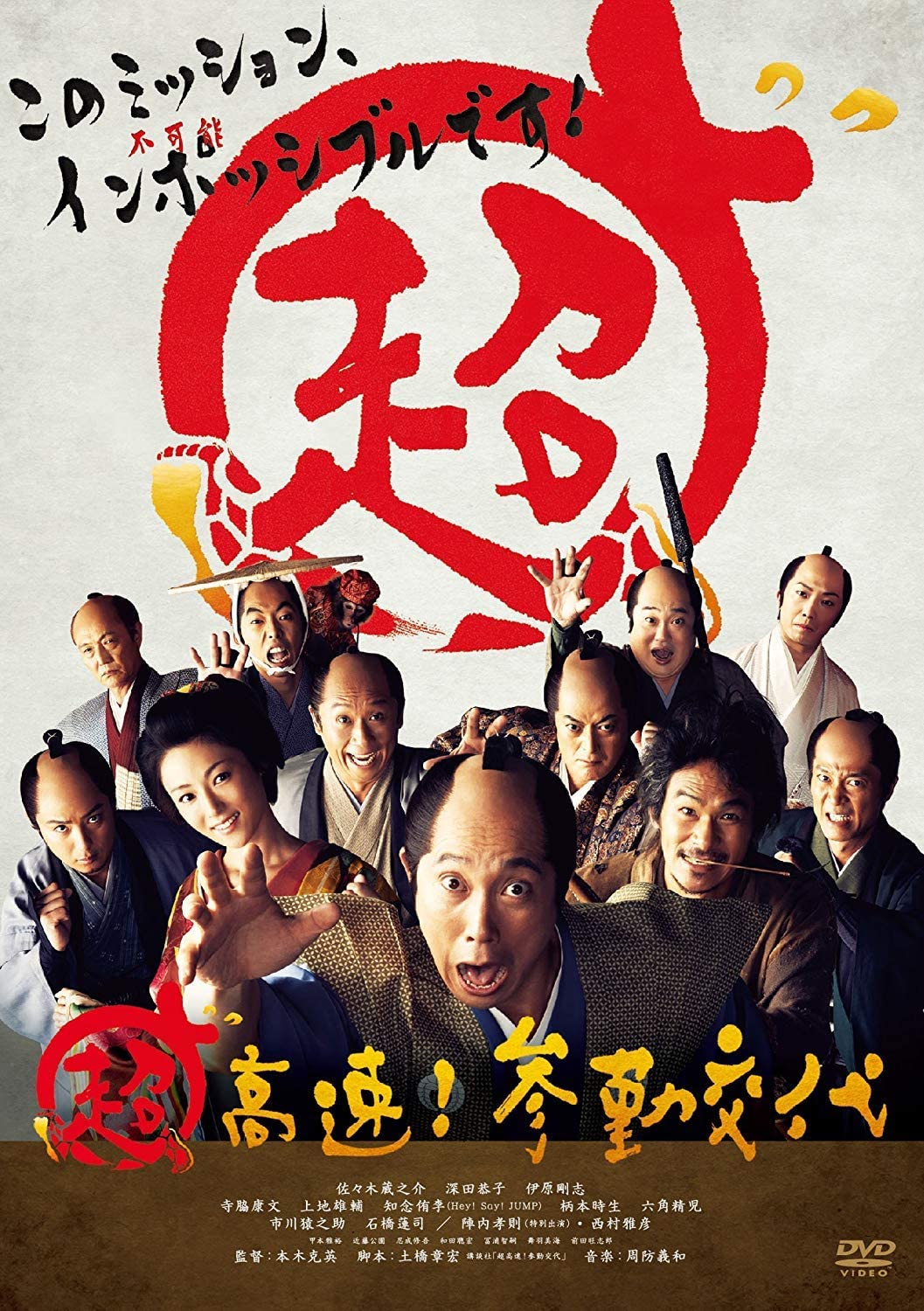

A light historical drama of laughter and humanity, Japan's Running Meros
This 2014 comedy period film depicts a clan leader of a small clan in the Edo period who, together with a few vassals, travels from Iwaki, Mutsu Province (Iwaki City, Fukushima Prefecture) to Edo in five days in order to overcome a crisis of survival.
Kuranosuke Sasaki plays Masamichi Naito, a feudal lord who has claustrophobia, a weakness that makes it difficult for him to do his business, but he is a kind-hearted lord who is at ease with his subjects and extends a helping hand to anyone who is in need.
The heroine is played by Kyoko Fukada, and the retainers include Masahiko Nishimura, Yasufumi Terawaki, Seiji Rokkaku, and Tokio Emoto. The antagonist is played by Takanori Jinnai, and the cast is full of unique personalities.
The clan leader runs through the mountains, falls into a river, is wanted, is attacked at night, and is forced to flee by those he hired with little money. The clan leader overcomes these hardships through his character, the special skills of his vassals, and the relationships and power of the people he encounters.
Although the main characters have Iwaki accents, the dialogue itself is not old-fashioned, the routes are often explained on a map, you can learn about the rules and mechanisms of the Edo period's highways, barrier posts, and the daimyo's journey, and there are light scenes of sword fighting, action, romance, and gags, as well as easy-to-understand villains. The story is easy to understand and enjoyable for all generations and genders.
Two years later, a sequel film was released to great acclaim, depicting the uproar immediately after the film's ending.