
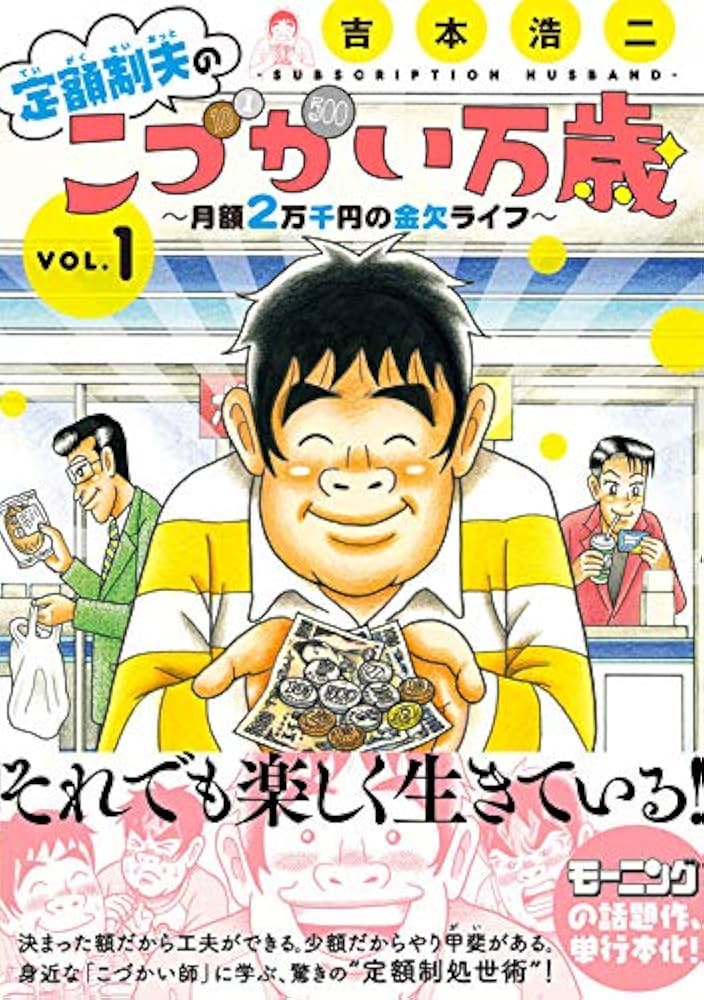

The value of the allowance as perceived by me.
First of all, I felt that the message and thoughts from the author of this manga would be conveyed 180 degrees differently to those who do not have a family than to those who do.
Well, I don't think the author, Koji Yoshimoto, intended for the manga to be well received by people in their teens or even those in their fifties.
I am of the same generation as the author, so I was able to empathize with the importance of money and family ties.
In the first episode, I couldn't help but laugh at the sight of grown adults frantically trying to figure out what to do with a few hundred yen worth of snacks at the AEON sweets corner.
As a person who has a household with an allowance system (as I do too), I thought, "I understand.
There is a battle between myself (the devil) who wants to be satisfied with buying this and buying that, and myself (the angel) who wants to hold out until the next time until the next allowance. The amount of money I receive from the same allowance system may vary from person to person, but I am almost the same as the author.
That is why I can relate to this manga so much, and it is the manga that sticks out the most to me right now.
I think that the target audience is the families who have an allowance system. The characters in the manga have different ranges of spending money, but they all manage to have fun with their money! I learned a lot from them.
I was especially surprised at the story about the Ponta card points that can be redeemed for a great deal of money.
There are many other ways for those who have a small allowance to have fun even with a small amount of money, so I hope you will read this book.