
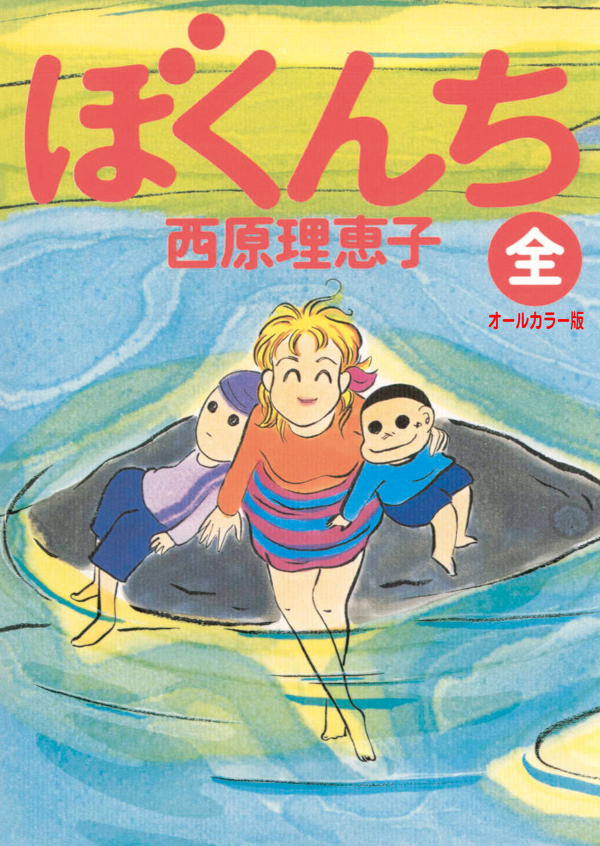

The warmth of life that transcends common sense and ethics. A sad and gentle story of "Bokunchi
It has been made into a movie, but the original work is the masterpiece.
It is the origin and quintessence of Rieko Saibara, a pioneer of genuine laugh-out-loud reportage and a talented writer with a lyrical style.
The smiling faces of the characters, drawn in gentle, tasteful, relaxed lines, and written in a simplistic manner, are the impression of the manga as a whole.
The setting is a lawless area with no questions asked, where it would be ridiculous to complain about people who are disadvantaged by their environment, or about having just been born in such a town.
The protagonists are two brothers who live on the edge of a desolate fishing town that looks like a scene the author may have seen as a child. The older sister, who has come to replace their mother who has run away from home, always has a smile on her face and accepts even the worst episodes with a laugh. The younger brother, who smiles with innocence, is just as innocent, and monologues about how he and his brother feel about the inadequacy and uncoolness of the adults around them. The honesty of the younger brother's thoughts is not only funny, but also touching.
It is not only funny but also touching because of its honesty. and other such common sense things don't matter as you read, and you become engrossed in the unbearable silliness of this immoral and ungodly town.
The brothers work with adults in spite of their bad jobs and give gifts to their kind sister. Third-party pity and sympathy are meaningless; they each do what they need to do to survive. For example, "It's good enough to be a little bit lower than you want to be.
The tragedy and comedy that ensues is relentlessly funny with the author's unique gags and dialogue, and whether it is painful or funny, it is at any rate heartbreaking and sad.
Toward the end, the older brother becomes more mature, and the older sister continues to accept her fate. In the end, the brother's smile, which seems to have swallowed his own circumstances and sadness, is heartbreaking. I am sure that everyone who has read the book remembers that smile.