

Time" and "Film."
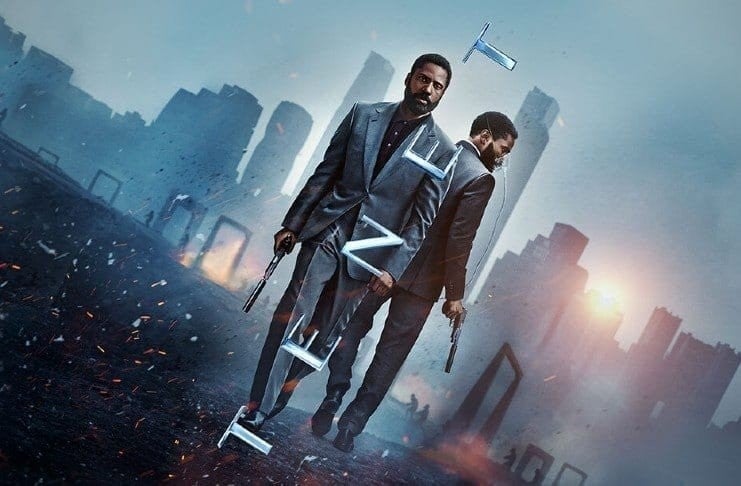
Christopher Nolan, the director of TENET, has consistently explored the subject of time since his commercial debut, Memento. In "Memento," time moves backwards every ten minutes; in "Interstellar," time flows differently on each planet; in "Dunkirk," Nolan depicted stories from different time periods simultaneously on a stretched time line. And now, with "TENET," he has done an unprecedented production on the theme of "time going backwards," by having "time moving forward" and "time moving backwards" exist at the same time. The "reverse playback of time," which has been depicted in Jean Cocteau's "Orphée" and Tarkovsky's films, is a very essential theme for the form of expression called "cinema," which is usually assumed not to rewind once it has been played. In his filmography to date, Nolan has often used cut-backs at the climax of his films to simultaneously narrate two stages and heighten the emotional impact of the film. This technique is used to great effect in this film. What is important here is that the time axis of the two stages shown in the cutbacks is slightly offset, and the theme of "time" is expressed here as well. This technique was used by Griffith in "The Creation of a Nation," and is a very cinematic technique. Check out TENET, Nolan's latest exploration of the subject of time!