
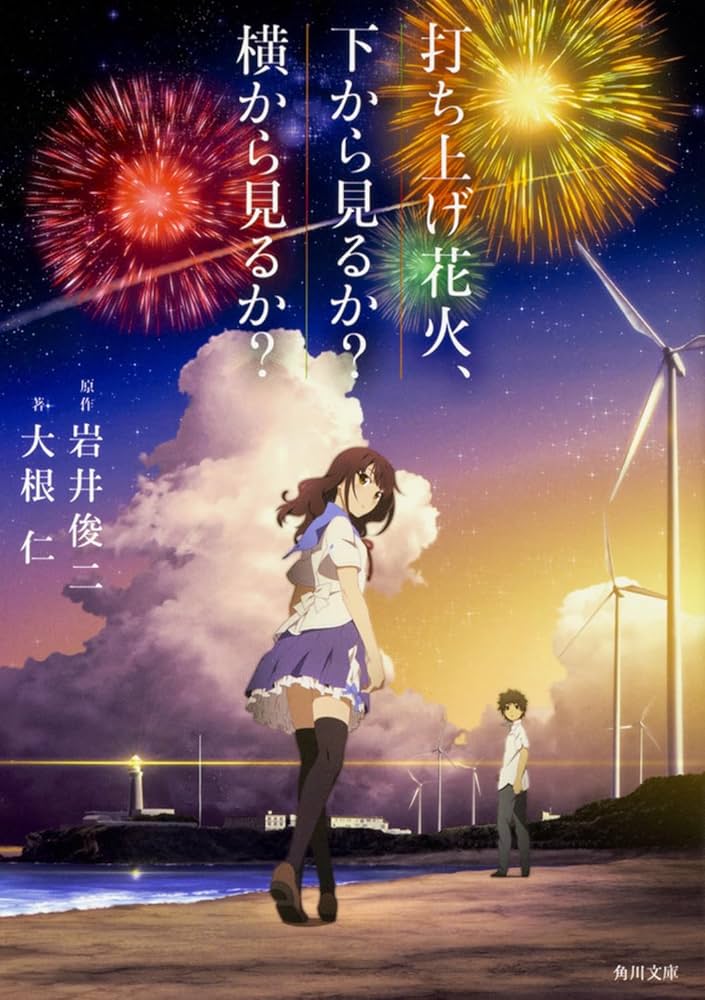

OK as long as the heroine is saved.
It is a story with a happy ending in which the hero boy accumulates "what ifs" with the heroine and the power of a mysterious sphere, and helps the heart of the heroine who transfers schools for her parents' reasons.
The heroine is always dull, perhaps because she is disgusted by her mother, who is a romantic type, and she does not like her own blood as well.
Compared to her classmates, she is mysterious and mature.
Through the power of the mysterious sphere, the hero repeatedly "what if" many times, and at the same time, the heroine learned about the heroine's feelings.
And the heroine fulfilled her wish to "elope" with the hero (although they played elope for only one day).
In the first choice, the heroine made a promise to go to a fireworks display with the hero's friend and was stood up, but in the "what if" world, the hero accompanies the elopement and helps the heroine many times.
I thought this was the difference between the hero and the supporting characters.
Also, except for the heroine, the characters' words and actions are more childish than the age setting.
It is a pity that the adults are also childish in their words, actions, and ideas. I wonder if it is a daring direction.
The images were beautiful.
It is a film that doesn't explain every single thing, so if you are looking for a clear explanation of the characters' actions and events, this is not the film for you.
If you watch it again, I am sure you will discover something new about the characters' expressions and descriptions.