

It appeals to the realities of a disparate society.
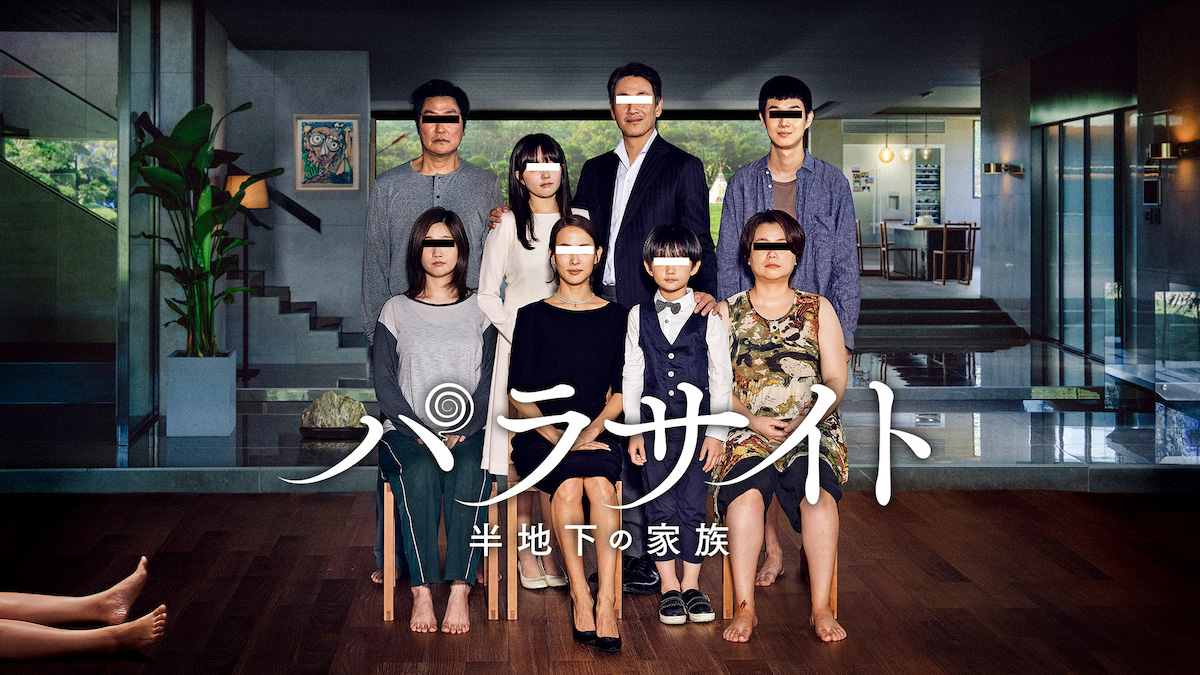
The story is about four members of the poor Kim family, all of whom are unemployed and living in a half-underground house, who become parasites (parasites) one after another to the wealthy President Park and his family. The Park family lives in a large mansion on high ground and leads a life that is the complete opposite of that of the Kim family. As we Japanese are not at all familiar with semi-underground houses, some of us may be surprised from the first scene showing the view from the semi-underground house. The film, which realistically depicts the social disparity and appeals to the viewers directly, received a major award, the "Academy Award for Best Picture. The award drew even more attention, and movie theaters were packed every day, even on weekday afternoons. One of the most notable scenes in the film is the one in which the Kim family, all of whom have parasitically moved in with the Park family, are looking after the Parks. Taking advantage of the absence of the Parks, the Kims are drinking, eating, and messing around, when a former housekeeper, who was expelled from the Park family, comes to visit them in the pouring rain. The Kims' mother, the current housekeeper, is suspicious and invites the former housekeeper into the house, but this act takes the story in an unexpected direction. This scene accelerates the development of the story, and we, the viewers, are drawn into the story more and more. Although the story seems impossible, it is a film that approaches the real issue of inequality in South Korea, and has had such an impact that the actual semi-underground housing in South Korea has been featured in the Japanese media. This remarkable film, the first Asian film to win the Academy Award for Best Picture, should be shared by many.