
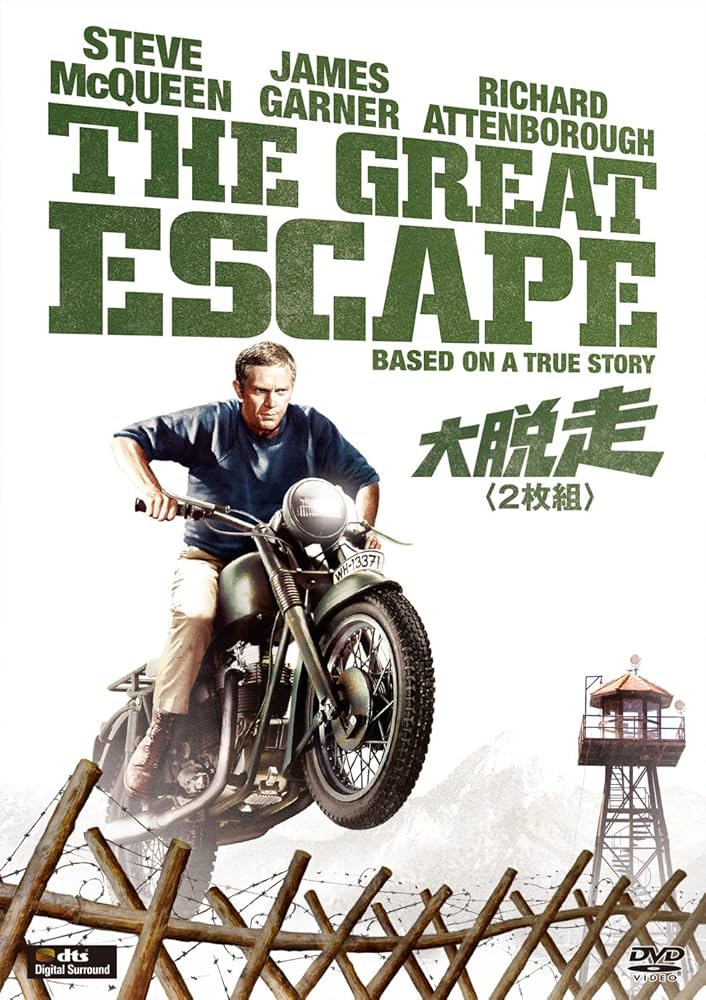

A work to be seen during a stay at home due to the Corona infestation.
The story begins in the 1940s, during World War II, when Americans were taken as prisoners of war by the Germans and placed in prison camps.
The life of surveillance and labor in the camps caused the American POWs constant mental and physical pain, and they could think of nothing but despair for the future.
Then an American POW, played by Steven McQueen, finds hope for the future in a plan to escape from the camp. His escape plan was simple: he was to hide from the guards and dig a hole from the basement of the prison to the outside of the barbed wire walls of the camp to complete the tunnel.
For many months, they carved tunnels with small spoons and other tools, and by using a cart made from wooden planks and ropes, they removed and concealed dirt from the inside of the prison to create the tunnels. The repetition of this process bore fruit, and the tunnel leading to the outside was completed.
Some prisoners of war were opposed to the escape, but when the tunnel was completed, even these prisoners held out hope for escape, creating a cheerful scene in the dark tunnel.
The work of digging a hole to hide from the guards' eyes was a series of tense scenes, but the real work began once the tunnel was completed and the Great Escape began.
The operation was set in motion at midnight in the dark.
At first they successfully escaped from the eyes of the German soldiers, but when they were in large numbers, some of them were found by the German soldiers watching from the turret and shot dead.
Luckily, the American POWs who had left the tunnel and got on their motorcycles were forced to engage in a car chase.
Although there were only a few survivors in the end, the film makes viewers think about how they can find hope for the future in the midst of the coronavirus epidemic in the real world. This is a film that makes us think about the future.