
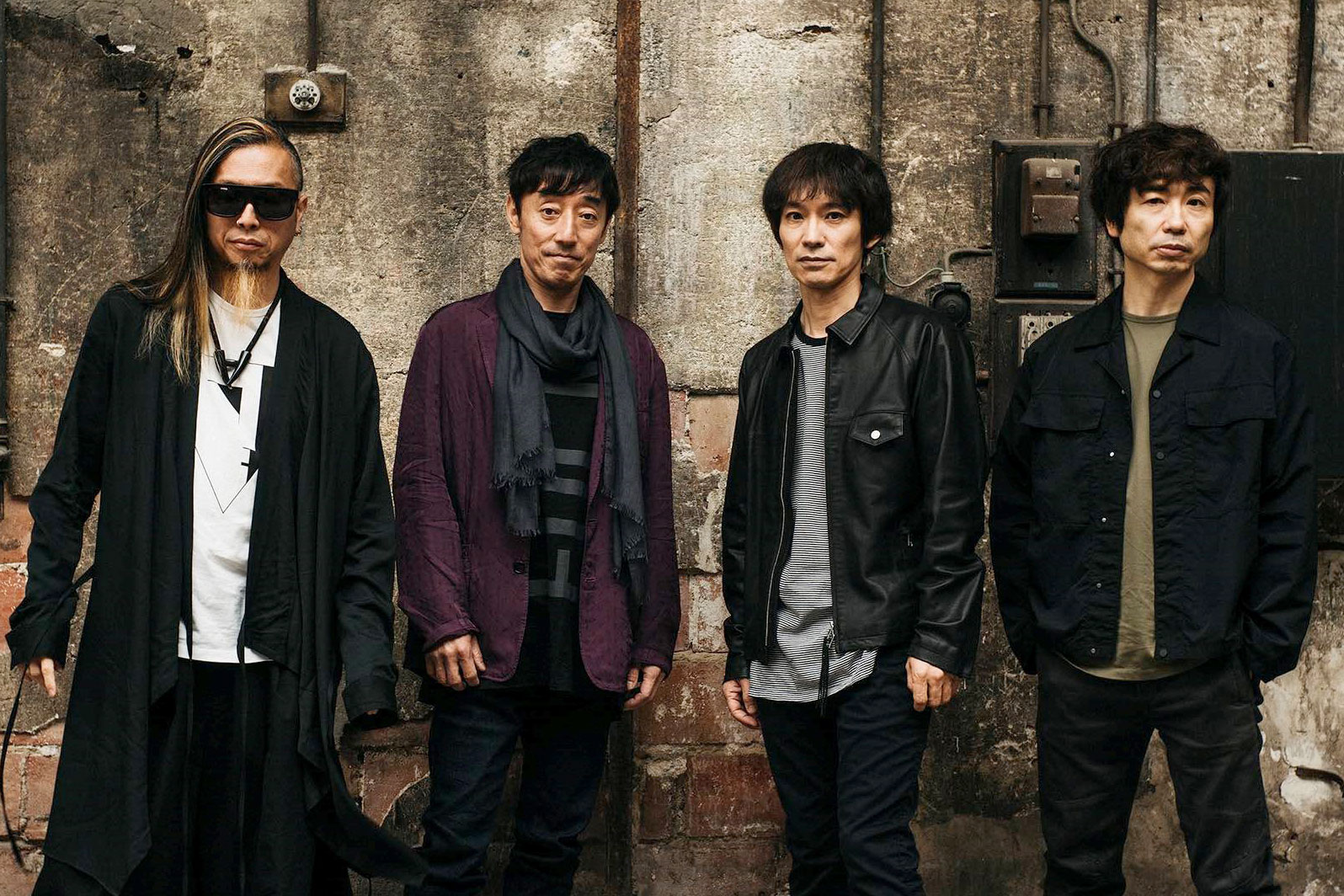

A brilliant blend of imaginative lyrics and addictive melodies
A four-piece band that became famous in the 1990s with such singles as "Robinson," "Sora mo Furaiwakeru Kudasuru," and "Cherry," which became big hits. Vocalist Masamune Kusano's voice is full of tenderness and sadness, and combined with the addictive melodies, it is very pleasant to listen to. However, the true essence of the band's music lies in the lyrics, which, like the famous song "Robinson," are rich in a wide range of worldviews and exquisite abstraction that can be interpreted in any way depending on the listener's imagination. Here are two songs that I particularly recommend. At first listen, "Life in the Country" (included in the album "For Those Who Couldn't Be Aurora"), as the title suggests, seems to describe a peaceful rural life with a list of concrete words describing the scenery and lifestyle of the countryside, but it is followed by "The Vision I Believed Would Always Arrive," "On the Never-Ending Circle," "Nega's Town," The expression "I have to say goodbye to you" suggests something more serious (bereavement?) than just an ad hoc goodbye. The expression "I have to say goodbye to you" evokes something more serious (bereavement?) than just an on-the-spot goodbye, and gives a sense of depth. The lyrics of "Koi ha Yugurei" (included in the album "Sora no Hukikata") are impressive in that they compare love to various things. The lyrics of "Koi ha nakai kanai sad telepathy," "Koi ha naitakunai sakura hasten to bloom," "Koi ha naze nai nakuyaku no yakuwaku," and "Koi ha sappan e no nasai devil no kohyo" are all excellent and sympathetic expressions that remind one of his first love and temporarily rejuvenate the listener's heart.