

The milestone of Japanese rock in the zero's, this was where it all began.
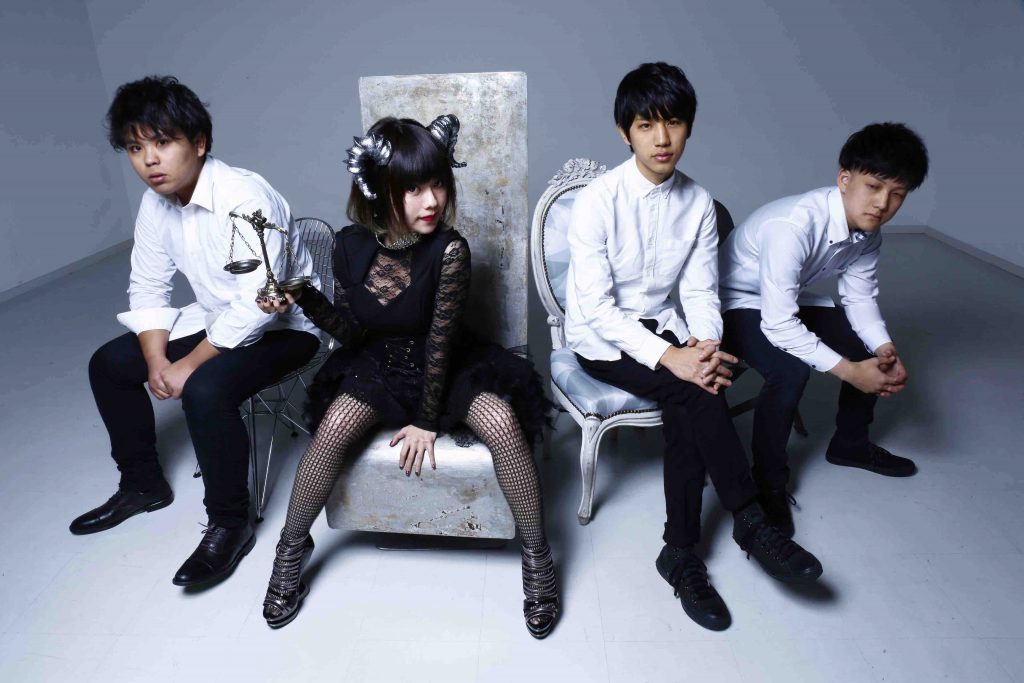
Theory of Relativity is a four-piece band formed in 2006 with vocalist and lyricist Etsuko Yakushimaru at the center. Yakushimaru has sung theme songs for many animated TV series, including "Arakawa Under the Bridge," "Riruru Ping Drum," and "Shijohan Shinwa Taikei," and her work with Theory of Relativity can always be cited as the starting point for her musical activities.
The first album "Chiffonism" sold 4,000 copies despite being distributed only through direct sales at live venues and mail order, and as soon as it went on sale nationwide, it was ranked No. 1 on the weekly J-POP indie chart of all Tower Records stores. This was the first time that Relativity's music reached No. 1 on the weekly J-Pop indie chart. This was the beginning of Relativity's meteoric rise to the top, and I believe that the metaphor of a "milestone" for them is not entirely wrong.
After that, they released two albums, "Hi-Fi Shinsho" and "Synchronicity," and their popularity remained steadfast, but their activities stagnated due to the departure of bassist Shinabe Shinichi and drummer Nishiura Kensuke, member changes, and the expansion of Yakushimaru's solo activities. However, they have been sporadically active, releasing their first single in three years, "NEO-FUTURE," in 2018.
Why does their music still attract us more than a decade after its release? The answer was already summed up in the song "Jigoku Sensei" from "Hi-Fi Shinsho" I would like to quote the lyrics of the first verse.
Class visits, a premonition of love
Home visits are the gates of hell
In the schoolyard after school
I know the love of extracurricular lessons
From the song "Jigoku Sensei" included in "Hi-Fi Shinsho
The impact of the rhymes and the decadence of the worldview are so strong that this passage is sung wistfully by Yakushimaru, who is still in her early twenties, with her unique vocalization and breath. Teens at the time were enraptured by this song, which seemed to be a vacuum-packed version of a high school girl's avant-garde and straightforward yearning for her homeroom teacher on the eve of her graduation.
And the solid feel of titles such as "Teletext," "Shikaku Revolution," and "Classroom Collapse" reinforce the urban and civilized image of the album.
Regarding the impact of the above-mentioned rhymes, it is noteworthy that this point can be used as the axis to discuss the relationship between the Theory of Relativity and the Internet-born masked artist "It Should Always Be Midnight," who is a representative of the Japanese music scene in 2025. It is not uncommon to talk about the Theory of Relativity in connection with "It should be midnight all the time. Many of the songs represented by "You should study. are also often based on the essence of wordplay and rhyming. Of course, it cannot be said that the Theory of Relativity alone prepared the ground for today's J-Pop, but its influence on subsequent artists is too great.
One phenomenon, Theory of Relativity, was undoubtedly the beginning of it all. Each of their songs lies quietly at the origin of the Internet discourse that is spoken of by many as a piece of nostalgia.