
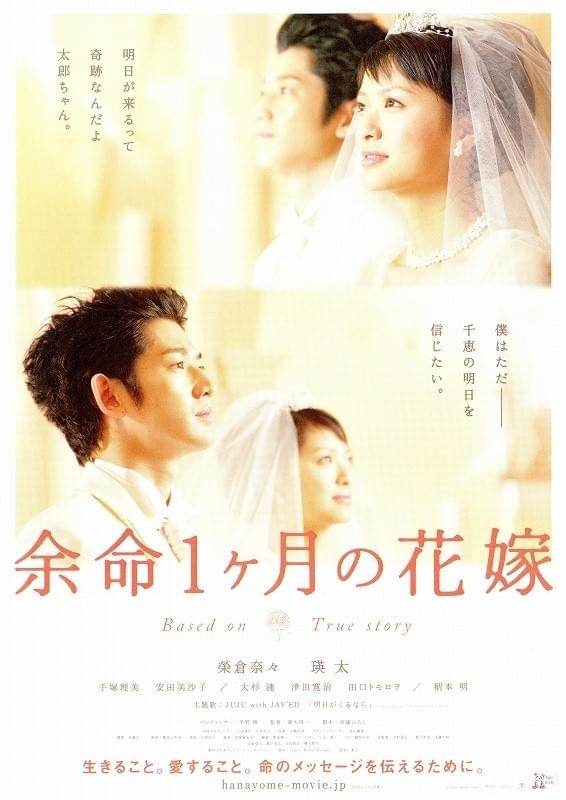

Not as much as everyone says.
It is a common story of being suddenly diagnosed with a disease and given a limited life expectancy, which is moving and sad, but not particularly good.
Perhaps it is inevitable because it is created based on a true story, but I did not feel any special originality.
However, the beginning of Taro and Chie's relationship and the scene where Chie leaves Taro after she recovers from breast cancer are realistic without being overly dramatic.
There are no major developments or dramatic and moving scenes in particular, but on the contrary, I think many of the scenes are very realistic and sympathetic.
Chie's mother was also diagnosed with ovarian cancer and passed away, and she refuses Taro's confession because she knows the sadness of losing a loved one.
The father of Chie, who has no choice but to accept the cruel reality of his daughter being diagnosed with cancer after his wife's death, is carefully and realistically portrayed in the film.
The depth of Taro's love for Chie, even after learning of her illness, is also moving.
Taro and his father's tenderness toward Chie, who was gradually weakening in her hospital room, was very touching.
The scene in which Chie's wish to wear a wedding dress was granted as a surprise made me think how happy she must have been.
Although there are so many good scenes, my honest impression is that they are not as good as the public had been making them out to be.
It was moving, of course, but it was a common development and I could see where it was going.
It was realistic at best, but I felt it lacked a storyline. I think it is a good film, but I would not recommend it.