
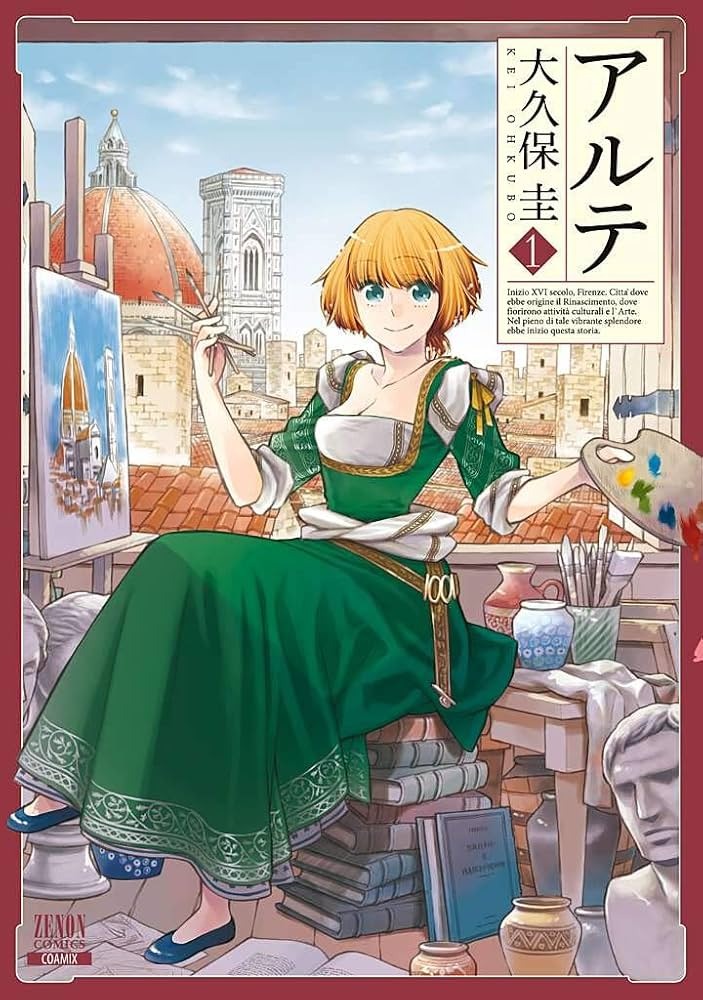

A young lady aspires to be a painter in the male-dominated world of the 16th century.
Women have no choice but to be liked by men if they want to make a decent living.
In such a society, the 15-year-old heroine Arte, born into an aristocratic family, loved to paint, but her father, who supported her, died suddenly, and her mother, who originally did not like Arte's devotion to painting, burned away her drawings.
At the time, the only way to become an artist was to apprentice at a studio, and Alte visited all the studios she knew, but she was turned down at the door without even having her paintings looked at.
When Arte asks why they won't even listen to her, they are told, "Because you are a woman.
Most people would be brokenhearted and saddened at this point, but this heroine is not a "tragic heroine"; instead, she cuts off her long hair, a symbol of women in this era, on the spot and says, "Then I'll throw women away! She dares to say, "Then I'll throw women away!
If that wasn't enough, she almost cuts off her breasts as well, and then she accepts the impossible task of becoming an apprentice to Leo, who runs a workshop by himself.
This early synopsis is the biggest and most overwhelming attraction of this work.
In an environment that would break anyone's heart, he gradually gains the trust of those around him through his attitude and ability, despite the terrible discrimination he faces.
The figure of Arte, a transcendent yet strong and attractive woman who transcends gender, gives admiration and courage to those who read it.