
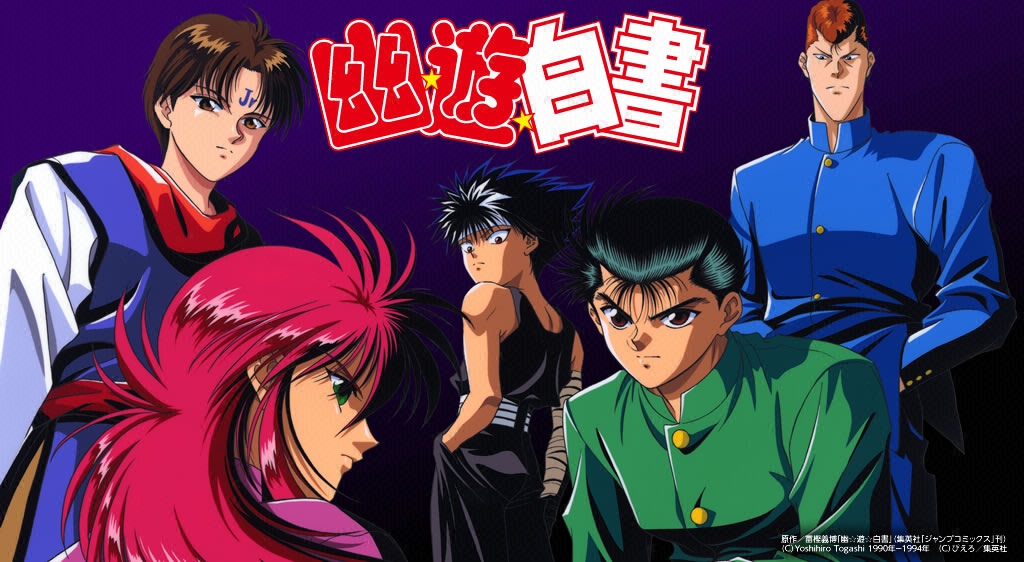

The complex psychology of the characters is fascinating.
It is a battle manga featuring a delinquent junior high school boy, Yusuke Urameshi, in a world where the human world, the spirit world, and the demon world exist.
Using his spiritual powers, he fights against humans and monsters in different positions with his fellow delinquents and cooperative monsters.
The grotesque depictions and the psychology of diverse values are fascinating.
There are many characters who make thought judgments that seem to be far removed from common values.
Here is one popular enemy character.
Toguro (younger brother) is a former human fighter who turned into a yokai to maintain his strong body.
He chose the path of solitude in order to abandon his pride and naivete, despairing of his overwhelming power after a yokai killed his friends and disciples.
He became stronger and took revenge on the yokai, but he could not forgive himself.
He longed for an opponent with whom he could fight with 100% of his overwhelming power.
It was Urameshi, who could give 120% for his friends, who defeated him.
He was to reject his own value that no one can defeat overwhelming power.
He looks a little clearer to see that it is the power that comes from the connection with his friends that he once sought.
After his death, he chooses to go to hell, the most painful place in the world.
He is not yet overjoyed at his own naivete, and his regrets are not yet cleared up.
His last words are his hopes for Urameshi, who is stronger than he knows, and his gratitude to his friends.
It is interesting to see the change in Urameshi's words after fighting a strong enemy, as if he is influenced by the values of his opponent.
I think the great appeal of this work is the complex human psychology that can be understood anew after reading it over time.