
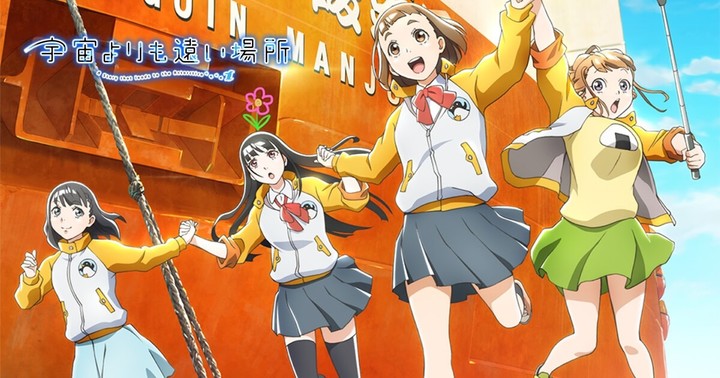

Their youth was in "Antarctica
One day, Kimari, aka Mari Tamaki, a high school sophomore who has been wanting to start something but has been unable to take the first step, picks up an envelope containing one million yen and meets a girl named Shirase Kobuchizawa, who is aiming to go to the South Pole. Kimari is moved by Hose's refusal to give up despite being told that it is impossible for a high school student to go to the South Pole, and sets out with Hose to reach the South Pole.
The film was so highly acclaimed that it was named one of the "best TV shows" by the New York Times in 2018, and its major appeal is that it "realistically and exquisitely depicts the black emotions of adolescence.
In the film, Kimari and her friends are ridiculed by the people around them for going to the South Pole, but as the story progresses, the eyes of the people around them change. In many works, the protagonists would be evaluated, but in this work, they are jealous, and people start spreading false rumors on social networking sites and talking behind their backs. This work is full of such humanistic and realistic performances. The scene that left the greatest impression on me was when Hose's first words were "Suck it up" when he landed in the Antarctic for the first time. Suck it up," expresses the resentment of having been ridiculed up to now, and all the hard work he has put in using that as an engine. The realism of using dirty words instead of pretty words. However, while depicting such black emotions and humanistic realism, it does not become too dark throughout the work, and I think this exquisite direction is a major attraction not found in other anime works or works with a coming-of-age theme.
Another charm of this work is that it goes to the South Pole in order to get it moving. This is because there are four main characters in this work, including Kimari and Hose, but each of them is "stuck" in their own problems. Kimari had a desire to "do something," but due to her personality that is easily swayed by others, she was unable to take the first step, and then she decides to go to the South Pole on her own, and in the process, her self that had stopped at "wanting to do something" starts to move. Hose was unable to realize the death of his mother who disappeared in Antarctica, and even though he came to Antarctica, he was unable to accept it and stopped, but as he spent time with his friends, he cut off his unresolved feelings and started moving. She says, "I want to try something new, but I can't seem to take the first step. But it is hard to take a step forward." This work may easily appeal to such people.
I would also like to recommend this work to junior high and high school students. It depicts in a realistic and cheerful manner the "acting without thinking" and "difficulties in socializing with others" that are unique to adolescence. I also think that if you review this work as an adult, you will be able to see it from a different perspective.