
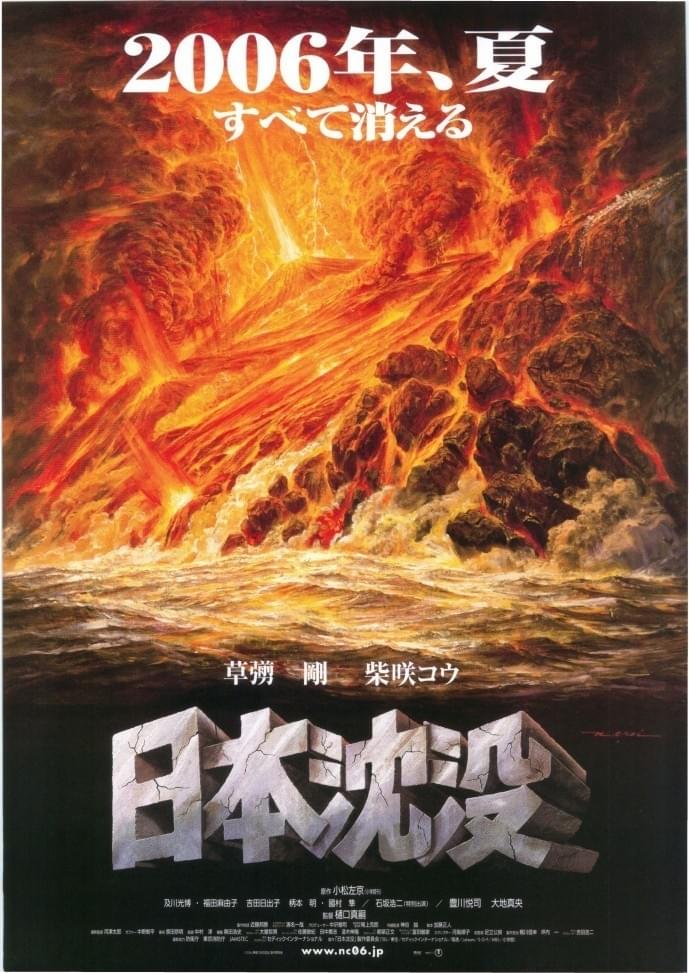

Japan sinking
A film adaptation of Sakyo Komatsu's bestselling book.
The first one to be made into a movie, a series of unusual phenomena are occurring in various parts of the Japanese archipelago. Dr. Tadokoro, a seismologist, gives warnings, but no one listens. On the contrary, he is told that he is stirring up anxiety and is treated as a freak. However, the prime minister of the time believes Dr. Tadokoro and orders a survey of the seas around Japan. The data coming in one after another showed clear anomalies. The prime minister decides that there is not a moment to lose. He takes step after step to protect the lives of his people, but the problem is too great to save the lives of 120 million people. Few countries are willing to accept it. The prime minister and Dr. Tadokoro are troubled by the different political systems, different religions, different cultures, and different ethnicities, not to mention the large land area of the country. They go to see an old man. He is a mysterious old man. He looks like a hermit. He says that the Japanese people should die with the island. That would be the happiest thing for the Japanese. He says, "Born in Japan, die in Japan, that is what Japanese people should do. I cried when I saw this scene. I was a teenager at the time, but this line made my heart ache.
The drama is also wonderful. The special effects are spectacular. It is a masterpiece that will remain in the history of Japanese cinema. Even if you watch it now, it will never fade away.
I saw Tsuyoshi Kusanagi's version of the movie, but it was not as good as this one.
Directed by Shiro Moriya, starring Keiki Kobayashi, Tetsuro Tanba, Hiroshi Fujioka, and Ayumi Ishida.