
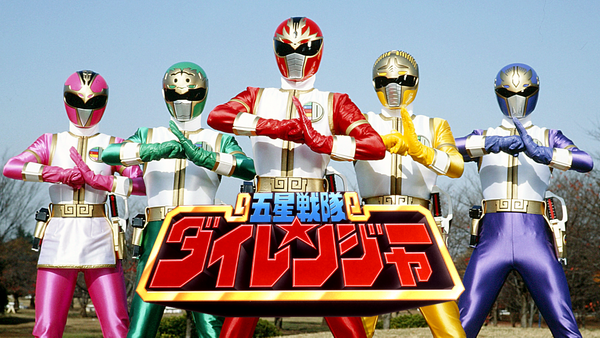

A fine work that could have been a masterpiece.
This work, the 17th in the Sentai series (15th at the time of broadcast), is in some ways even more unique than the previous two, "Torijin Sentai Jetman" and "Dinosaur Sentai Juuranger". As the second Fantasy Sentai film, I have the impression that it is a lesson learned from the previous two films. First of all, "Jetman" was too much focused on drama and character portrayal, which spoiled the poignancy of the children's entertainment, while "Joolanger" was too much focused on entertainment and lacked depth and substance in terms of the story's framework and drama. The most important point was that the backbone of the five members was too thin to be easily understood.
This work, therefore, first of all, ensures the pain and entertainment value for children by pushing the flashy name-dropping and Chinese martial arts action to the forefront. In addition, the Kidenjyu that appear as robots, including the Dragon Star King, have wonderful unique designs and actions, and above all, they are almost unbeatable in strength. This is enough to maintain the catharsis and the outburst of entertainment for children. In addition, improvements were made in terms of drama and characters. To make it easier to empathize with the five characters, they were made into young people of today (two of them are related to the Dai family), and a scriptwriter was assigned to each character to tell their main story. In this way, the goal was to create consistency and delve into the five characters, and the issues of the previous two films seem to have been met.
However, perhaps because this was taken too far, this work lost sight of the main storyline in the middle of the story, and the characters ate the story. Furthermore, the creators lost sight of where they should be aiming for as a story, which was caused by the intermittent character-driven episodes without proper horizontal connections. This was clearly shown in the last half of the film, when Doushi betrays the five Dairangers and returns to Goma's leadership, and his actions and the development of the story in the last half of the film are disjointed.
The final episode of the film, in which the Douji continue to fight even after 50 years, is a bit of a letdown, like the final episode of a JUMP manga that has been censored. Of course, the first half of the film was interesting, and the visuals that established the world of the film were amazing, and the sales were as great as those of the first two films, but as a work of art, it could not become a revolutionary work that surpassed the first two, and I cannot deny the impression that it ended incompletely. The materials used in each film were good, and it is regrettable that they could have become masterpieces, depending on the way they were made.