

Puzzle Game Impressions
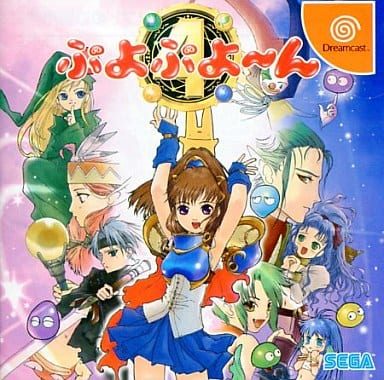
This is the fourth title in the "Puyo Puyo" series, a puzzle game that has taken the world by storm, and was first released on Dreamcast in 1999, followed by N64 and PS.
In this title, new elements were added, such as "special skills" for each character to give them a certain degree of advantage, and each stage, including the story mode, had its own characteristics.
However, the stage elements seemed to have more difficulties, and the "comic demo," which is a familiar feature of the series, seemed to be appropriate in a good way to ease the players' minds, whereas this work, perhaps based on the elements of the "Magic Story," which is an external story, proceeded in a serious mood, but the purpose of the last boss was also not revealed. However, this work is based on the elements of the "Magic Tale," which is an external story, and the game proceeds in a serious mood.
In addition, the overwhelming percentage of new entries and "support characters" accompanying the main character Aruru were female, which gave the impression of a "gal-game," including the higher body height and cuteness of the character design (although the character voices were done by amateurs in the previous work, whereas in this work they were done by professional voice actors). (However, the character voices were done by amateurs in the previous work, whereas in this work they were done by professional voice actors, giving a sense of stability).
The series went into a period of silence until its revival in 2003 with Puyo Puyo Fever, but I personally like the more serious mood of this game compared to the previous SUN, which was thoroughly comical. I personally felt that the serious mood of the previous SUN, which was thoroughly comical, contrasted favorably with the serious mood of this work.