
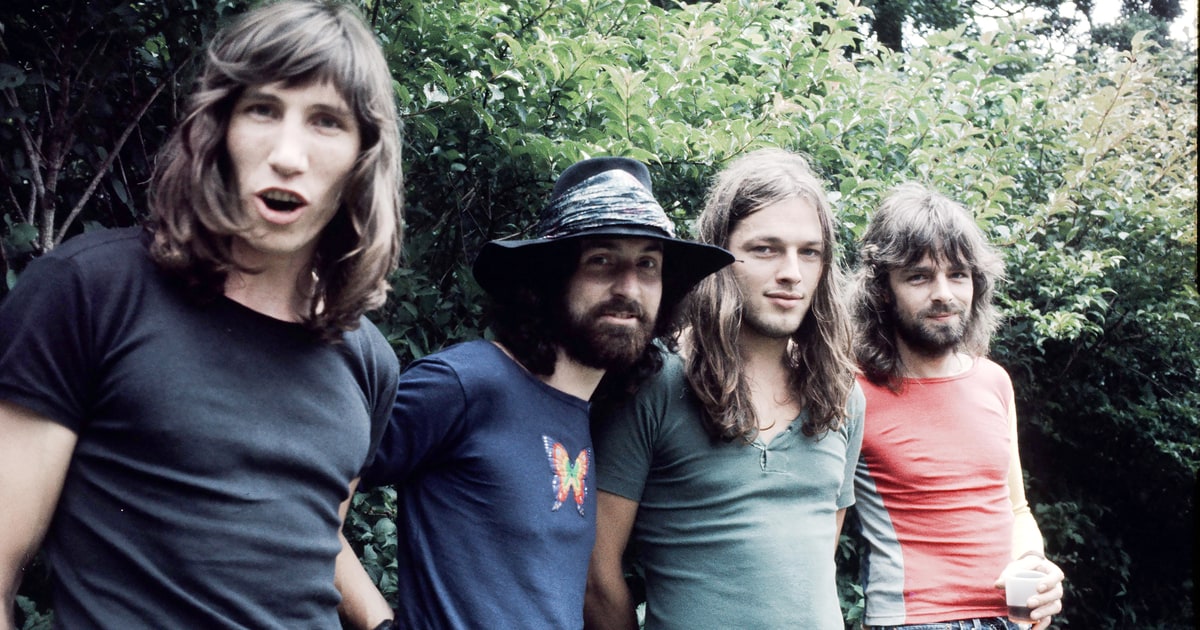
Pink Floyd is a British rock band formed in London in 1965. Their avant-garde musicality and psychedelic sound have won them worldwide acclaim. With their philosophical lyrics, experimental sound, meticulous song structures and unique live performances, they are regarded as one of the most successful and influential groups in the history of pop music. Their albums have sold more than 230 million copies worldwide.
history
From its formation to 1967
Source: ultimateclassicrock.com
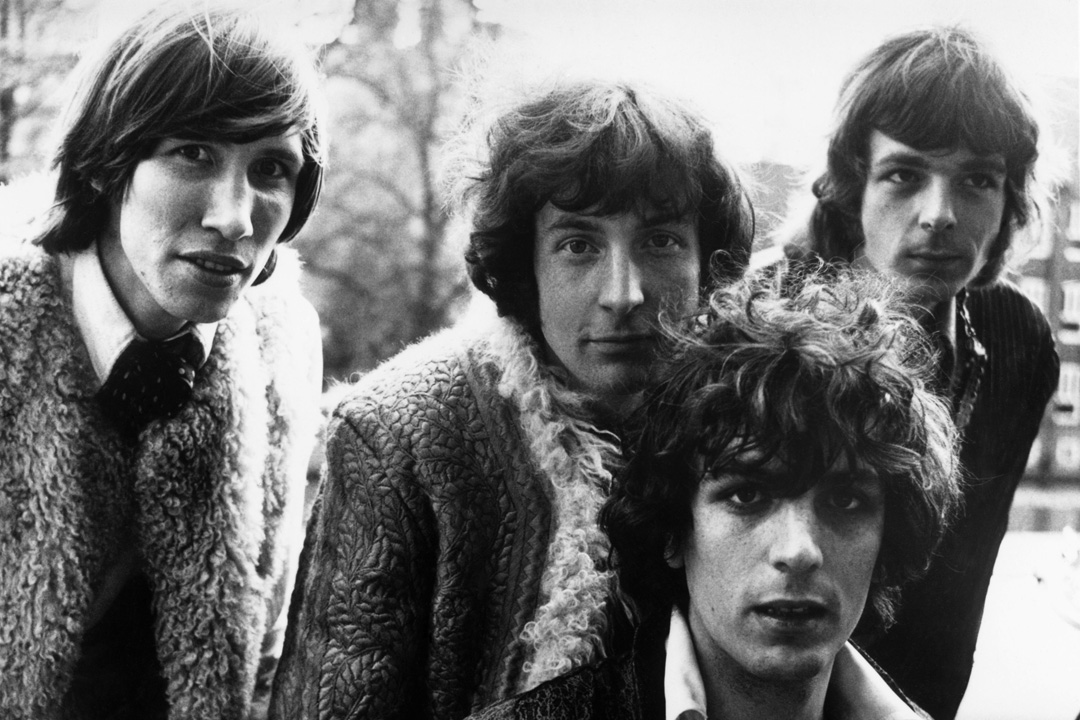
Roger Waters and Nick Mason met at an architecture school in London, where they started playing music with their mutual friends Keith Noble, Liv Metcalfe, and Juliette Gale. Richard Wright, who later attended the same school, joined the group and formed the band Sigma 6. At first, Roger played lead guitar, Nick played drums, and Richard played rhythm guitar. The band continued to perform steadily, changing its name to Tee Set, Architectural Abdubs, and Abdubs, but in 1964, Keith Noble, Liv Metcalfe, and Juliette Gale left the group. The three remaining members, Roger, Nick, and Richard, invited their old friend Syd Barrett and guitarist Bob Croce to join the band as their replacements.
In mid-1965, due to opposition from their parents and college instructors, Bob Clauss left the band and was replaced by Syd Barrett as lead guitarist, and around late 1965 the band began calling themselves "Pink Floyd". Syd borrowed the name from two blues musicians, Pink Anderson and Floyd Council.
They played mainly blues and other songs, copying songs by the Rolling Stones and the Who, and gradually began to be approached by well-known live music venues such as the Marquee Club. Eventually, he began to introduce show elements with extensive use of improvisation and lighting, and began to build his own unique line of music. Around this time, Sid began to compose more energetically, and the band's original songs increased, which led the band to start focusing on Sid.
The band gradually made a name for itself in the London underground scene with its lengthy improvisations and effective light shows using colored slides, and was featured in local newspapers.
The band moved their base of operations to UFO, one of the leading clubs in London's underground scene, and their energetic activities attracted the attention of the music industry. Arnold Layne" was released. Arnold Layne" was banned by several radio stations due to its sensitive lyrics about cross-dressing and other perversions, but it got off to a good start, reaching number 20 in the UK charts.
In June of the same year, they released their second single, "See Emily Play," which was performed on the BBC program and reached #6 in the UK charts, surpassing their previous single, "Arnold Layne.
In August of the same year, they released their first album, "The Piper at the Gates of Dawn". The album reached a high of #6 on the UK charts and stayed there for 14 weeks. The band was still performing at UFO at this time, but Syd's mental state began to deteriorate, probably due to the anticipation of the large crowd. The band members were optimistic that Syd's illness was temporary, but his condition worsened, and even when the band started to play, Syd began to behave oddly, standing on stage with his guitar around his neck and doing nothing. The band's manager announced to a music magazine that Sid's mental condition was not good. When the band toured the U.S. for the first time, Syd's condition was at its worst, and he refused to answer questions from the press or sing during the shows.
Back in the UK, the band supported Jimi Hendrix on his UK tour, but Sid's mental state became critical and the other members considered bringing in a new member to replace him.
Member Change and Global Success
Source: pastdaily.com
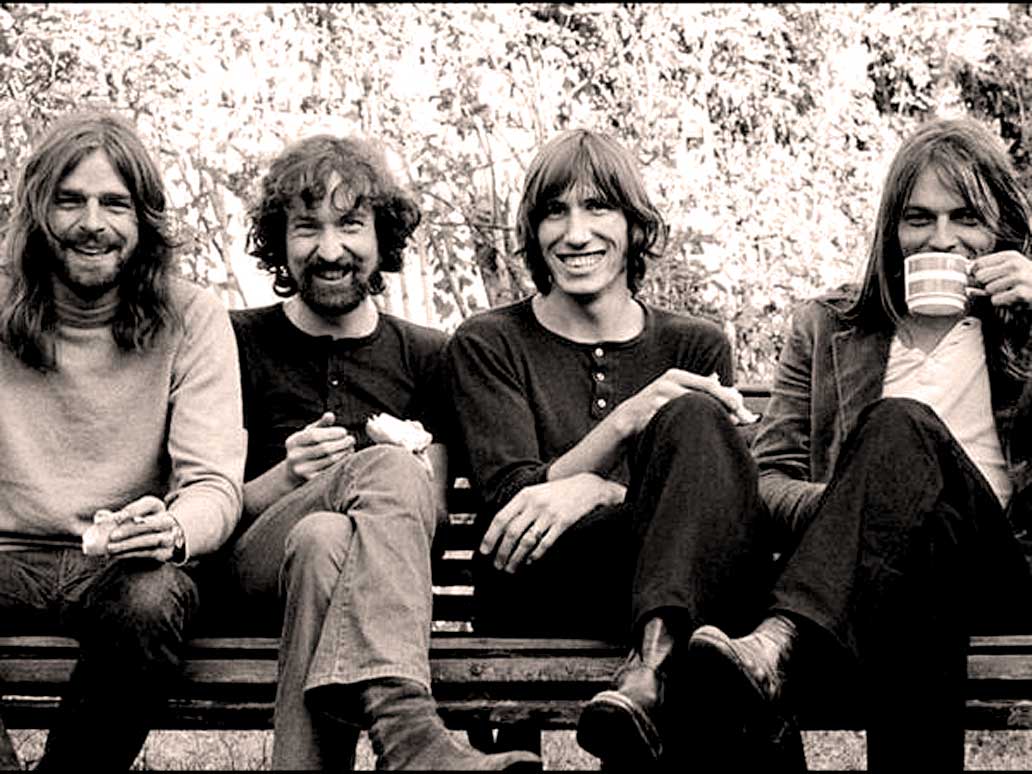
In December 1967, the band welcomed guitarist David Gilmour as its fifth member. David had attended the same school as Sid in the early 60's and was an old friend of his. The band decided to continue with Sid as the only writing member, without having him participate in live performances. The band then took a publicity photo as a five-piece band, which seemed to be the start of new activities, but Sid's mental state did not recover, probably due to his awareness of the need to produce a hit following "Arnold Layne" and "See Emily Play". It became consequently difficult for Sid and the band to work together, and in March 1968, the members discussed the future of the band with the manager, and Sid agreed to leave the band.
After Sid left the band, the pressure was on Roger to carry on the creative lyrics and sound that Sid had written. Immediately after David joined the band, he tried to be aware of Sid's voice when performing. However, he gradually began to avoid playing Sid's songs and began to play Roger's and Richard's songs such as "It Would Be So Nice" and "Careful with That Axe, Eugene" to remove the shadow of Sid.
In 1968, the band entered Abbey Road Studios in London to record their second album, A Saucerful of Secrets (Mysteries). Roger and Richard began to develop their songwriting abilities, and several songs each were recorded and included on the album.
The album was released in June 1968. The album's artwork was created by Storm Thorgerson and Aubrey Powell of the art group Hypnosis, and it reached a peak of #9 on the UK charts, where it stayed for 11 weeks. The reviews from the media were generally positive, although some media outlets described the songs as long and tedious. A single, "Point Me at the Sky," was released in December of that year, but it failed to sell any more than "See Emily Play," and it would not be released again until 1973.
In 1969, he produced the soundtrack for Barbe Schroeder's film "More". It is said that due to the lack of time for production, many of the songs on the album were appropriated from live performances. In November of the same year, the band released a two-disc album titled "Ummagumma," the first containing live recordings and the second featuring each member performing experimental music. It was well received by critics and reached a peak of #5 on the UK charts.
In October 1970, the band released their fifth album, Atom Heart Mother. This album became the band's first #1 album and was critically acclaimed by the media and was a musical and commercial success. The title track, "Atom Heart Mother," is over 23 minutes long, taking up the entire A-side of the record with full orchestral accompaniment. After touring the United States and Europe with "Atom Heart Mother," the band began work on the next album. However, there was no theme to address, so they spent from late afternoon until dawn in often unproductive endeavors, such as basic sonic considerations and lengthy guitar riffs.
The following year, 1971, saw the release of their sixth album, "Meddle. Although it failed to match its predecessor, "Atom Heart Mother," it was a critically acclaimed album, reaching a high of #3 on the UK charts, where it remained for 82 weeks. It is said that "Meddle" marked a transition from the Sid-influenced Pink Floyd of the 1960s to the new Pink Floyd. The band themselves said that with this album, they were finally able to establish their creativity. The band made their first visit to Japan in the same year, and performed concerts at music festivals such as "Hakone Aphrodite" in Hakone, Japan.
After a tour of England, Japan, and the U.S. in 1971, the band began work on the next album. At a meeting held at Nick's house to discuss the new album, Roger suggested that the theme for the next album be "what makes people crazy," inspired by the pressure surrounding them and their ex-member Sid, who had a mental breakdown. The other members agreed to Roger's concept and produced a demo, which was recorded from May 1972 to January of the following year, and their seventh album, "The Dark Side of the Moon (Madness)" was released in March 1973. This album was a huge hit in the UK and Western Europe, and was received with enthusiastic praise from critical sources. The band toured the U.S. around this time, and in the U.S. the album was also the band's biggest hit to date, reaching #1. It has remained on the Billboard charts for 14 years and has sold over 45 million copies worldwide. The release of "Money," a single released simultaneously with the album, also reached No. 1 in the U.S., catapulting the band to stardom. This changed the band's surroundings dramatically, with a much larger live audience and a different clientele, which frustrated the members of the band.
After a tour featuring "The Dark Side of the Moon," the band returned to the studio in January 1975 to work on their ninth album. Physically and emotionally satisfied with the great success of the previous album, the band struggled to find a new theme. Roger and Richard later recalled this period as "a time when everything was difficult. David was interested in improving upon songs the band had already produced, and Nick was unable to concentrate on production, partly because of his deteriorating relationship with his wife. Even with the members' lack of creative drive, Roger was beginning to come up with new concepts.
In 1974, the band produced three new songs and began to present them as a suite on a European tour. The song, which begins with David's guitar, was a stepping stone to a new album. The song represents the ups and downs of ex-member Syd's career as a musician, and Roger commented that he wanted to get as close as possible to the indefinable sadness of Syd's disappearance.
When the band was working on a new album, Syd suddenly visited the studio where the members were working, but he had changed his appearance so much that they did not recognize him for a while.
Then, in September 1975, they completed and released their ninth album, "Wish You Were Here (Flame - Wish You Were Here). It reached No. 1 on both the U.S. and U.K. charts.
From this point on, the band's subsequent releases took the form of large-scale concept albums.
Roger Waters-led era
Source: i.scdn.co
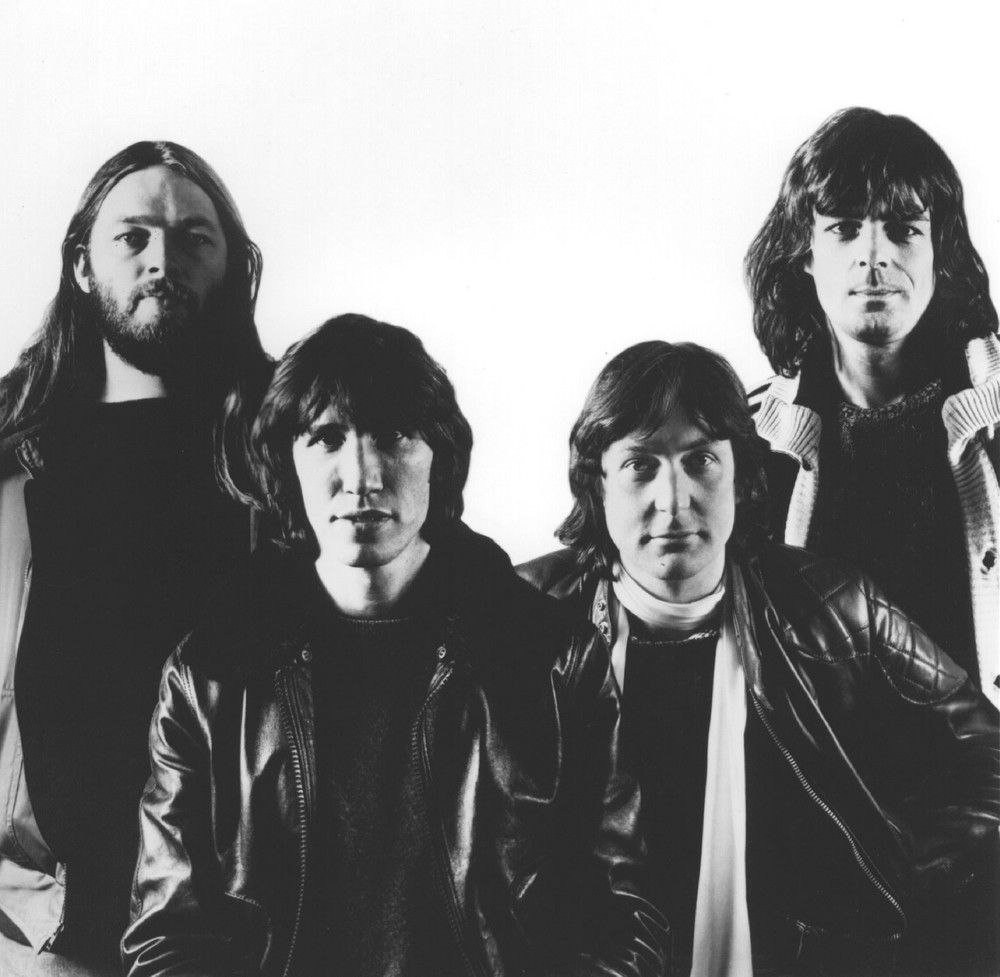
In 1976, the band finished recording their tenth album, "Animals," which was inspired by the British novel George Orwell's "Animal Farm. The concept of "Animals" was Roger's idea and was influenced by British novelist George Orwell's "Animal Farm," in which social classes are divided into dogs, pigs, and sheep in the album's story. The album's artwork was created by Roger using a photograph of the Battersea Power Station in southwest London. Four of the five songs on the album were written by Roger, and the floating, fantastical sound of the previous albums was replaced by a straightforward, intense rock sound.
After the release of "Animals," the band toured Europe and North America on a tour entitled "Pink Floyd : In The Flesh. This was one of the biggest tours in the band's history. On the last day of the tour, Roger got angry at a rowdy fan in the front row in Montreal, Canada, and spat in his face. Later, shocked by the incident, Roger regretted his actions and said on a radio show, "There is an invisible wall between us and the audience. He said on a radio program. He used this experience as an idea for his next album, "The Wall. Around this time, each member began his solo career, and David released the album "David Gilmour" in 1978, which was a hit.
In July 1978, Roger told the members about two ideas for the next album: one was a 90-minute demo tape called "Bricks in the Wall," and the other was a demo tape for what would later become Roger's solo album. David and Nick adopted the former as the idea for their next album. Co-producer Bob Ezrin wrote a story for the new album featuring the character "Pink. The character "Pink" was based on Roger's childhood experience of losing his father in World War II.
In November 1979, Roger released his 11th album "The Wall," a two-disc set. Roger wrote most of the 26 songs on the album, with the exception of a few songs on which he wrote the lyrics and music. At the time of its release, the music industry was in the midst of the rise of punk rock and new wave music genres, and progressive rock groups such as Pink Floyd were derided as "old wave" and not considered attractive by younger listeners. However, with the single "Another Brick in the Wall (Part 2)," the band showed its underlying strength to young listeners by recording a massive hit with worldwide sales of more than 30 million copies.
By this time, Roger's power had expanded further within the band, leading to Richard's dismissal from the band and a growing rift among the members. During "The Wall Tour" with Richard as a supporting member, the band began to build a wall between the stage and the audience in the middle of the show, and it all came crashing down in the last song, which became a hot topic.
The Wall" album and the soundtrack for Alan Parker's film "Pink Floyd The Wall," a compilation of the concert tour, were scheduled to be produced. However, due to a dispute between England and Argentina (the Falklands War) at the same time, Roger decided to drastically change the direction of the album's production. David was of the opinion that the songs created during the sessions for the previous album, "The Wall," should not be used for this album, and that it should be composed of completely new songs, which put him at odds with Roger. In addition, Roger was no longer satisfied with the playing of the other band members, and he worked almost exclusively on the album by himself, employing many outside musicians.
The Final Cut" was released in March 1983. Subtitled "A requiem for the post war dream by Roger Waters," it was intended to be Roger's solo album. Sales were not good, but it did reach #1 in the UK charts. The album has a heavy atmosphere, with Waters' personal feelings about the war and a character modeled after his own father, who was killed in action, which has divided fans.
The process of making this album caused cracks to appear in the band, and Roger realized that it was impossible to continue working with this band, and instead of leaving the band, he began to think about stopping the band's activities. There were plans to tour after the release of "The Final Cut," but these plans were cancelled. Then, in 1985, two years after its release, Roger left the band and announced the band's dissolution on his own accord.
David Gilmore-led era.
Source: www.billboard.com
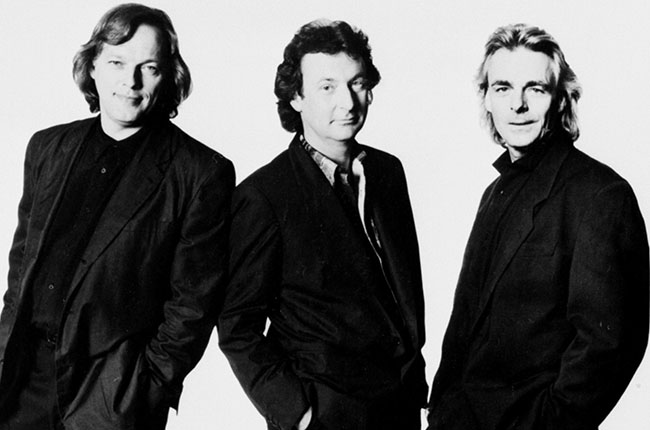
Gilmour, along with Mason, was strongly opposed to Pink Floyd's "breakup" and insisted that the group survive, and after Roger's departure, he personally took the helm to launch the new Pink Floyd. Gilmour invited a number of outside musicians to work on the album. Roger was furious at Pink Floyd's continued activities and filed a lawsuit. Gilmour was forced to respond to the lawsuit, but the two parties reached a settlement on the condition that Gilmour give Roger the rights to "The Wall," ban the use of the "pig" object on stage, and pay Roger a little over 20 percent of the income from the use of the song. The confrontation attracted the attention of the press and fans, and Rolling Stone's special Pink Floyd issue was the number one selling issue of the magazine that year.
The new David-led Pink Floyd, thus made viable, released A Momentary Lapse of Reason (Depression) in 1987. The album featured prominent musicians such as Tony Levin, Carmine Appice, and Jim Keltner, and was a compact collection of songs that did not stick to the lengthy epics of the past. Roger, who had been in charge of writing the lyrics, was no longer with the band, and David was assigned to write the lyrics as well, which was said to be very difficult since it was the first time he had done so. At this point, David and Nick were still the only two official members, and Richard was a supporting member. In 1988, the band toured Japan for the third time, and to date, this is the last time they have toured in Japan.
In 1993, six years after the release of the last album, the sessions for the new album began intermittently, again led by David, and Richard returned as an official member for the first time since "Wish You Were Here" in 1975. Two weeks into the sessions, about 65 songs had been written, and the producer and band narrowed it down to the final 11 by a voting system. Richard also wrote several of the songs and sang lead vocals on some of them. Many studio musicians were used, including Polly Samson, who wrote many of the songs on the album and later married David. Seven years after the previous album, The Division Bell (vs. TSUI) was released in March 1994. This album, which was based on the concept of "conflict due to lack of communication," became a huge hit in the U.S., the U.K., and many other countries around the world, reaching No. 1 in the rankings. After the release of this album, the band toured extensively again. A total of 112 shows were performed, and the total cost of the tour is said to have exceeded $200 million. The audience was also very good, with a total of 5.5 million people in attendance, and the video work "P.U.L.S.E." was released to capture the event. After this, the band went silent again and did not move for a long time.
Reunion, death of a member, last album
Source: images.vogue.it
After the breakup, the Pink Floyd and Roger Waters sides were decisively at odds, and Roger and David often blamed each other, even in magazines. However, since the late 1990s, the two sides have been gradually closing the gap and reconciling.
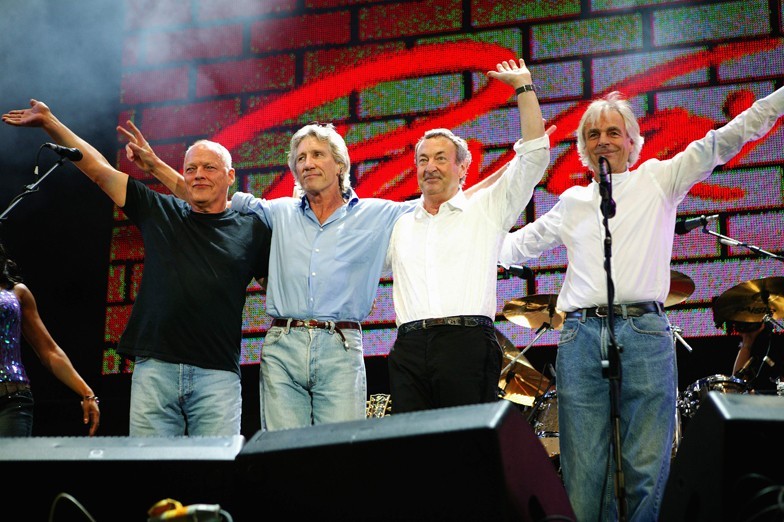
On July 2, 2007, Roger, David, Nick, and Richard reunited as Pink Floyd for a live performance at the "Live 8" charity event for the eradication of poverty in Africa. Roger first expressed his desire to reunite at the event and held discussions with David, who was reluctant at first, but eventually agreed, as the other members agreed. On stage, Roger told the audience that he was on stage for Sid. Toward the end of the stage, Roger called out to David, and all the members hugged. After this reunion, the band was offered a 100 million pound tour of the United States, which David turned down.
In the same year, the band was inducted into the Rock and Roll Hall of Fame. Richard was absent due to eye surgery, David and Nick attended, and Roger participated via satellite from Paris, where he was staying.
On July 7, 2006, former member Syd Barrett passed away at the age of 60 at his home in Cambridge; he was buried on July 18, but the members were unable to attend; a memorial concert for Syd was held on May 10, 2007, and David, Richard, and Nick performed some of Syd's composed songs from the band's early years, and Roger covered Sid's solo songs.
On September 15, 2008, Richard died of cancer at the age of 65. David issued a statement of condolence and performed a song he wrote called "Remember a Day" from their second album; Keith Emerson, also a well-known keyboardist for ELP, issued a statement of condolence and praised him for being the core of Pink Floyd's sound.
On July 10, 2010, Roger and David performed together at a charity event for Palestinian children in England.
In May 2011, David and Nick performed at Roger's live concert "The Wall" at the O2 Arena in London, the first time the three had performed together in many years.
In September of the same year, Pink Floyd and EMI Records released a remaster of past albums entitled "Why Pink Floyd...? a campaign to remaster and re-release past albums.
In 2012, David and Nick decided to explore the session material from "Division Bell" to create a new album. Roger did not participate and Nick stated that the album was "in memory of Richard".
In July 2014, he announced via Twitter that his first album in 20 years, "The Endless River (Eternity/TOWA)" would be released in October of that year. The work will be an instrumental-oriented ambient piece, the band revealed on its website.
After a month of delay, the piece was released on November 7, 2014, with David stating that it would be Pink Floyd's last album. He stated that there would be no tour to promote this album because it would be impossible without Richard, and he again denied the possibility of a reunion the following year, including Roger, hinting at the end of Pink Floyd.
Members of Pink Floyd
David Gilmour, Ph.
Source: img.wennermedia.com
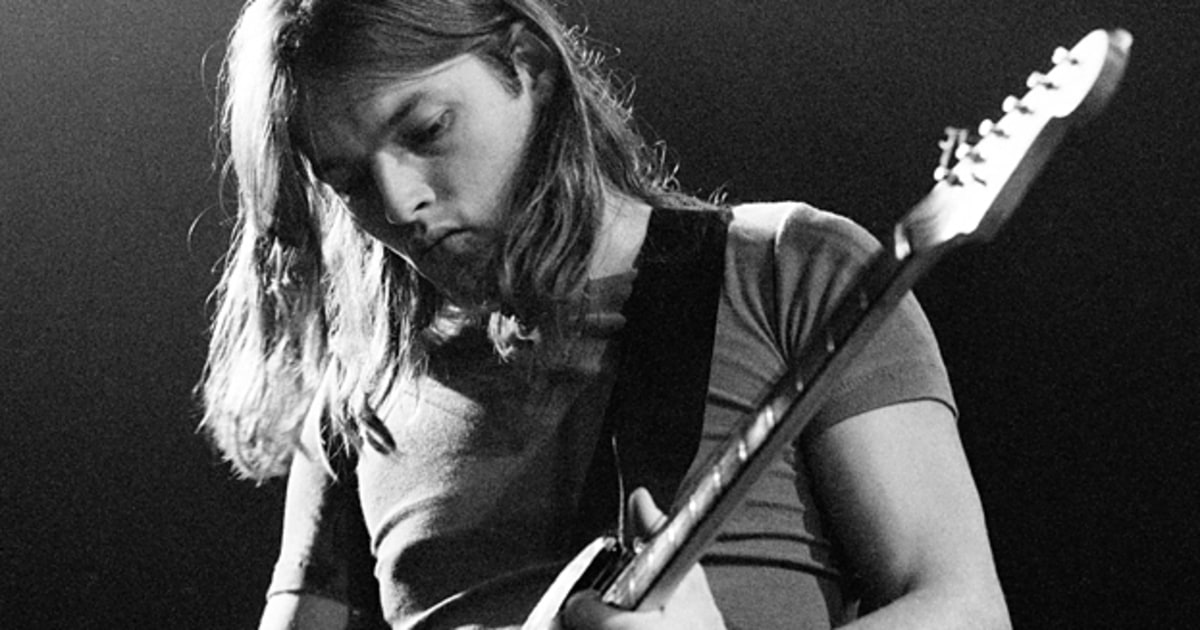
Musician born in England in 1946.
He joined Pink Floyd as a guitarist in 1968, replacing Syd Barrett.
After Roger Waters left late in the band, he led the band as leader.
He often uses a Stratocaster guitar. He was ranked as the 82nd greatest guitarist by Rolling Stone magazine in 2003 and 14th in 2011.
Nick Mason
Source: societyofrock.com
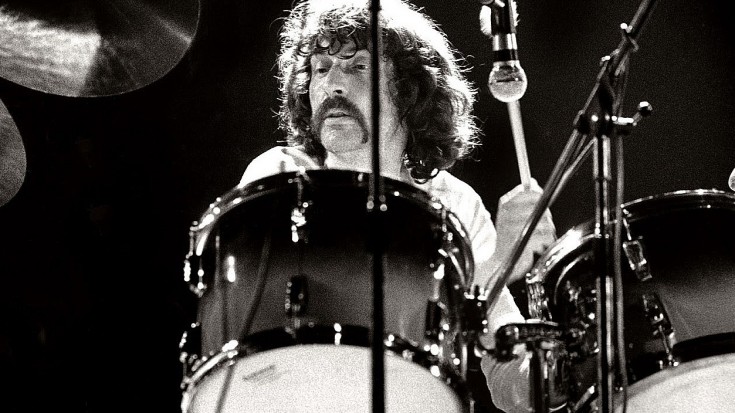
Musician born in England in 1944.
A member of Pink Floyd since its formation, he played drums in the band.
When the relationship between Roger and David deteriorated in the middle of the band, he took a neutral stance and showed up at both Roger's and David's gigs, and has maintained a good relationship with both of them.
He took the initiative in creating tape collages of the sound effects heard in the band's songs.
He is ranked 51st on Rolling Stone's list of the greatest drummers of all time.
Richard Wright

Tags
Contents
- history
- From its formation to 1967
- Member Change and Global Success
- Roger Waters-led era
- David Gilmore-led era.
- Reunion, death of a member, last album
- Members of Pink Floyd
- David Gilmour, Ph.
- Nick Mason
- Richard Wright
- Roger Waters
- Syd Barrett
- Original Albums
- The Piper at the Gates of Dawn
- A Saucerful of Secrets (Mystery)
- Soundtrack from the Film More
- Ummagumma
- Atom Heart Mother
- Meddle.
- Obscured by Clouds
- The Dark Side of the Moon (Madness)
- Wish You Were Here (Flame - I Wish You Were Here)
- Animals
- The Wall
- The Final Cut
- A Momentary Lapse of Reason (Depression)
- The Division Bell (vs. TSUI)
- The Endless River (Eternity/TOWA)
- Pink Floyd's most popular songs
- Arnold Layne
- Interstellar Overdrive
- A Saucerful of Secrets
- Green Is The Colour
- Atom Heart Mother
- One Of These Days
- Echoes.
- The Great Gig in the Sky
- Money
- Brain Damage
- Wish You Were Here
- Another Brick In The Wall (part II)
- Comfortably Numb
- Not Now John
- Learning To Fly
- Take It Back
- Louder than Words
- Pink Floyd Episodes and Anecdotes