
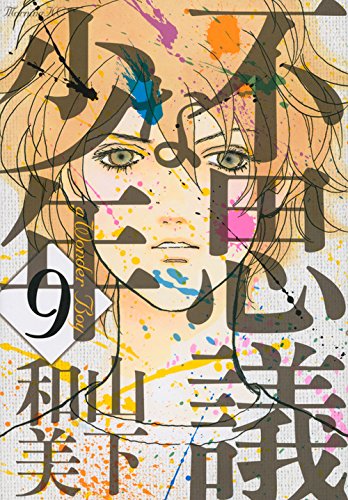
Kazumi Yamashita's manga has been serialized irregularly in "Weekly Morning" since 2001, and moved to "Morning Two" in 2006. A "boy" appears in various times, countries, and situations, and continues to look at the activities of the people there. Nine volumes have been published through 2014.
Turning Point Times
A fact that cannot be moved because the boy himself is a boy.
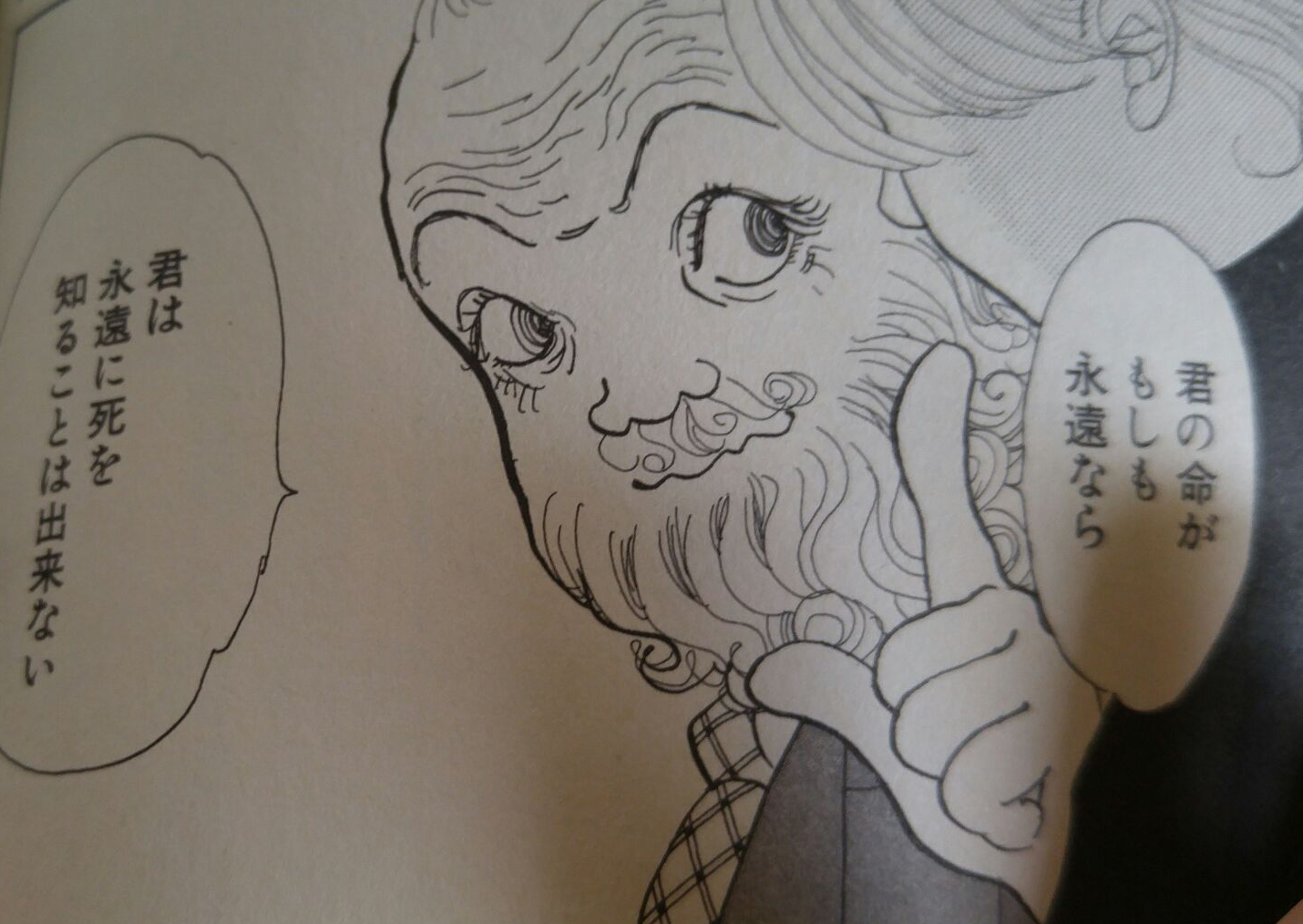
In the second volume, "Socrates," the boy wonders how someone like Socrates could accept the death penalty as it is and choose to die without escaping, but Socrates says that he must obey the laws of the place where he lives and that he is looking forward to the "afterlife.
In order to show him that "man is a fool" and that "there is no afterlife," the boy sends Socrates, just before his execution, to travel through time and brings him to the present day, far in the future from the time he spent there.
Socrates, as a philosopher, considered it important to "dialogue with someone," but he is stunned by the reality that no one is looking for "dialogue" in the present day.
In a scene in which a tired businessman who is about to commit suicide stops by talking to his boss on his cell phone, he quotes his own words, "I know that I do not know," and says to the boy, "This proves that I am still alive, even after 2,400 years. I know that I am still alive after 2,400 years.
The boy refutes that this proves nothing and that there is no afterlife, but Socrates twists his theory by saying, "If your life is eternal, then you cannot know death forever.
Socrates accepts death, which he cannot know because he is a "boy," without fear when he returns to Athens.
Socrates' famous line, "I know that I do not know," overlaps with the boy's own question, "Why are you interested in human beings? overlaps with the boy's own question, "Why are we interested in human beings?" and convinces both the boy and the reader that it is because there is still something in human beings that can satisfy his curiosity.
Man lives for his own satisfaction.
Humans live to satisfy their own desires, called ego.
The boy enjoys watching it, but sometimes there are people who do not have that desire at all.
It is easy to see how he can coerce those who have desires to take revenge or make a fortune.
In fact, the boy has done it many times.
But in "Tetsuo," the first of the two volumes, things are a bit different.
Tetsuo was forced to leave his hometown by the atomic bombing of Hiroshima and moved to Hokkaido.
He sings to children there, but never on the big stage.
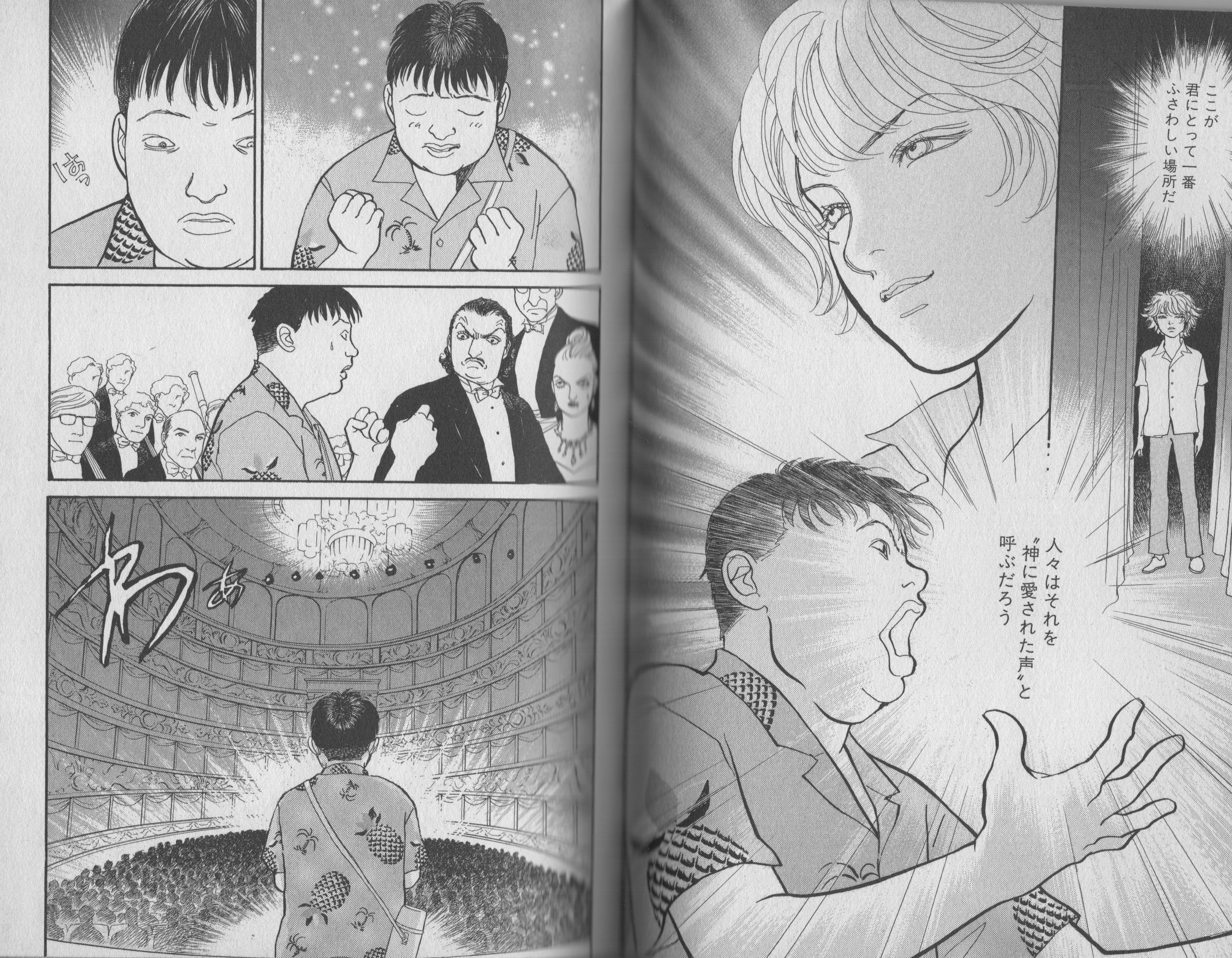
The boy takes him up on stage to have his voice recognized around the world.
However, Tetsuo later escapes this illusion and realizes that a dog is listening to his singing, and says, "Well, what the hell, I don't know if anyone will recognize me or not..." He then goes on to live in the aftereffects of the atomic bombing.
He later dies from the aftereffects of the atomic bombing. The boy bursts into tears and says regretfully, "I finally understand, I really loved your song.
There exists an "ego" of the boy who has seen only egos and wants people to recognize what is truly beautiful, and the boy understands this.
The boy is not human, but we can see how he is more attached to humans than to this.
Under thousands and hundreds of millions of miracles.
In Volume 3, "The Three Suetsugu Family Members," the boy interferes in a different way than before.
Why are you interested in human beings? The boy, who is asked "Why are you interested in humans?" at the beginning of the film, pretends to be the eldest son of the Suetsugu family, saying "It is not a bad idea to try to find out.
The family is a typical Japanese nuclear family, with a son who eats while watching TV, a father who has been laid off, a mother who is aware of it, and a cat.
The father had been pretending to go to work since his restructuring. He is unwilling to pay attention to the sight of his son listening to music and eating at a different table instead of at the dining table.
The boy uses his magical powers to show his father how his ancestors lived.
The father is happy and sad to see what his ancestors have been up to.
The mother and the child leave, and the father, no longer having to pretend to go to work, spends his days more aimlessly.
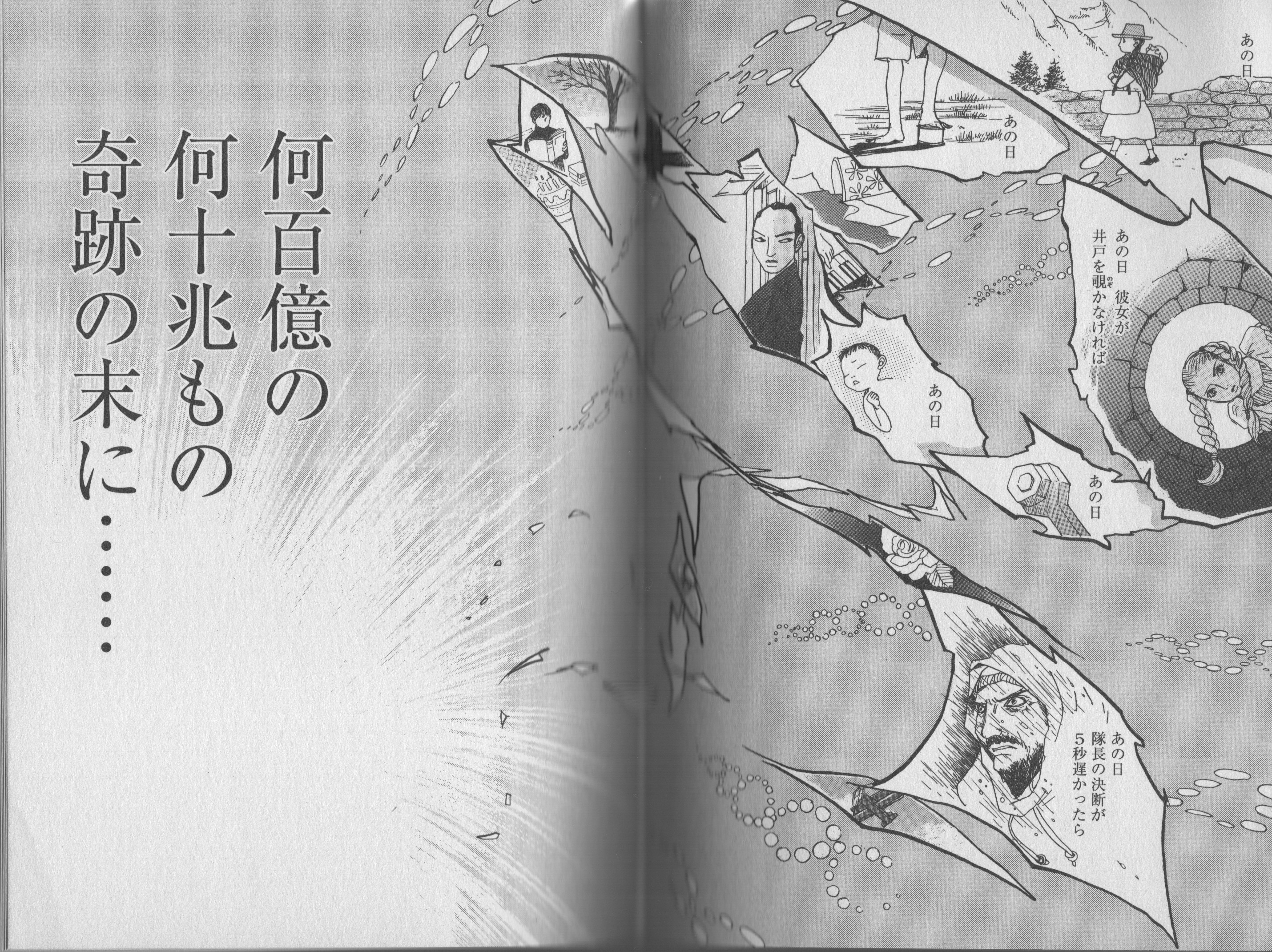
On his way home from shopping, he meets a boy who looks like his eldest son. There, he hears the story of his ancestors once more, and the boy tells him that "we have gathered around the table as a result of overcoming all possible options and choosing our possibilities.
The father takes another look at the everyday life that he has spent in a daze and considers the possibility of once again sitting around the table as a family.
He realizes that the "miracle" is not something outrageous, but that everyday life is the "miracle.
This film teaches us the importance of ordinary life and the fact that we live in the midst of countless miracles.
Although it is not a complete answer to the boy's question, "Why are you attracted to a human being?", it presents the interesting aspect of being human, "Knowing that the accumulation of every day leads to a miracle in the future makes us stronger and more positive," and the boy sees it through.
Famous quotes and lines from The Mysterious Boy
"Humans are strange. ......"
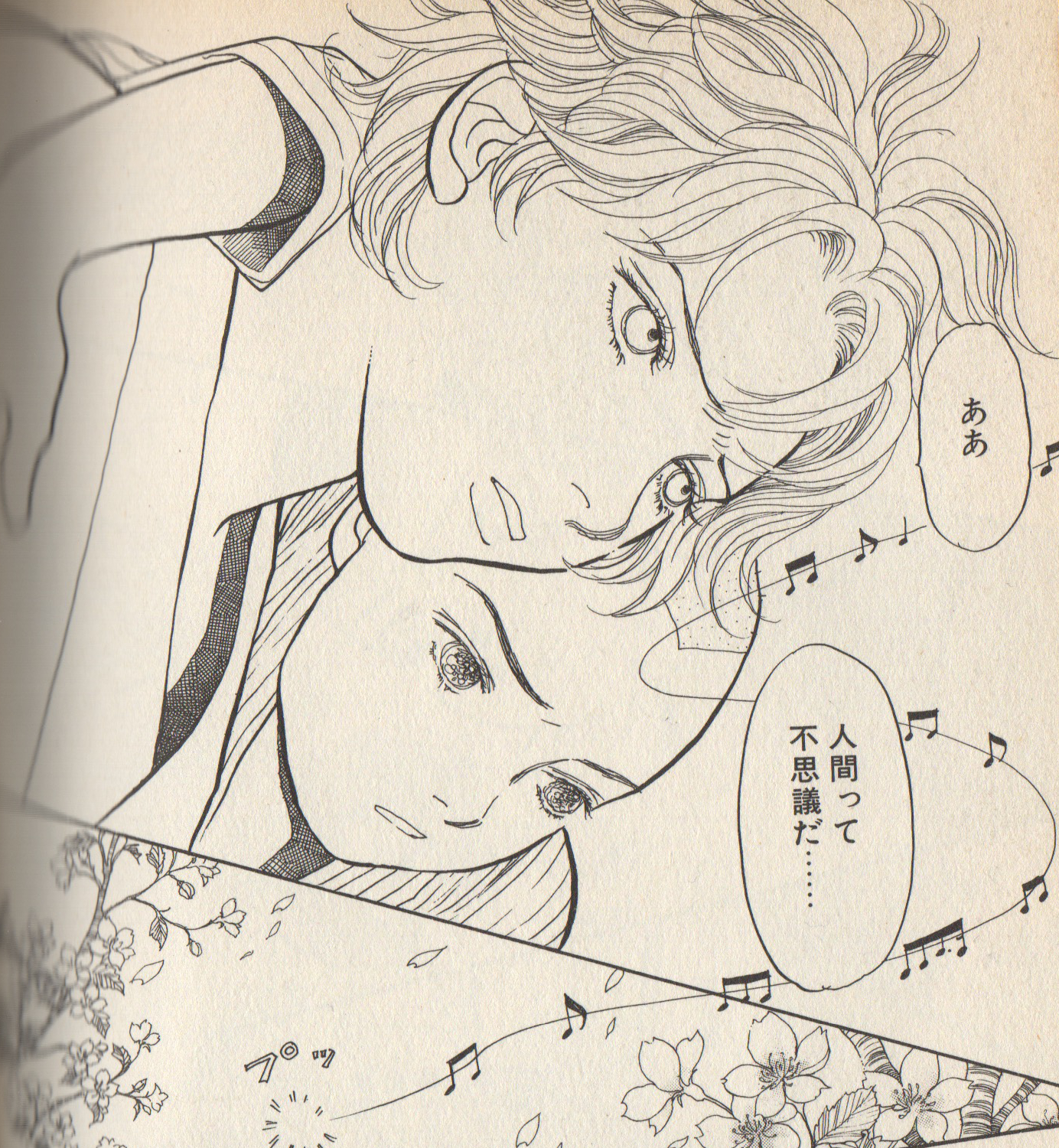
This line appears in "Mansaku and Naojiro," vol. 1, p. 86.
A boy dressed as Mansaku's younger brother, Naojiro, hears Mansaku's wish about the property dispute in the Onimai family and says, "I wish it would all disappear! He heeds Mansaku's wish and floods the entire area.
He then tells Mansaku, "What you wished for is not 'I wish it would all disappear,' but 'It will all disappear and be mine.
This murmur, "Human beings are strange ......" is a common impression of the boy in this series, and because of this feeling, the boy continues to look at human beings.
I really loved your song."
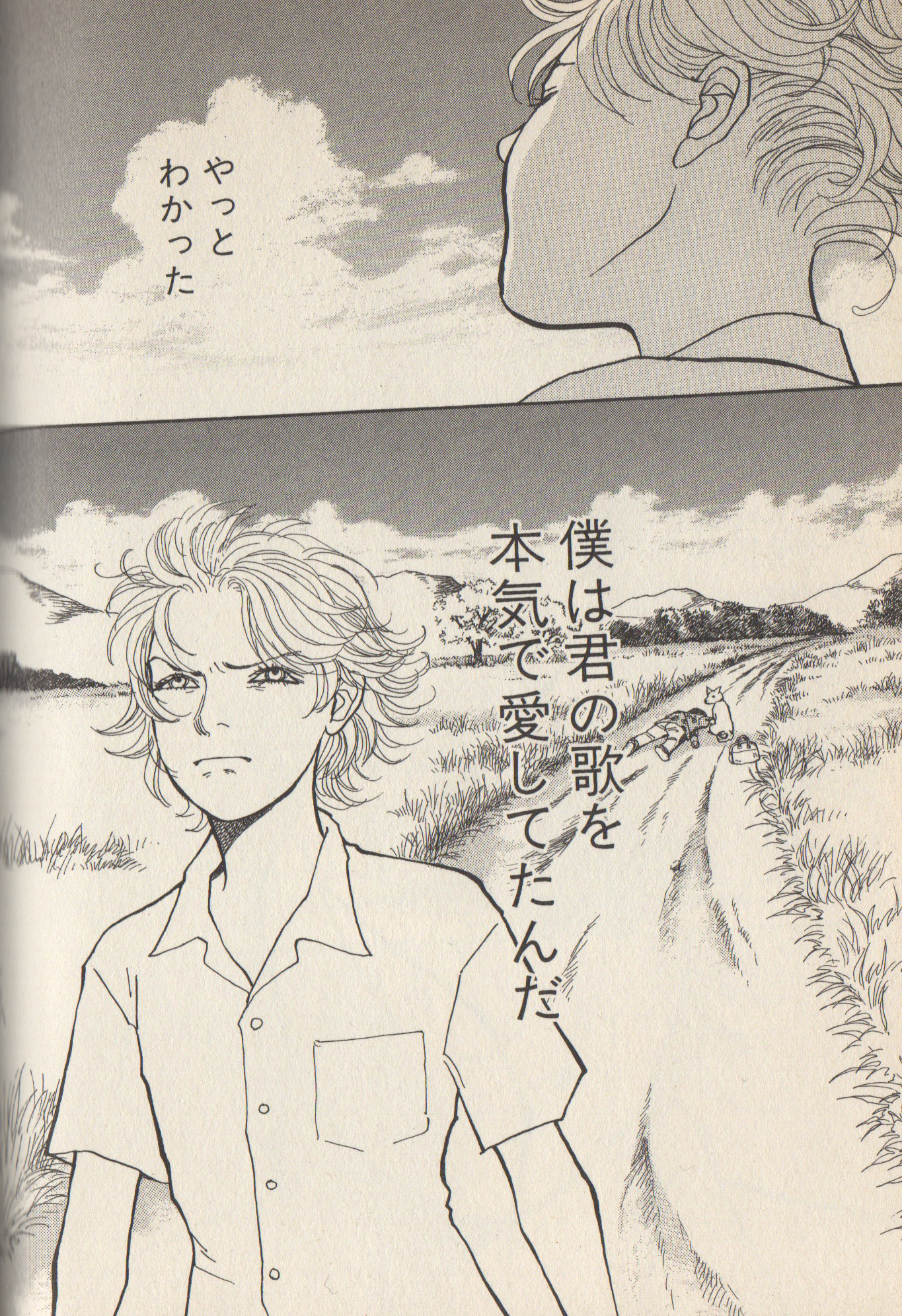
The last line of "Tetsuo," vol. 2, p. 52.
As Tetsuo is dying from the aftereffects of the atomic bombing, the boy ponders his confusion at those around him who did not appreciate his singing voice, and at Tetsuo who was not at all unhappy about it, and why he felt the way he did.
The boy makes his feelings clear, and you can tell that he is really angry at Tetsuo's death and at the "people around Tetsuo who don't understand the value of singing".
Hopefully I'll meet lots more people in the future."
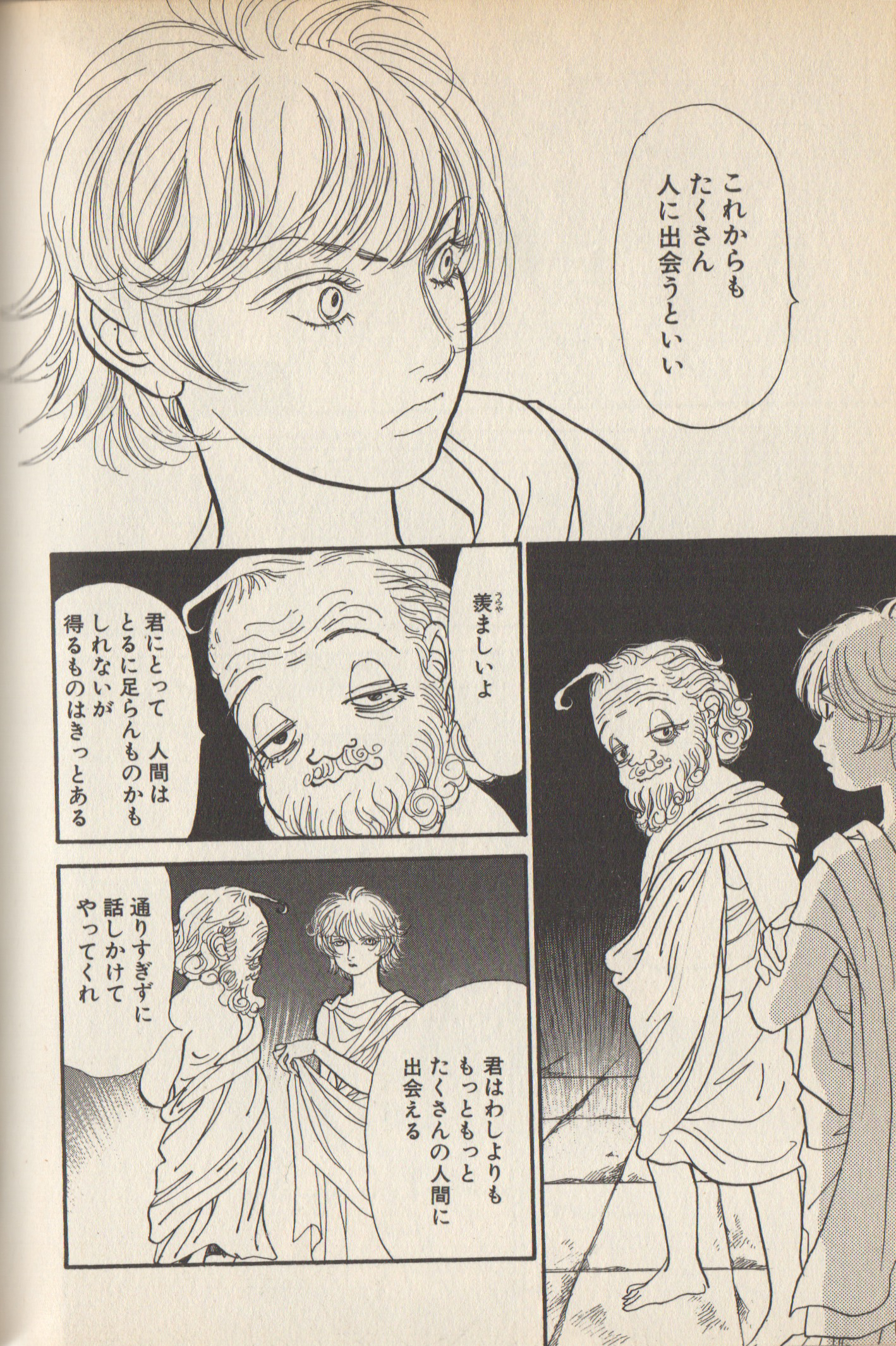
From the end of "Socrates," vol. 2, p. 140.
Socrates' series of lines to the boy, beginning with the line "I hope to meet many people in the future," is a scene in which Socrates himself, who has been executed and is about to die, entrusts the boy with the feeling that he would do so if he had eternal life, without being forced to do so.
The boy returns to his days of observing human beings again with this piece of Socrates' words in his arms.
"No. ...... I won't throw it away even if it dies. ......"
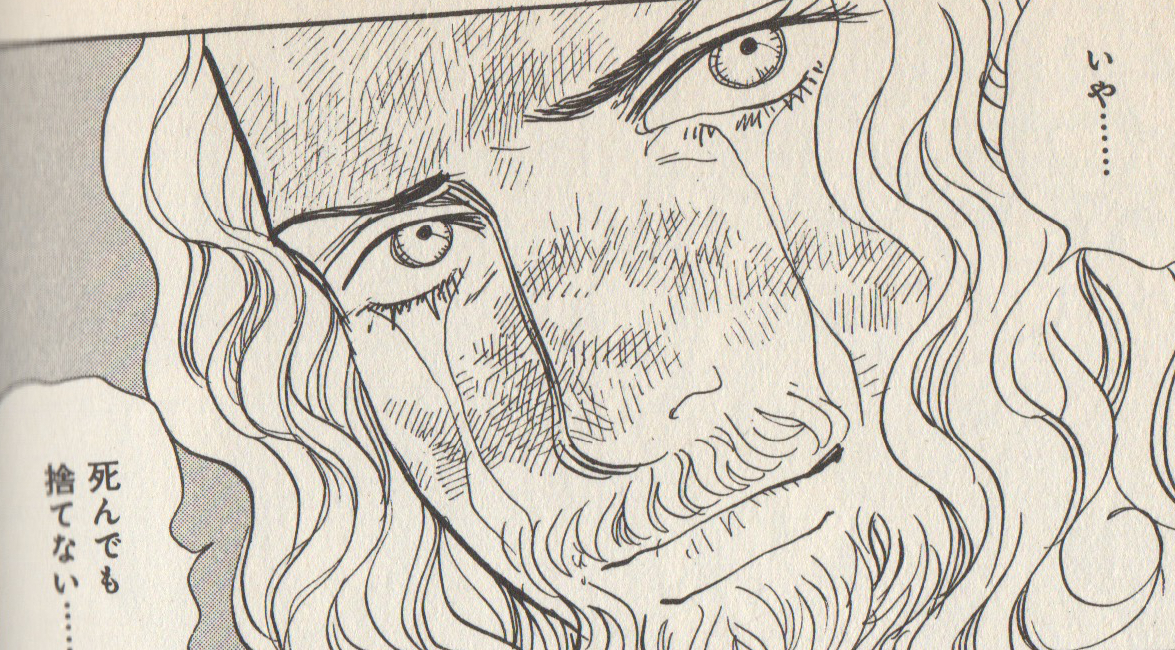
From "Sir Richard Wilson and Graham Becker," vol. 3, p. 188.
In this story, the ship's crew, except for Sir Wilson and Graham, abandoned ship and died while surveying Antarctica. Sir Wilson was the captain of the ship and Graham was a suspicious man who had come aboard illegally and was forced to do menial work. They are forced to live in distress alone together, and Sir Wilson is obsessed with the delusion that Graham boarded the ship of the Antarctic exploration team led by him for revenge, and he wants to kill Graham. However, when he hears Graham say, "If I had to say, Captain Wilson is the one thing I would save until the end," he relaxes and realizes that the one thing he would save until the end is Graham.
However, he can only choose one thing to save until the end.
In the end, Sir Wilson dies in his delusion, avenged by Graham. It is a quote left by Sir Wilson, who tried to overcome himself in the face of death.
I, too, live for revenge."

Tags
Contents
- 『不思議な少年』の概要
- The Story of "The Mysterious Boy
- 『不思議な少年』の登場人物・キャラクター
- Who is the boy?
- usual
- English aristocratic style
- Avalokitesvara Bodhisattva
- Greek style
- Inuit-style ethnic costume
- uniform
- siren (in Greek mythology)
- butler
- appearing young
- clothing
- female form
- T-shirt
- bartender
- Turning Point Times
- A fact that cannot be moved because the boy himself is a boy.
- Man lives for his own satisfaction.
- Under thousands and hundreds of millions of miracles.
- Famous quotes and lines from The Mysterious Boy
- "Humans are strange. ......"
- I really loved your song."
- Hopefully I'll meet lots more people in the future."
- "No. ...... I won't throw it away even if it dies. ......"
- I, too, live for revenge."
- That's emotion.
- Songs.
- This is my job!"
- You're the one they'll be looking for forever, even if they don't find you."