
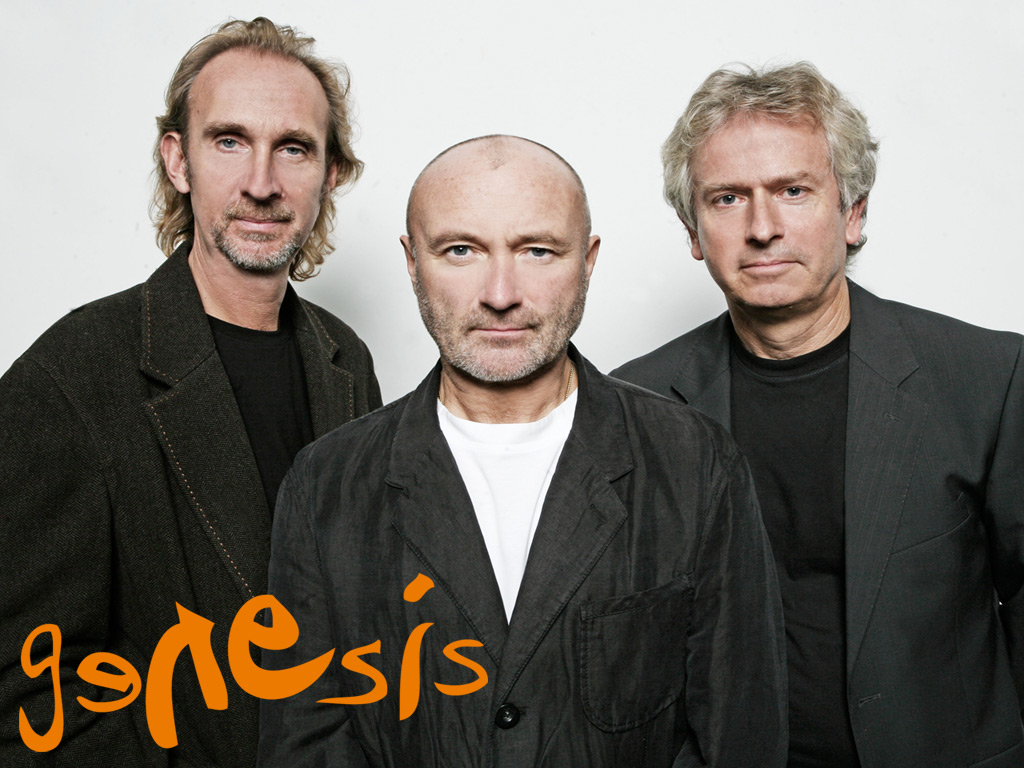
One of the five major progressive rock bands from the U.K. Formed in 1967, the group was led by Peter Gabriel, who left the band in 1975. Formed in 1967, the band was led by Peter Gabriel, who left the band in 1975. The band has been virtually inactive since 2008 and was inducted into the Rock and Roll Hall of Fame in 2010.
Band History
formation
Source: s-media-cache-ak0.pinimg.com
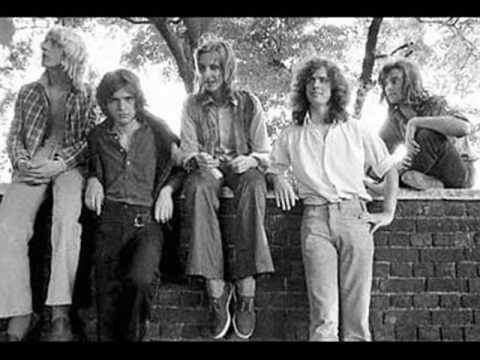
In 1967, classmates Peter Gabriel (vocals), Anthony Phillips (guitar), Tony Banks (keyboards), Mike Rutherford (bass), and Chris Stuart (drums) from Charterhouse School, a public school in Surrey, England, formed the band while still in school. Before forming the band, each member had experience in semi-professional and other musical activities. Gabriel was in an on-campus band called "The Anon" and became friends with Mike Rutherford, who was also in the group. Tony Banks was good friends with Gabriel, and Rutherford and Anthony Phillips, who were also good friends, wrote songs and made demo tapes at each other's homes, which led to the five of them forming the band.
Early years of activity (1969~1975)
Source: indieethos.files.wordpress.com
In 1969, they released their first album "From Genesis to Revelation" (Japanese title: Genesis), but they were unable to actively produce the album due to the fact that an unknown group of the same name was active in the U.S. at the time, and the content of the album, which was created in response to the producer's opinion, swung in a drastically acoustic direction. The album was not well received at all, and was even called "the second best of the Bee Gees" because of its acoustic orientation.
In addition, Chris Stewart left the band at the time of recording, coinciding with the time when each member was considering his own future plans during the making of the album. Chris Stuart left the band at the time of recording, and John Silver, who had replaced him on drums, left the band to attend college at the same time the recording was completed.
The four remaining members then discussed what to do with their future musical activities. Phillips and Rutherford decided to pursue music full-time, to which Gabriel and Banks agreed, and with John Mayhew on drums, Genesis was born as a professional band.
In 1970, the band released its second album, "Trespass," which featured a more complex structure, longer playing time for each song, and a more progressive rock approach than the first album. However, some of the group members who had seemed to have solidified their unity left the group. One of the group's founders, Anthony Phillips, left the group, citing musical differences. He was replaced by Steve Hackett, who had been active in "Quiet World. Also, Mayhew, whose drumming skills had been disputed by the members, was fired, and Phil Collins, a member of "Flaming Youth," filled his place. Here was the lineup of the members of the first golden age of Genesis.
The group released its third album, "Nursery Crime" in 1971. The songs took a more progressive turn, and together with a connection to English fantasy literature, the album marked the direction of the group's musicality.
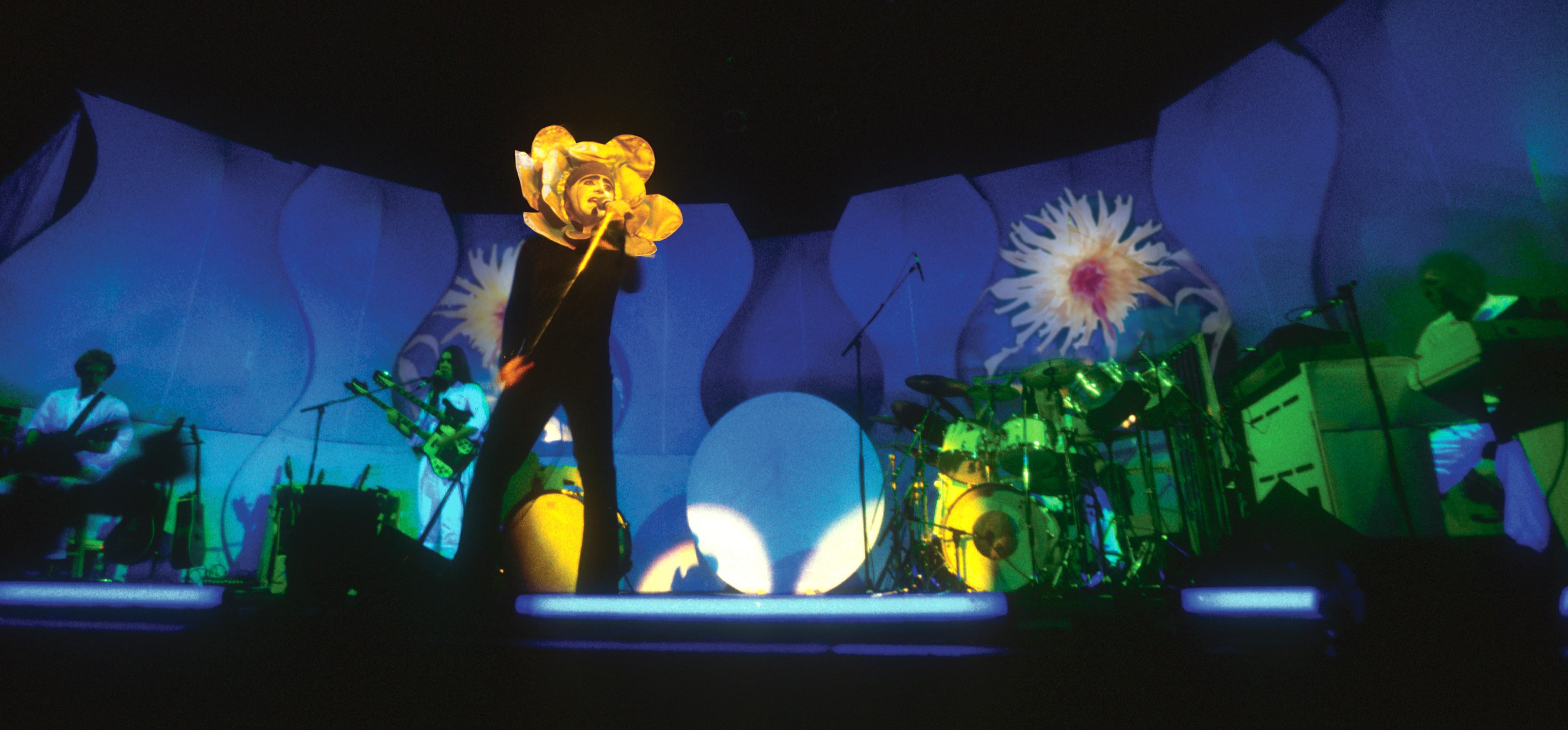
The group continued to release albums year after year, and their 1974 album "The Lamb Lies Down on Broadway" reached No. 40 in the U.S., establishing their reputation as a progressive rock band. The band also established its popularity, especially in European countries, thanks to Peter Gabriel's fantastic live performances.
However, Gabriel, who had long been troubled by musical differences with the other members, decided to leave the group in 1975 due to a series of personal events, including marriage and childbirth. In 1975, Gabriel decided to leave the group and pursue his career as a solo artist.
The Phil Collins Era
Source: 3.bp.blogspot.com
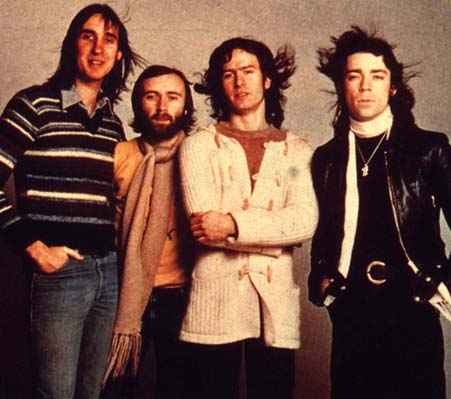
After Gabriel left the band, drummer Phil Collins took over lead vocals as well. 1976 saw the release of the album "A Trick of The Tail". The band's sound changed to a new sound with a more rhythmic emphasis. Bill Bluford joined the band temporarily during this period. This was because he was taking the drummer's place when Phil sang lead vocals at live shows. Soon after, Chester Thompson, drummer for Frank Zappa, joined the group as a session musician. He has remained a semi-regular member of the group ever since.
In 1977, during the making of the live album "Second Out," guitarist Steve Hackett left the group, and the group's later members were established in 1978 with the release of "...And Then There Were Three...". The members of Genesis are established. Mike Rutherford took over bass and guitar duties, rotating with Darryl Steemer, who became an associate member of the group, on live shows and on certain songs.
The group's songwriting style is "...And Then...." The group's songwriting style would change to a more pop-influenced style, with a stronger Phil Collins influence. In fact, the album reached #3 on the UK charts and #14 on the U.S. Billboard charts, establishing the group's popularity in the United States. The single cut "Follow You Follow Me" reached No. 7 in the UK charts, the first time it had reached the top 10 in the UK.
The group continued to release albums one after the other, and as they took a more pop-oriented approach, they reached their peak with "Invisible Touch" released in 1986. The single "Invisible Touch" reached No. 1 in both the U.S. and U.K. The album reached No. 1 on the U.K. album chart and No. 3 on the U.S. Billboard album chart. The single "Invisible Touch" reached No. 1 in both the U.S. and the U.K. The band became a popular rock band worldwide, both in name and reality.
Phil Collins' retirement and dissolution
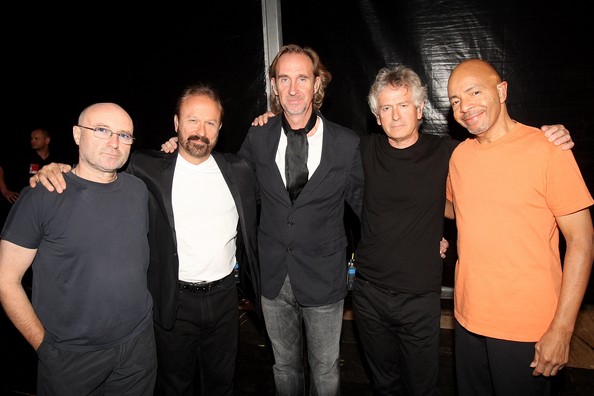
Source: www1.pictures.gi.zimbio.com
When "Invisible Touch" was released, Phil Collins had already established his popularity as a solo artist, and his third solo album "No Jacket Required," released the previous year, reached No. 1 in both the U.K. and U.S. album charts. He was also extremely busy participating in live aids at the time, filming dramas and movies, and collaborating with other artists such as Eric Clapton.
In 1991, the album "We Can't Dance" was released. It became a bestseller around the world and once again showed Genesis as a global supergroup.
However, despite the glamorous public appearances, Phil is said to have had many problems in his personal life: when he divorced his second wife, Jill, in 1996, he received a lot of media bashing about his privacy, which led him to announce his retirement from music.
In 1997, after Phil left the band, the album "Calling All Stations" was released with Ray Wilson on vocals, but it was not well received worldwide, and the band disbanded the following year.
Phil's return, another retirement, and the cessation of group activities.
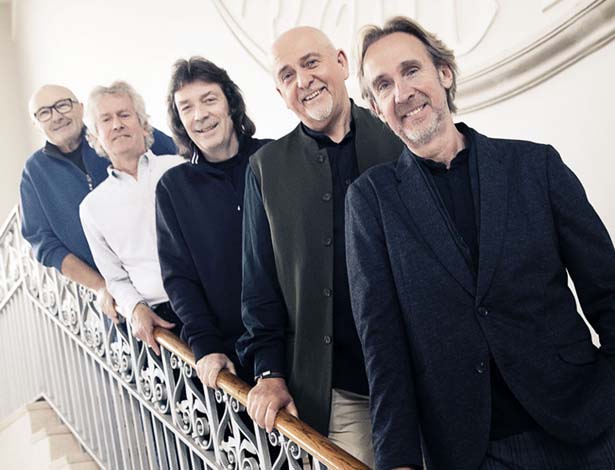
Source: www.genesis-fanclub.de
In 2006, Phil Collins, Tony Banks, and Mike Rutherford announced the resumption of the group's activities. In 2007, the "Turn It On Again" tour took place.
However, in 2008, Phil announced his retirement again. Due to the aftereffects of a spinal cord transplant surgery he had undergone in the past, he has temporary paralysis of the sensation in his hands, and he also suffers from sudden hearing loss in his left ear. His activities as a member of the golden age of the band have virtually ended.
Members of Genesis
Main Members
Anthony George "Tony" Banks
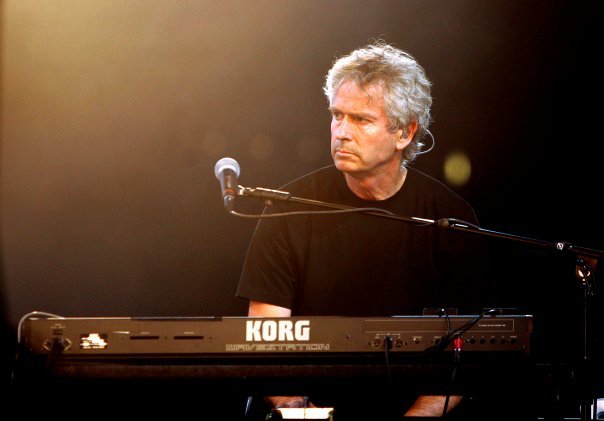
Source: img2-ak.lst.fm
Born: May 27, 1950 Responsibility: Keyboard
Born in East Horsley, East Sussex, England. Taught classical piano and guitar from an early age. Met Peter Gabriel at Charterhouse School, a public school, and started playing in a band. Later, he formed Genesis with Mike Rutherford and Chris Stuart.
The band is said to form the pillar of the band's musicality. On stage, in contrast to Gabriel and Phil's flamboyant performances, he is characterized by his almost poker-faced, nonchalant performance. His layered sound and chord progressions are reminiscent of classical music, and it was his musicianship that made Genesis known as a progressive rock band, but it also brought them into conflict with Gabriel and Steve Hackett, which contributed to their departure from the band.
He is one of the current members of the band, along with Mike, who has been a member of the band since its inception.
He was awarded the Prog God (Prog God) at the Progressive Rock Awards 2015.
Mike Rutherford, Michael John Cloete Crawford "Mike" Rutherford
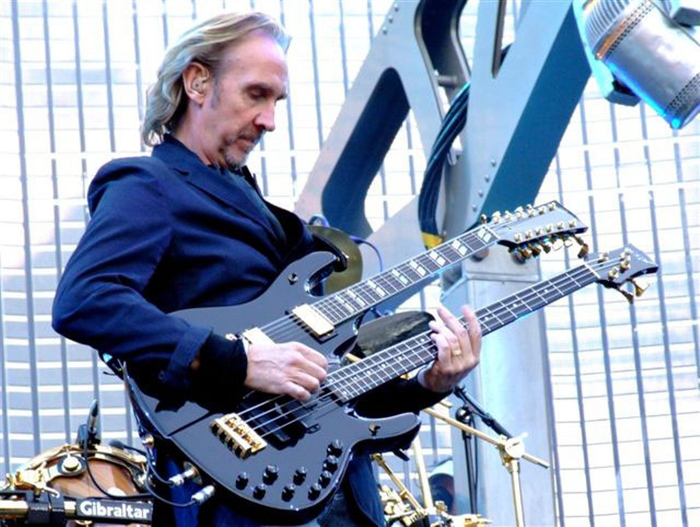
Source: img1.liveinternet.ru
Born: October 2, 1950 Responsibility: Bass, Guitar
Born in Guildford, Surrey, England, he was given a guitar at the age of eight and played it in public for the first time at the age of nine with a band called "The Chesters".
At Charterhouse School, he met Anthony Phillips and formed "The Garden". The band merged with Gabriel and Banks' "Anon," also an on-campus band, and Genesis was born.
Although he plays bass on the band's credits, he also plays guitar on some songs. As a student, he had been exploring the 12-string guitar with Phillips, and can be seen on stage using a double-necked 12-string guitar and 4-string bass.
His guitar and bass skills are not particularly flashy, but they are characterized by complex playing that is not confined to chords. As a bassist, his style of playing is not to bring the bass to the forefront, but rather to embellish the music, but his groove is not stoic and low-pitched, but rather bounces around the song like a rubber ball. His phrasing is similar to that of a bassist; he does not play like a regular bassist, but more like a guitarist.
As a solo act, he formed Mike + The Mechanics, which released a successful single "The Living Years" in 1989, which reached No. 1 on the U.S. charts.
He is one of the two remaining original members of the band.

Contents
- Band History
- formation
- Early years of activity (1969~1975)
- The Phil Collins Era
- Phil Collins' retirement and dissolution
- Phil's return, another retirement, and the cessation of group activities.
- Members of Genesis
- Main Members
- Anthony George "Tony" Banks
- Mike Rutherford, Michael John Cloete Crawford "Mike" Rutherford
- Philip David Charles "Phil" Collins
- associate member
- Chester Cortez Thompson
- Daryl Stuermer, Daryl Mark Stuermer
- discography
- From Genesis to Revelation
- Trespass
- Nursery Cryme
- Foxtrot.
- Selling England by The Pound
- The Lamb Lies Down on Broadway
- A Trick of The Tail
- Wind and Wuthering
- ...And Then There Were Three...
- Duke
- Abacab.
- Genesis
- Invisible Touch
- We Can't Dance
- Calling All Stations
- Genesis' signature song
- The Musical Box
- Supper's Ready
- Dancing With The Moonlit Knight
- I Know What I Like
- Firth of Fifth
- Cinema Show
- The Lamb Lies Down on Broadway
- Dance on a Volcano
- Los Endos
- Afterglow
- Follow You, Follow Me
- Behind The Lines
- Turn It on Again
- Abacab.
- Mama.
- That's All
- Invisible Touch
- Tonight Tonight Tonight
- Land of Confusion
- In to Deep
- Throwing It All Away
- Episodes and anecdotes of Genesis
- Gabriel's stage costume
- Phil as lead vocalist
- VALI LITE
- Twin Drums Session
- Rutherford 12-string guitar
- Status of group activities at this stage