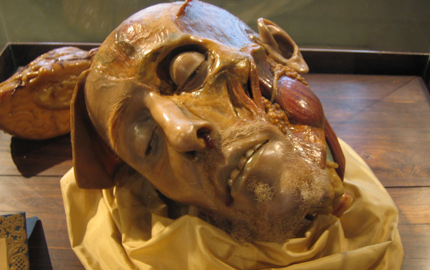
Moulage is a medical educational specimen, said to have originated in 16th century Renaissance Italy, where wax models of dissected bodies were used as molds. Is it art or grotesque grotesquerie? We will introduce you to a number of moulages that are scary but somehow fascinating.
It all started with the Renaissance.
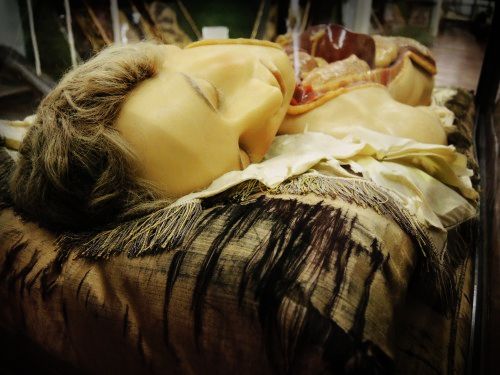
The time was 16th century Italy, and at that time, from a Christian point of view, it was taboo to dissect a corpse.
It was considered taboo to dissect a corpse from a Christian viewpoint. However, in the 16th century, it was considered taboo to dissect a corpse from a Christian perspective,
doctors and scholars who were willing to break the commandment to dissect for the advancement of medical science, the powerful Medici family gave them a chance.
The Medici family, a powerful family at the time, gave a chance to doctors and scholars who were willing to break the commandment to dissect for the advancement of medical science.
The Medici family, who were powerful at the time, took a chance and dissected a body in Florence, far from the Vatican, and made a wax model of it for later study.
and made a wax model of the body and preserved it for later study. This was
This is said to be the beginning of moulage, which means "molding or shaping" in French.
It is said that this was the beginning of moulage, which means "molding and shaping" in French.
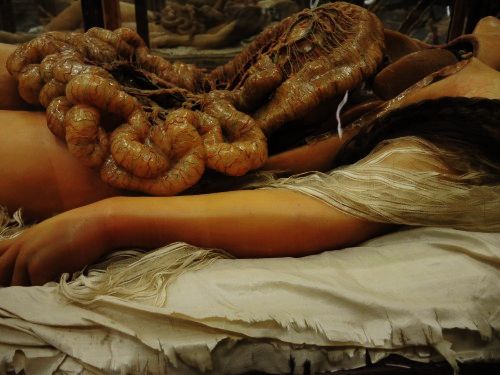
The Museo di Specola in Florence houses a collection of 16th century
The wax figures are still on display in their original form.
The wax specimens are posed with their internal organs exposed, sometimes with their skin peeled off, and with their blood vessels exposed.
and sometimes posed with their blood vessels exposed.
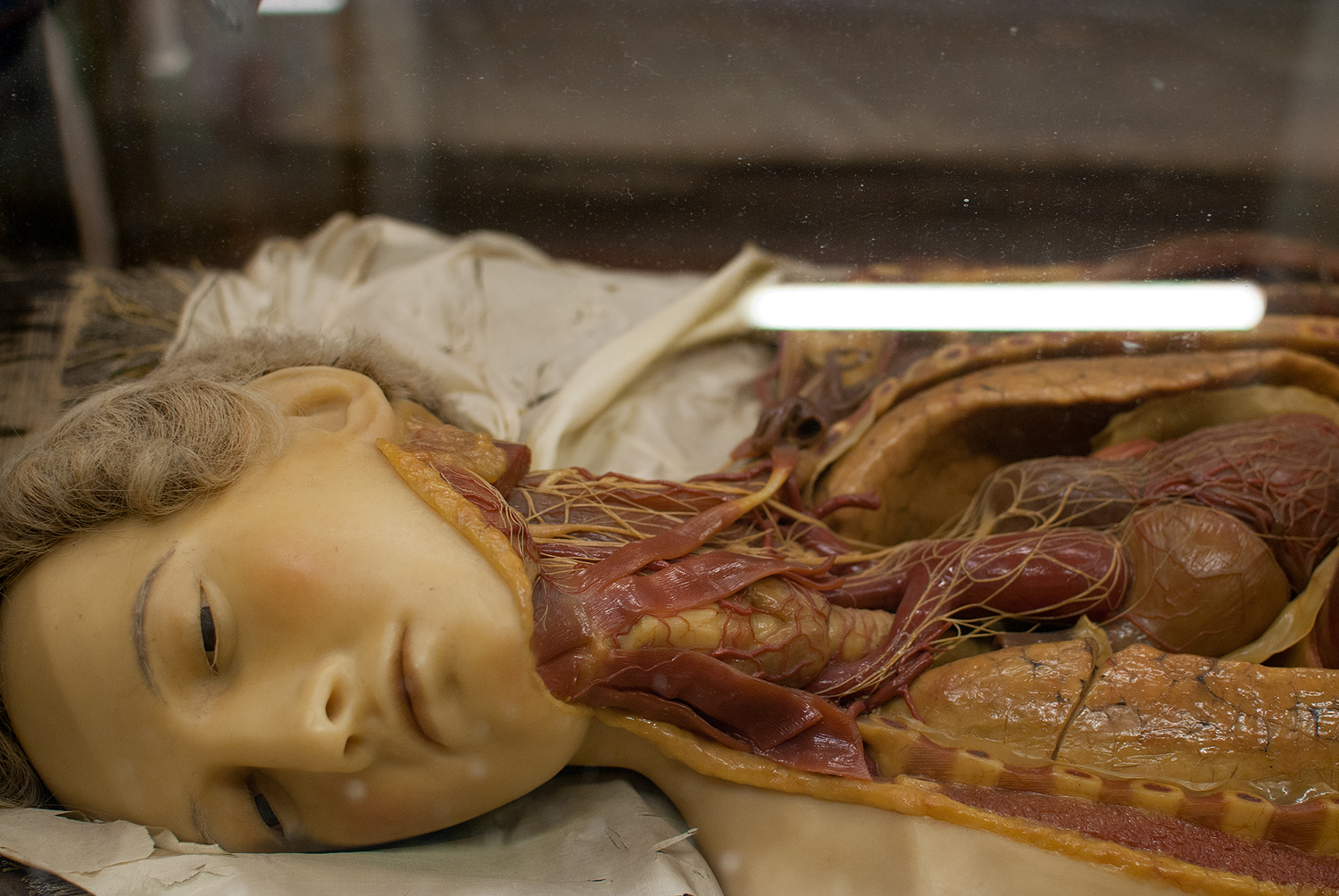
The melancholy expression on their faces is so melancholy that they appear to be in a state of ecstasy.
Zumbo, the magician of human specimens
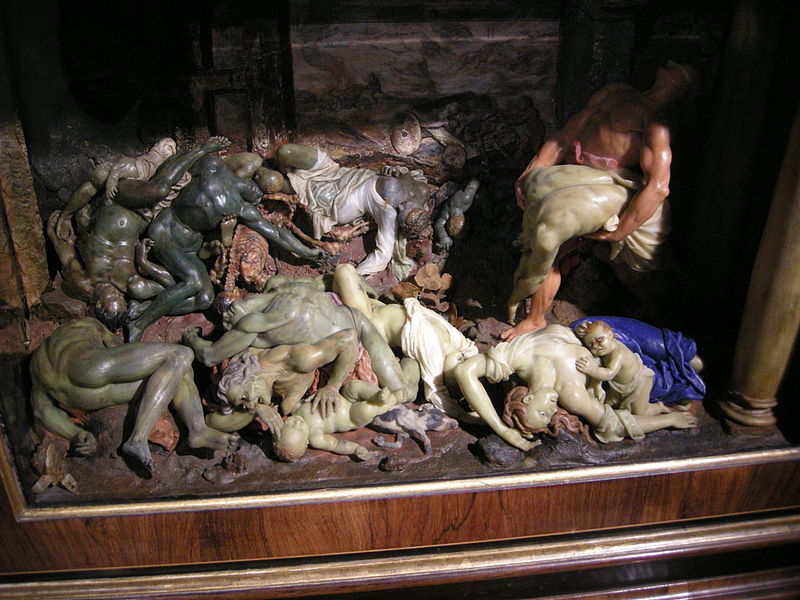
The most talented here was Gaetano Zumbo (1656-1701).
Originally a Neapolitan craftsman, he moved to Florence.
His work "Terror," a waxwork reproduction of a city filled with the bodies of plague victims, is a realistic depiction of corpses rotting in the streets.
The work entitled "Terror" realistically depicts the decomposition of a corpse.
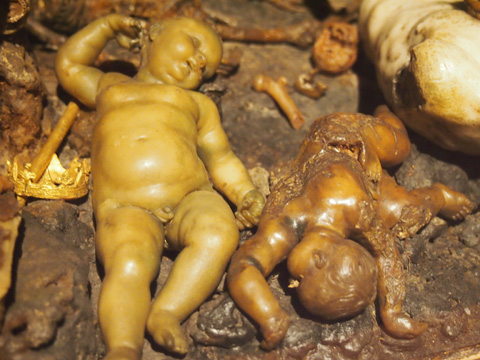
An "angel" who dies and rots away. No matter how young and beautiful one is
cannot escape death.
Moulage in the 19th century
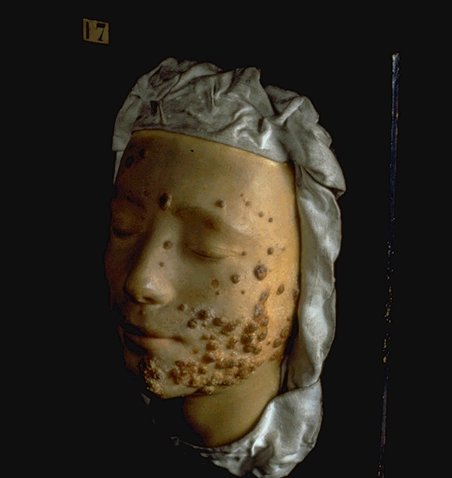
Later, a number of moulages were made for educational purposes, mainly for dermatological diseases.
mainly for teaching dermatological diseases. In an era when color photography was not available, moulage
the symptoms of dermatological diseases. A plaster mold of the affected area was
wax was poured into it, hardened, and colored to look like the real thing.
and colored to resemble the real thing.
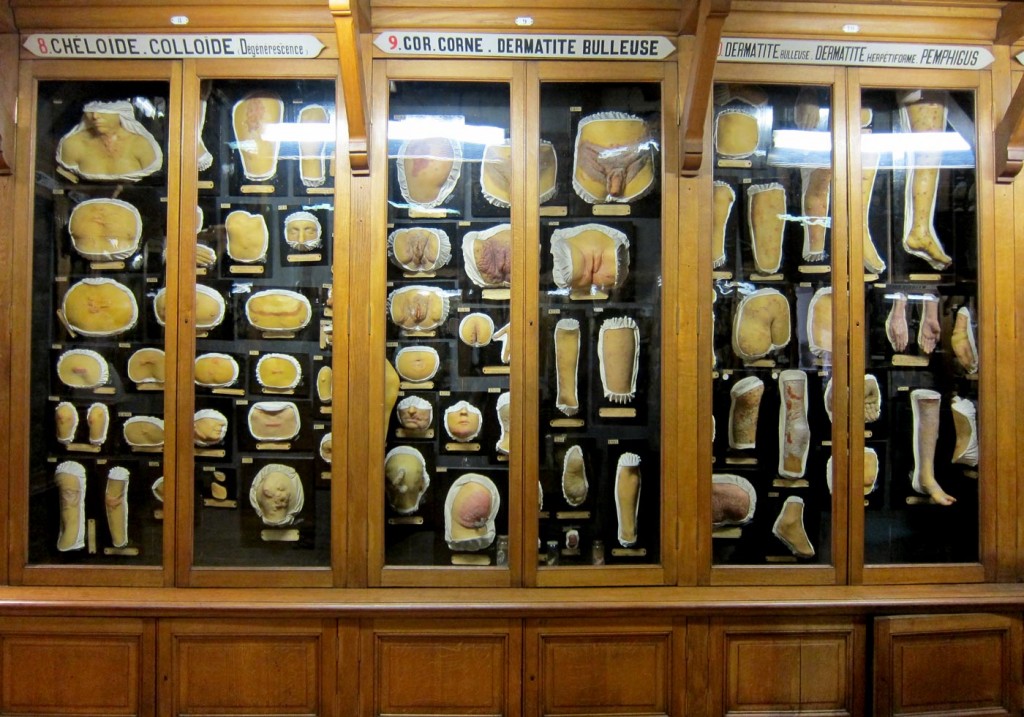
The world-famous collection of moulage for skin diseases is at the
Hospital Saint-Louis in France. Jules Barletta (1834-1923), who
created more than 2,000 pieces and was awarded the Legion of Honor.
Most of his works are housed in the Saint-Louis Hospital.
Moulage found in Japan
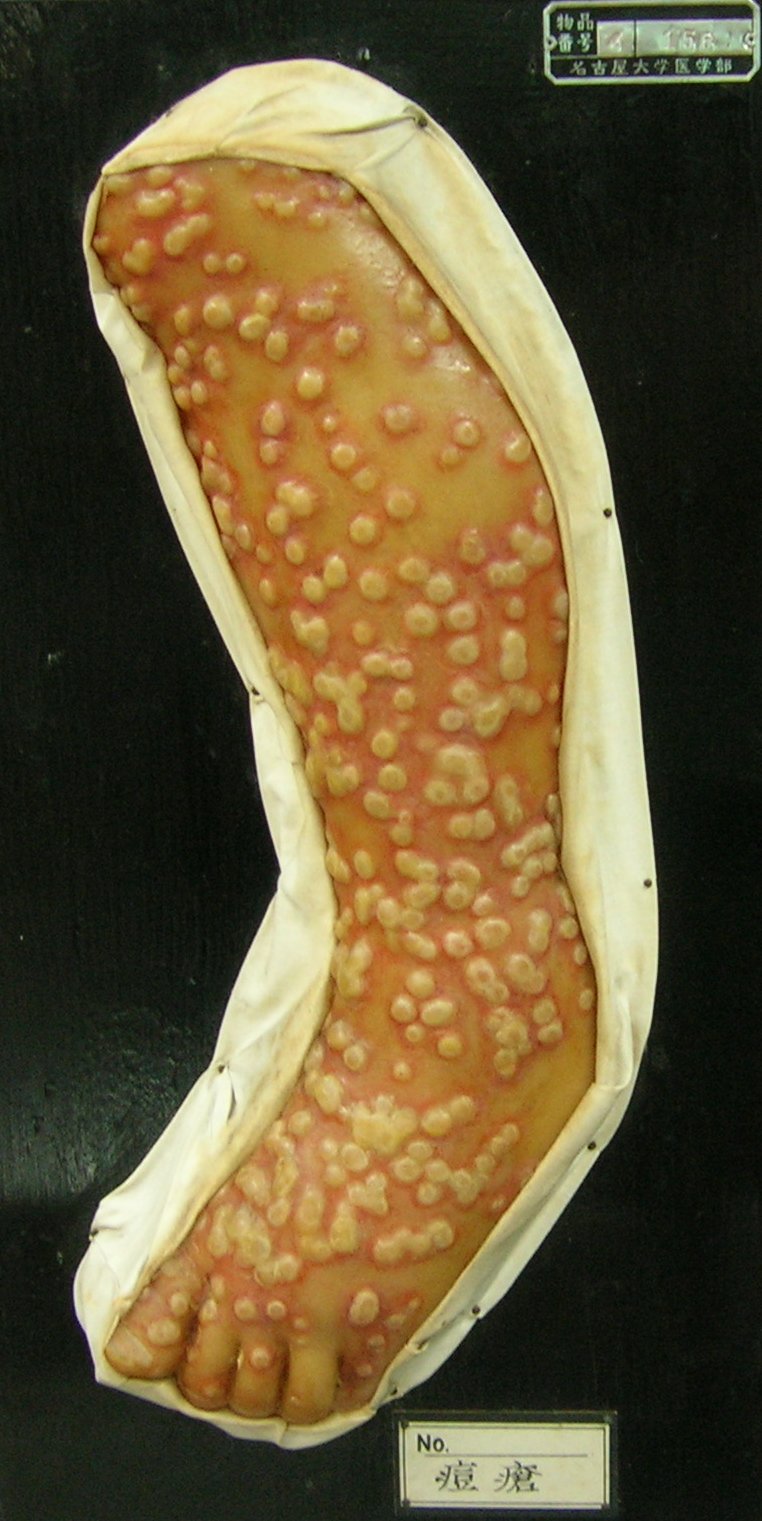
Moulage was introduced to Japan during the Meiji period (1868-1912) and was produced until the 1950s.
Some of them are on display at the University of Tokyo Museum and other museums.