
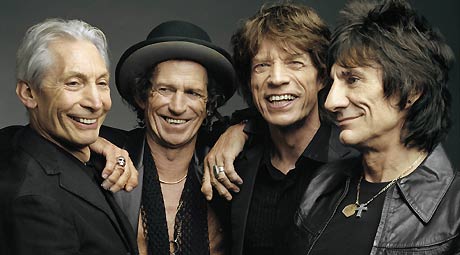
The Rolling Stones are a British rock band that has never broken up since its formation in 1962. Along with the Beatles, the Rolling Stones have been described as "the world's greatest rock 'n' roll band" and have earned the respect of countless musicians.
In 1989, the band was inducted into the Rock and Roll Hall of Fame.
History
formation
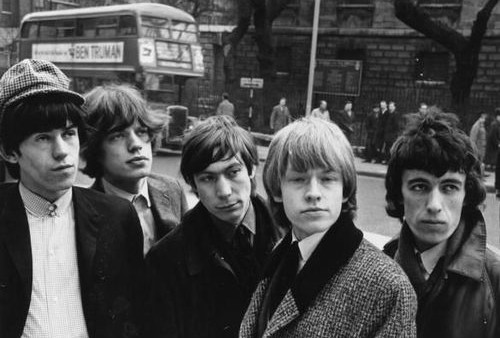
The story begins when Mick Jagger and Keith Richards, who had originally been childhood friends, met again by chance on a train platform in high school.
At the time, Mick was carrying a record of black music (blues, R&B, etc.) that was popular among young people at the time.
The two found that they shared the same taste in music and revived their relationship, which led directly to the formation of the band.
Brian Jones joined the band as its first leader, and the band was renamed "The Rollin' Stones" after a Muddy Waters song (later renamed "The Rolling Stones").
In 1962, the band played its first show at the Marquee Club in London.
In the same year, Bill Wyman (bass) and Charlie Watts (drums) join the band, and the original members of the band are now present.
The following year, 1963, the band made its major label debut with the single "Come On" on Decca Records.
The band was introduced as a rival to the Beatles, who had debuted the previous year and boasted explosive popularity, and quickly became a top band.
In the early days, the band focused on cover songs, but gradually began to write original songs, and in 1965, with "Satisfaction," they scored their first No. 1 hit in the United States.
The band continued to have hit after hit after hit, including "Lonesome World," "Wet in Black," and "Jumpin' Jack Flash," but the songwriting style of Mick and Keith deteriorated their relationship with their leader, Brian, and Brian left the band after their best album, "Beggar's Banquet," which is still considered their best work. Brian left the band after the release of their best album, "Beggars Banquet".
Brian's Death - The Altamont Tragedy
On July 3, 1969, one month after leaving the band.
Brian was found drowned in his swimming pool.
He was already addicted to drugs, but his death remains a mystery.
Two days later, the band held a free memorial concert in Hyde Park, London.
About 250,000 people attended the concert, which featured Mick Taylor, formerly of the Blues Breakers, as the replacement guitarist.
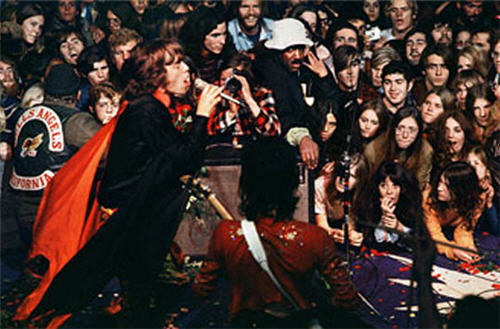
Security for the event was provided by the infamous Hells Angels motorcycle gang.
The Stones were so pleased with this success that they hired the Hells Angels to provide security for the "Altamont Free Concert," the last stop on their U.S. tour.
However, due to a lack of preparation, the crowd, which was estimated to be between 200,000 and 500,000 people, was in chaos.
The concert ended badly when a black man in the audience was stabbed to death by a member of the Hells Angels, a tragedy known as the "Altamont Tragedy.
This incident is said to be the end of the Love & Peace and Hippie movements, including the Woodstock Festival.
Prime period - Mick Taylor's departure
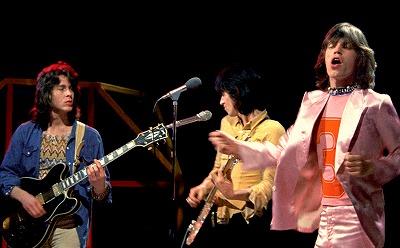
1970. The band established its own label, and stadium-class tours became a regular occurrence.
Mick and Keith's songwriting became more and more brilliant, and their musicality was fully established during this period.
The backbone of the band was Mick Taylor's guitar, in contrast to Keith's. The two guitars were intricately intertwined.
The sound of the two guitars, which were intricately intertwined and sounded like a single guitar, produced many great songs and albums, and the band was entering its heyday.
However, in 1974.
Mick Taylor suddenly quits the band.
The band members, in a panic, held an audition for a guitarist, and while Jeff Beck, Eric Clapton, and many other greats gathered, Ron Wood, formerly of Faces, was chosen to replace him.
With the addition of Ron, the band grew even more, but when "punk rock" was born in the late 70s, they were regarded as "symbols of the old era" and were attacked by young people as targets of criticism.
However, the band maintained their popularity while actively adopting new music of the time, such as "disco" and "reggae," and moved into the 1980s.
Mick and Keith's feud - suspension - revival
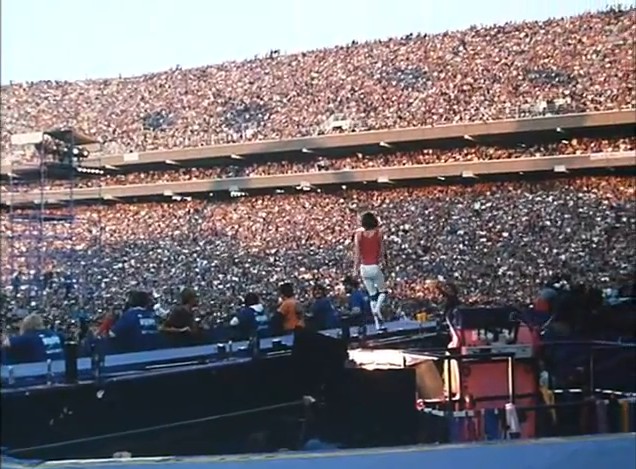
In the 1980s, the band continued to tour at stadium level, but their popularity gradually began to wane and their relationship deteriorated.
Sales were also sluggish, and when Mick began his solo career in earnest around 1984, the friction between him and Keith reached its peak.
The band was almost disbanded, and in 1988, even Keith began his solo activities.
It seemed as if the band was about to break up, but thanks to Ron Wood's efforts, their relationship was finally restored, and the band overcame its greatest crisis and began recording again.
In 1989, the album "Steel Wheels" was released.
The Stones made a full comeback and began their first world tour in eight years, and the Stones began to move again into the 1990s.
Japan tour, which was said to be impossible, is realized.
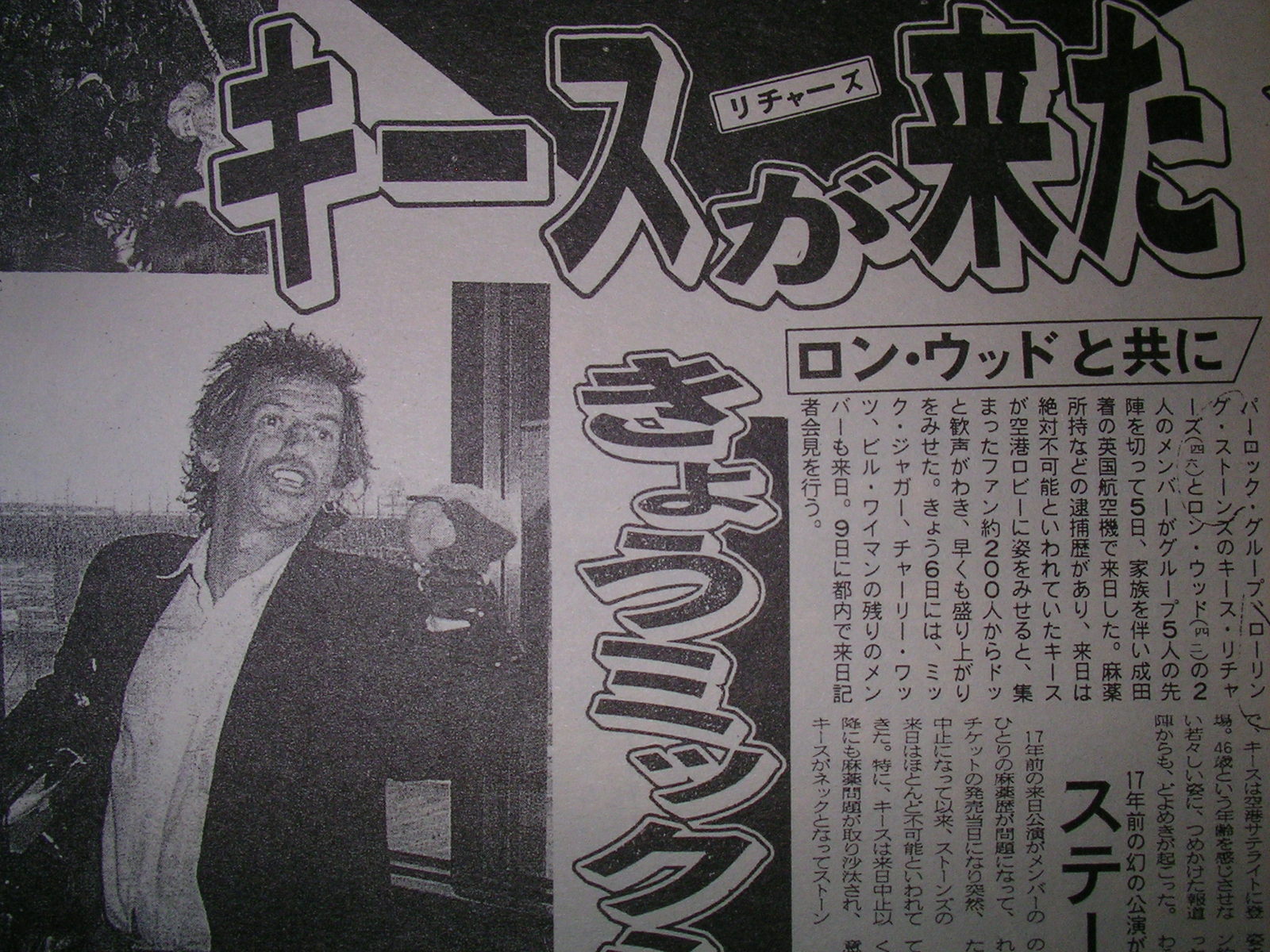
Newspaper article on his first visit to Japan
1990. After 27 years since their debut, the band was finally able to perform in Japan, having been denied entry due to the members' drug addiction.
The long-awaited first visit to Japan was broadcast in prime time on commercial TV stations, creating a boom in Japan.
At the time, Japan was in the midst of a bubble economy, so Michael Jackson, Madonna, and other superstars were coming to Japan one after another, but the Stones were treated differently.
Incidentally, two years earlier, Mick Jagger visited Japan for the first time as a solo artist and gave a "kick-off" performance at the newly completed Tokyo Dome.
The performance was also broadcast in prime time (two-hour slot) on commercial TV and attracted a great deal of attention.
Rock and Roll Hall of Fame - Cuba Performance - Afterwards
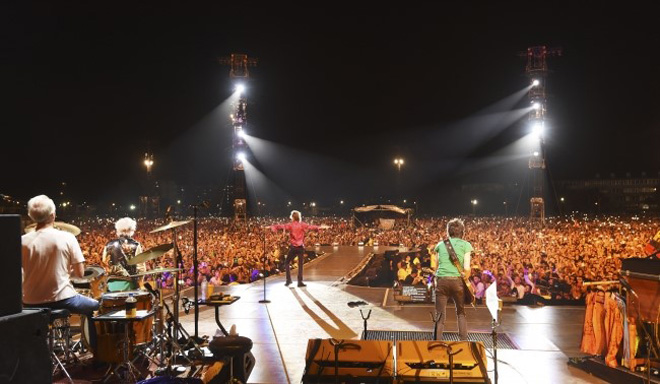
The Havana concert in 2016.
In 1989, the band was inducted into the Rock and Roll Hall of Fame.
In 2016, the band made a historic tour of Cuba, which was a great success.
And then, a few months later.
Now he released a new album, "Blue & Lonesome," his first in 11 years.
All the songs on the album are blues covers, reminiscent of the early Stones, and even though the average age of the band members is over 70, they are still active and at the forefront of music.
Members of The Rolling Stones
Mick Jagger (vocals, harmonica)
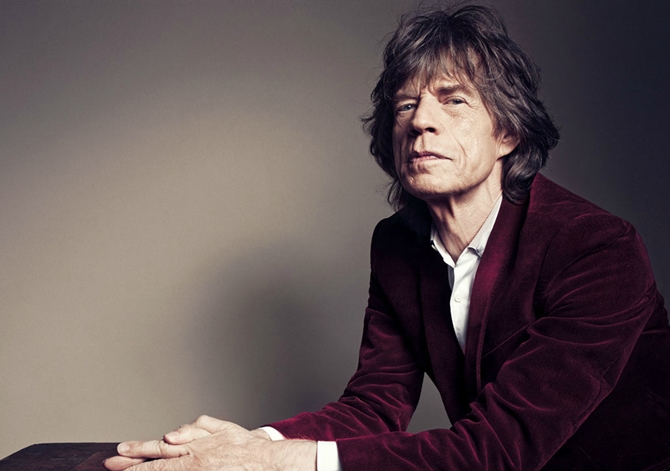
He is the frontman of the band.
In 2003, he was knighted by the British government.
Recently, he has become a celebrity in a different sense among supporters, as there is a jinx that the team Mick cheers for at a soccer game always loses.
He also has a very distinctive singing style, but there is a theory that he originally had a different voice.
It is said that he bit his tongue while playing basketball in junior high school and underwent emergency surgery, resulting in the change in his voice to the one he has today.
The truth is unknown, but in any case, there is no doubt that the Stones' current voice has made them the one and only band that they are today.
Keith Richards, guitar

Related Articles
27クラブ(The 27 Club)の徹底解説・考察まとめ
「27クラブ」は、27歳で亡くなった有名な音楽家や芸術家たちを指す総称で、特に1960年代後半から1970年代にかけてこの現象に注目が集まった。ジミ・ヘンドリックスやジャニス・ジョプリンなど名だたるメンバーが多く、いずれも各界で絶大な影響力を持ち、短期間で大成功を収めた人物ばかりだ。彼らの死は大きな衝撃を与えただけでなく、死亡した年齢が27歳と共通しており、都市伝説や陰謀諭などが囁かれることとなった。アーティストなどの短い人生の儚さと、その才能への敬意を示す言葉としても知られている。
Read Article
A collection of guitarists who use Telecasters with images!
The "Telecaster" is an electric guitar manufactured and marketed by Fender in 1951, and is characterized by its clear resonance when played in the upper register. The article introduces some of the guitarists who use Telecasters, including Tomoyasu Hotei, Futoshi Abe, TK of "Rin to Shigure," Keith Richards of "The Rolling Stones," and Jimmy Page of "Led Zeppelin," with images.
Read Article
Contents
- History
- formation
- Brian's Death - The Altamont Tragedy
- Prime period - Mick Taylor's departure
- Mick and Keith's feud - suspension - revival
- Japan tour, which was said to be impossible, is realized.
- Rock and Roll Hall of Fame - Cuba Performance - Afterwards
- Members of The Rolling Stones
- Mick Jagger (vocals, harmonica)
- Keith Richards, guitar
- Charlie Watts (drums)
- Ron Wood, guitar
- Old Members
- Brian Jones, guitar, harmonica
- Mick Taylor, guitar
- Bill Wyman, bass
- The Rolling Stones' signature song
- Jumpin Jack Flash
- Honky Tonk Women
- satisfaction
- Representative Albums
- Beggars Banquet
- Let It Bleed
- Sticky Fingers.
- The Main Street Rogue
- black and blue
- The man with the tattoo.
- GRRR! ~Greatest Hits 1962-2012
- The Stones' Influence
- Related Links