
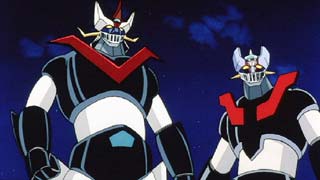
A compilation of robot animation works created in the Showa era and still popular today, their remakes, and Heisei versions.
True Getter Robo: The Last Day of the World
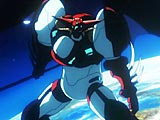
This is one of a group of works of Getter Robo, a milestone of combined robots that was developed in 1998 as an OVA.
Although many of the characters and robots have the same names as those in the Showa anime version, the accuracy, position, and settings of all of them are significantly different, and there is no connection with the Showa anime version.
The enemy characters are not the Dinosaur Empire or Hyakki Empire that appeared in the past, but Invaders, giant space creatures that fly to Earth from outer space in search of the Getter Ray.
There are many highlights such as the violent action similar to the manga version of the Getter Robo series, the Getter 1 versus the mass production Getter Robo G Corps in the first episode, and the appearance of the Getter Emperor, which cannot be missed when talking about the Getter Robo series.
The story is also very easy to watch, with a total of 13 30-minute episodes.
Dancuga Nova

The 12-episode, robot anime started in 1985 and is set 200 years after DANCOUGA, the super-jurugal machine god.
While the original Dancuga fought against invaders, the first part of Dancuga Nova's story depicts a battle between humans, and the second part depicts a battle against an enemy that plans to exterminate the human race.
The voice actors who starred in the original Dancuga, such as Kazuki Yao and Norio Wakamoto, also appear as important characters.
The royal mecha action depicted by Masami Ohari, the general director, is a must-see.
Jeeg the Steel God
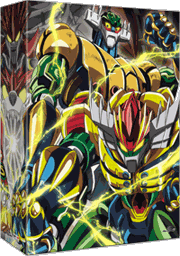
Broadcast in 2007, the story is set 50 years after the comic book version of Steel Jeeg, but some of the characters are different.
The main character is a lecherous but hot-blooded character, and there are many erotic scenes that recall the works of the original author, Go Nagai.
In contrast to the old Jeeg, in which the cyborg Hiroshi Shiba transforms into a Jeeg, the new Jeeg is a motorcycle-shaped mecha that transforms into a Jeeg by attaching parts.
Above all, the scene in episode 12 where the new and old Jeeg fight together is truly bloodcurdling.
Gaiking LEGEND OF DAIKU-MARYU
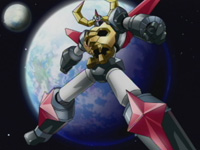
Broadcast in 2005, this work is based on Gaiking the Great Sky Demon Dragon, which was broadcast in 1976, with a completely new setting and worldview, except for Gaiking, the main mecha, and the names of some of the characters.
The story is about a boy, Tsuwabuki Diamond, who is chosen as the pilot of Gaiking, and fights against Darius's army, which aims at the ground world, together with the crew of the giant dragon battleship, Gokuuma Ryu.
The film features a variety of animations with Gaiking's rich combination patterns, Mayumi Tanaka, famous for her roles as Pazoo and Krillin, as the main character, and insert songs by Akira Kushida, a great singer in the ani-song world, to satisfy anime fans.
REIDEEN
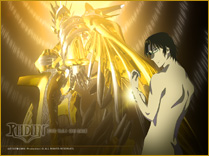
A robot animation series broadcast in 2007, based on the original Yusha Raideen that aired in 1975.
Although there are commonalities such as the name of the main mecha, Raideen, the "fade in" call when boarding, and the special move, Godbird, the design and settings are significantly different.
The anime features several heroines, including the main character, Junki Saiga, his childhood friend Shiori Kobayakawa, Rei Midorino, a mysterious transfer student who holds an important key to the story, and Hana Hoshikawa, a psychic sister who serves as the main character's guard, as well as many romantic scenes.
The Raideen, which is depicted in full CG, starts out sluggish, but as the main character, Junki Saiga, grows and becomes more experienced in battle, the Raideen's movements visibly improve and its special moves increase, giving the impression that both the main character and the mecha are growing.
There is also an anime called "Choja Raideen" that was broadcast in 1996, which is also based on "Yuusha Raideen". This one is more of a transforming hero story than a robot story. Whenever the heroes transform, they lose their clothes and become completely naked.
Mazinkaiser SKL
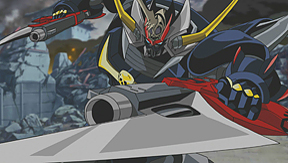
This OVA work, released on DVD in 2011, is very short (three episodes), but each episode is full of intense action scenes.
The story and setting have no connection to the previous Mazinker series, and there is almost no connection between the two except for the name "Mazinkaiser.
The two-seater Mazinger, the dynamic action with a large sword, and the Gankata with two pistols are the features that distinguish this work from the previous ones.
Most of the story is dominated by battle scenes, and the density of the action is so high that it is easy to forget the objective of preventing the runaway growth of the gravity core in order to prevent the destruction of the world.
The main characters, Kaido and Shinjo, driving the Mazinkaiser SKL, are so moving that you forget the purpose of the battle: "We are the hell! Many of you may have been moved by the decisive line of the main characters, Kaido and Shinjo, who drive Mazinkaiser SKL: "We are Hell!
