
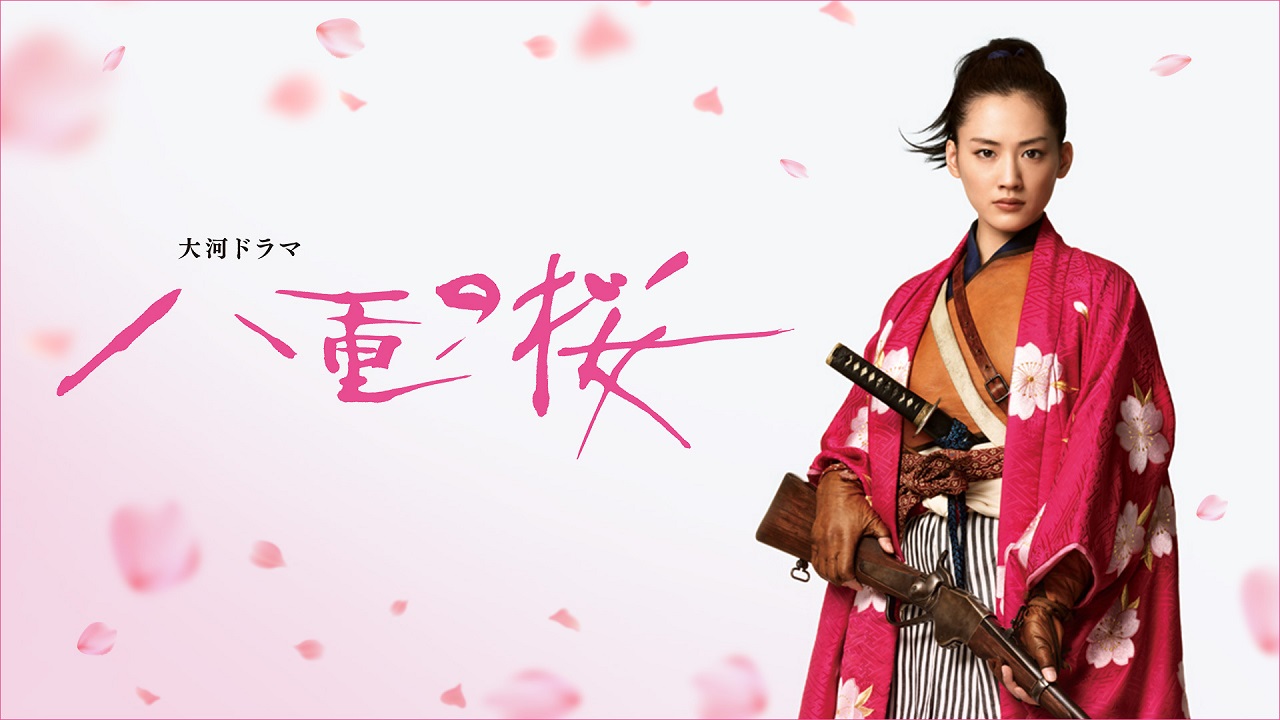
The 2013 NHK Historical Drama "Yae's Sakura". It tells the story of the life of Yae Niijima, who strongly survived the turbulent final days of the Tokugawa shogunate. The drama attracted attention because of its female protagonist, which is rare for an historical drama, and was highly acclaimed, including a nomination for the 2014 International Emmy Awards in the TV Drama category.
Here we introduce the profiles of the actors who appear in "Yae's Sakura". We hope you will enjoy them along with the film.
Anti-Shogunate faction
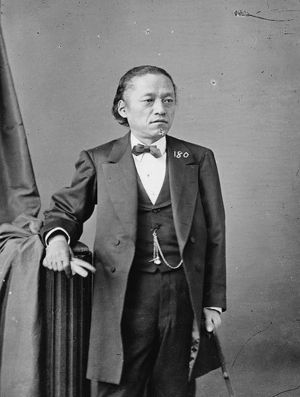
Source: ja.wikipedia.org
Tomomi IWAKURA, who fully demonstrated his political skills
He was from a court noble family and later became a politician. He was posthumously awarded the Grand Minister, Shoichii (Senior First Rank) and
She became a jiju (chamberlain) of Emperor Komei, and at first she promoted' Kazunomiya koka' (marriage of a princess to a princess) as a party of kobu-gattai (integration of the imperial court
However, this was impeached by the Sonno Joi ha (supporters of the doctrine of restoring the emperor and expelling the barbarians), and he resigned his official post and was placed under house arrest in Iwakura Village, Rakuhoku (the northern part of Kyoto). After that, he secretly associated with Toshimichi OKUBO, a feudal retainer of the Satsuma clan, and others at the place where he was placed under house arrest, which led him to overthrow the Shogunate
After the death of Emperor Komei, he read' Daigorei of the Restoration of Imperial Rule' to the Emperor and became a central figure in the new government. While in prison, he read' Kanken' (Chinese-style poem) dictated by Yamamoto Kakuma and recognized his talent.
His grave is located at Kaianji Temple in Shinagawa Ward, Tokyo Prefecture.
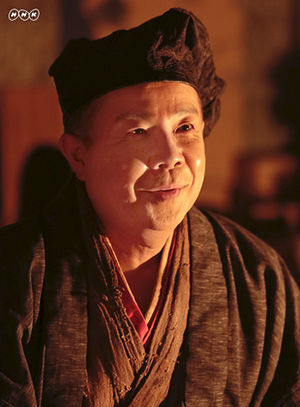
Source: www9.nhk.or.jp
Tomomi IWAKURA, who fully demonstrated his political skills
He was from a court noble family and later became a politician. He was posthumously awarded the Grand Minister, Shoichii (Senior First Rank) and
She became a jiju (chamberlain) of Emperor Komei, and at first she promoted' Kazunomiya koka' (marriage of a princess to a princess) as a party of kobu-gattai (integration of the imperial court
However, this was impeached by the Sonno Joi ha (supporters of the doctrine of restoring the emperor and expelling the barbarians), and he resigned his official post and was placed under house arrest in Iwakura Village, Rakuhoku (the northern part of Kyoto). After that, he secretly associated with Toshimichi OKUBO, a feudal retainer of the Satsuma clan, and others at the place where he was placed under house arrest, which led him to overthrow the Shogunate
After the death of Emperor Komei, he read' Daigorei of the Restoration of Imperial Rule' to the Emperor and became a central figure in the new government. While in prison, he read' Kanken' (Chinese-style poem) dictated by Yamamoto Kakuma and recognized his talent.
His grave is located at Kaianji Temple in Shinagawa Ward, Tokyo Prefecture.
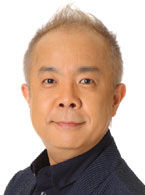
Source: www.asaikikaku.co.jp
Kosakai Kazuki Profile
[Name] Kazuki Kosakai
[Real Name] Kazuki Kosakai
[Family] Wife, eldest son: Shota Kosakai (freelance announcer), two daughters
[Master] Kinichi Hagimoto
[Date of birth] January 3, 1956
[Height] 165 cm
[Blood type] A type
[Place of Ichikawa City, Chiba Prefecture
[Affiliation] Planning Asai
[Hobbies] Movies, Clothes
[Past Works] Lieutenant Ninzaburo Kobata, Strange Stories
Official site
http://www.asaikikaku.co.jp/profile/kosakai/
On TV, Kosakai is portrayed as harmless to humans and animals, but he says it is "just the tip of the iceberg."
It is believed that Yae no Sakura will be the first to appear in an NHK drama.
Sonno Joi Ha
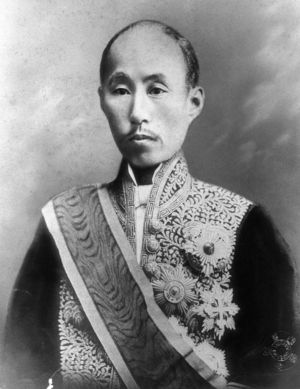
Source: ja.wikipedia.org
Sanetomi SANJO in new characters
Shoichii (Senior First Rank), Prince of the Supreme Order. Genkun (statesman). Known for his dislike of Christianity.
He joined the Choshu clan as a member of Sonno Joi ha (supporters of the doctrine of restoring the emperor and expelling the barbarians) and asked the bakufu to expel foreigners, but he was expelled from the Imperial Court due to the "Coup of August 18" and moved to Choshu (Shichikyo-ochi (exile of the seven nobles from Kyoto)).
When the first conquest of Choshu started, he moved to Dazai-fu (local government office in Kyushu region) and deepened exchanges with key figures such as Takamori SAIGO and Takasugi Shinsaku while living in confinement.
In the Kuroda Cabinet after the Meiji Government was established, he served as Naidaijin (Minister of the Center) even though he was an honorary post, and in the Seikanron (debate on subjugation of Korea), he was distressed by the conflict within the government, Iwakura took over the duties.
In 1891, he died at the age of 55 and was given a state funeral.
His grave is located at Gokoku-ji Temple in Otsuka, Bunkyo Ward, Tokyo.
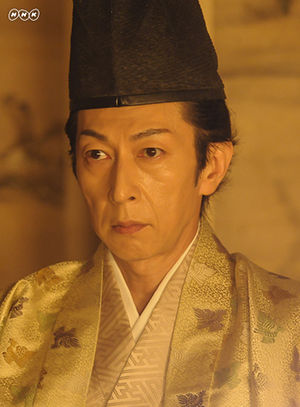
Source: www9.nhk.or.jp
Sanetomi SANJO in new characters Sanetomi Shinoi Eisuke SANJO
Shoichii (Senior First Rank), Prince of the Supreme Order. Genkun (statesman). Known for his dislike of Christianity.
He joined the Choshu clan as a member of Sonno Joi ha (supporters of the doctrine of restoring the emperor and expelling the barbarians) and asked the bakufu to expel foreigners, but he was expelled from the Imperial Court due to the "Coup of August 18" and moved to Choshu (Shichikyo-ochi (exile of the seven nobles from Kyoto)).
When the first conquest of Choshu started, he moved to Dazai-fu (local government office in Kyushu region) and deepened exchanges with key figures such as Takamori SAIGO and Takasugi Shinsaku while living in confinement.
In the Kuroda Cabinet after the Meiji Government was established, he served as Naidaijin (Minister of the Center) even though he was an honorary post, and in the Seikanron (debate on subjugation of Korea), he was distressed by the conflict within the government, Iwakura took over the duties.
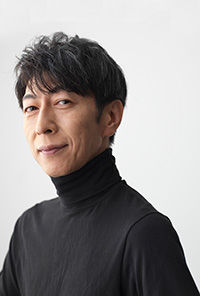
Source: www.me-her.co.jp
Profile of Eisuke Shinoi
[Name] Eisuke Shinoi
[Date of birth] December 15, 1958
[Height] 173 cm
[Blood type] A type
[Hometown] Ishikawa Prefecture
[Affiliation] Me & Ha Corporation
[Special skills] Nichimai, Soke Fijima School Shihan, Kanchihide Fujima
[Past Works] Continued Tono Monogatari, Defeated and Won - Shigeru Yoshida, the Man who Created the Postwar Period - by Hitoshi Ashida
Official site
Eisuke Sasai Eisuke Sasai http://www.me-her.co.jp/eisuke_sasai/
Narrative
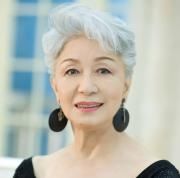
Source: beamie.jp
Katari Kusabue Mitsuko Profile
[Name] Kusabue Mitsuko
[Real Name] Mitsuko Kurita
[Family] Younger sister: Keiko Tomita
[Date of birth] October 22, 1933
[Height] 158 cm
[Blood type] B type
[Place of birth] Kanagawa Ward, Yokohama-shi, Kanagawa
[Affiliation] Oscar Promotion
[Past Works] Dondo Hareni de Kagami Kazuno, Tehijin de Tome, etc.
Official site
http://beamie.jp/t/mitsuko_kusabue.html
He was awarded the Shiju Hosho (Medal with Purple Ribbon) and the Kyokujitsu Shoju Sho (
NHK Reconstruction Support Song: The Flower Blooms
Perhaps it is because of the aspect of supporting reconstruction and the aspect of setting Aizu as a stage
Many people who have appeared in the NHK reconstruction support song "Hana ha Saku" have also appeared.
Kumiko Akiyoshi
He grew up in Iwaki, Fukushima Prefecture, from the age of six to 18.
Mr. Sato B-saku
He was born in Fukushima City, Fukushima Prefecture
Mr. Toshiyuki Nishida.
He was born in Koriyama, Fukushima Prefecture.
Mr. Hiroaki Murakami.
He was born in Rikuzentakata, Iwate Prefecture.
Production staff
Source: www.nhk.or.jp
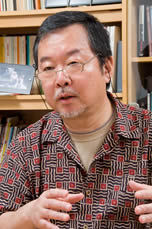
Comments from Mr. Hikozo Akamatsu, who was in charge of the title: Shoyo
"The seasons change and spring comes to the hearts of people in the disaster-stricken areas.
After that muddy stream, the surviving cherry blossoms miraculously attach their buds to the damaged branches, and before long the blossoms are in full bloom.
The figure of' Yae' overlaps the cherry tree.'
Excerpts are available in full here.
http://www.nhk.or.jp/dramatopics-blog/2000/116173.html
Source: nobuyukinakajima.com
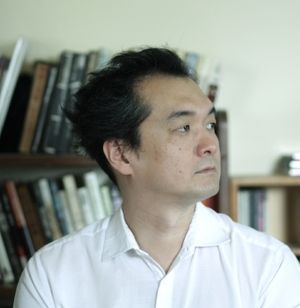
NAKAJIMA Nobuyuki of music
[Name] NAKAJIMA Nobuyuki
[Blood type] B type
[Past works] Music from tamayura, theme music from "The power of travel", etc.
Official site
http://nobuyukinakajima.com/profile/
Source: www.nhk.or.jp
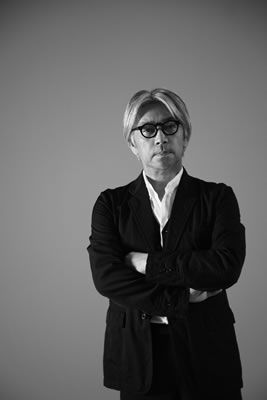
Theme music: Ryuichi Sakamoto's comment
"The image of a woman who lived a strong life in the turbulent times may be a guide for us Japanese living in the difficult times."
Partial excerpt. Full text here.
http://www.nhk.or.jp/dramatopics-blog/2000/116173.html
Source: www.yonezawa-naoe.com
Comment by 愼介 Naito, Chief Producer and Production Supervisor
After March 11, I began to think about this kind of thing. Along with this, the consciousness of Taiga dramas changed from trying to create something interesting to thinking about what to do now.
The Taiga Drama, which marks its 51st and 52nd year with this drama, is based on a half-century history, but the 2013 Taiga Drama decided to take a step forward into a new era and to take up a new subject called Yaeko Nijima with the aim of supporting the courage of the Japanese people. "
Director Taku Kato
Stage
Source: www.thr.mlit.go.jp
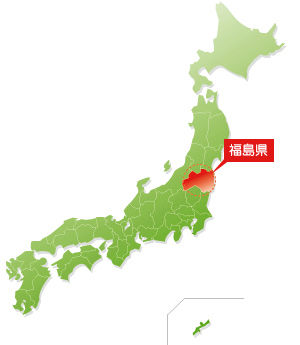
Fukushima Prefecture on a map of Japan
Fukushima Prefecture is located in the south of Tohoku.
This is the scene of the Aizu War, a part of the Boshin War depicted with eight cherry trees.
Source: fnk.or.jp
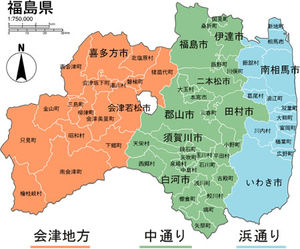
Maps of Fukushima Prefecture by region
Aizu Wakamatsu Castle is located in Aizuwakamatsu City.
It is commonly called Tsuruga Castle in the local area.
Currently, it is open to the public as a national historic site, Tsuruga Castle Museum and Tsurugajo Park.
You can experience beautiful cherry blossom viewing in spring.
Source: technocco.jp
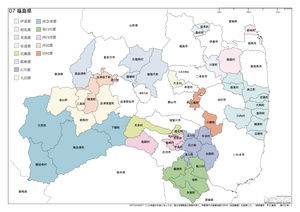
Blank map of Fukushima-ken by city or county
An aspect of the Boshin War, the Aizu War began with the Battle of the White River Mouth over Shirakawa Komine Castle, now a nationally designated historic site in Shirakawa City. Hajime Saito of the Shinsen-gumi masterless warrior party defended the domain, with Saigo Tanomo as governor and Chikara Yokoyama as vice-governor.
Let's start with Fukushima. Facebook
www.facebook.com
This is the official Facebook page of Fukushima Prefecture.
Fukushima Prefecture will surely revive, recover and develop further. His region will be the beginning of the twenty first century.
History of Aizu, Fukushima Prefecture.
It was the territory of the Ashina family of Sengoku daimyo (Japanese territorial lord in the Sengoku period), one of the headquarters of Masamune DATE, and was owned by Gamo Ujisato during the period of Toyotomi.
The area called "Kurokawa" was transformed into Wakamatsu by Gamo Ujisato. The name "Matsu" was adopted as an auspicious character since Ise-Matsugashima (Matsuzaka), where Ujisato started his career. Ujisato built the foundation of Aizuwakamatsu.
Matsudaira Morisada, a grandson of Katamori MATSUDAIRA, was recommended as the chief priest of Yasukuni-jinja Shrine after working as an employee of Norinchukin Bank.
He firmly declined, saying,' Saccho (Satsuma and Choshu Domains) are enshrined, and the war dead of the rebel army are not enshrined, but we cannot accept them as Aizu-jin (people of Aizu-cho),' and from 2007, he lived near the grave of the clan founder near Lake Inawashiro.

Tags
Contents
- List of performers and cast members
- People of the Yamamoto family
- Friends in Aizu
- Aizu Domain
- People of the Aizu-Matsudaira family
- Takise Mariko Tsutsui, a lady-in-waiting for Teruhime
- People of the Yamakawa family
- Vassal of the Aizu clan
- Chief retainer
- Samurai of Aizu clan
- Byakkotai
- People of Nihonmatsu Shonentai
- Sendai Domain
- People of Kyoto
- Intellectual
- Shogunate
- Tokugawa family
- Powerful figure in the shogunate
- Choshu Domain
- Tosa Domain
- Satsuma Domain
- Other Domains
- Shinsen-gumi
- People involved in the Meiji government
- People of Nyokoba
- People of Doshisha English School
- People of the Kumamoto Band
- People of Doshisha Girls' School
- Members of the Women's Volunteer Nursing Association
- Imperial Court
- Kobu-gattai faction
- Anti-Shogunate faction
- Sonno Joi Ha
- Narrative
- NHK Reconstruction Support Song: The Flower Blooms
- Production staff
- Stage
- What kind of drama?
- Where's the playwright?
- NHK Drama Summary