
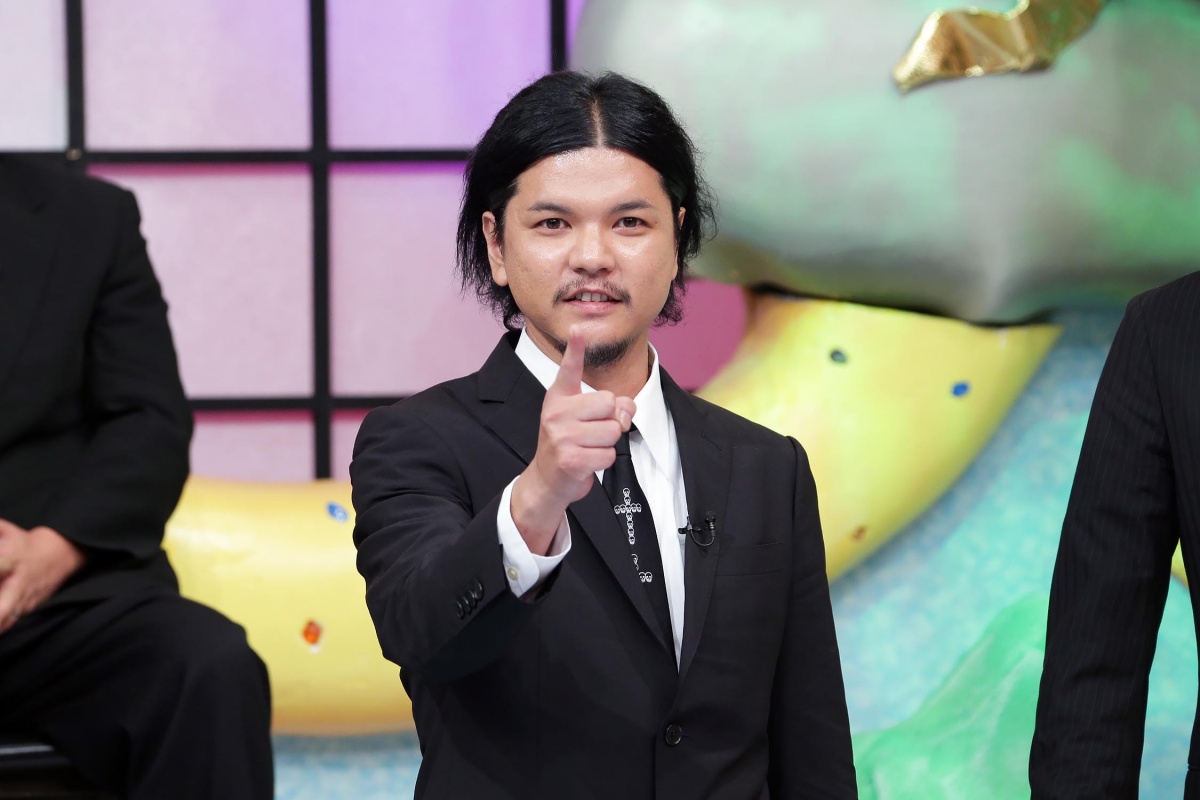
Yarigiri Urban Legend Gaiden" has been aired as a corner project of Yarigiri Cozy's popular "Yarigiri Urban Legend" project every time. This is an article that explains the viewpoints and unique perspectives of what Mr. Akio Seki, a.k.a. Mr. Urban Legend, has told in all the aired Gaiden, recovering foreshadowing, and unraveling lies and truths, and draws a conclusion at the end of each chapter.
Chapter 1: Summary of the timeline up to the main part of the external story
Location of Tokugawa's buried treasure
Until we get to the main part, we will summarize the urban legends that Seki has told so far.
The famous "Tokugawa buried treasure" is Mt. Akagi, but it is a dummy, not a real hiding place. It is said that hidden assets such as buried gold have been hidden in three places since olden times, that the government is already aware of the hiding places, and that a code indicating their whereabouts is hidden in the nursery rhyme "Kagome kagome.
Kagome kagome
Kagome kagome, kagome, kagome, when will the bird in the basket be taken?
The day after dawn, the vine and the tortoise slipped
The back of the basket, the back of the basket, the back of the basket, the back of the basket, the back of the basket
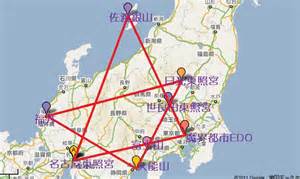
Kagome" refers to the pattern of woven baskets made of bamboo and other materials. In other words, it refers to a pattern. If all six shrines related to Tokugawa are connected by a line on the map, it becomes a "six-pointed star = Kagome. Next, "Nakanotori" refers to the torii gate. Yoake no ban" means morning sun. Tsuru to kame ga suberu" refers to the shadows cast by the morning sunlight on the crane and turtle statues.
The shrine Nikko Toshogu, which has a torii gate connected by a line and statues of cranes and turtles, is a good example of this. In addition, there is a small shrine in the direction where the extended shadow points, and a six-pointed star with only the upper part missing is drawn on the shrine. It is said that the shrine is a symbol of the lower part of the body, where buried gold is said to be hidden.
But why does the state want to keep the location secret? It is said that the government does not dare to disclose the location because, in addition to the buried gold, there is a fear that the history itself, which had been told by established theories, might be overturned. *There are various theories.
Identity of Hattori Hanzo
Why was Tokugawa Ieyasu able to win the country? It was the formation of the world's first special forces. This special force was a ninja unit (a covert unit) headed by Hattori Hanzo. Ieyasu trained them as an elite unit, and it is said that he was able to capture the country by making full use of reconnaissance, actual operations, and information gathering.
Hattori Hanzo, who headed this ninja unit, was given the honor of leaving his name "Hanzomon" in the name of the place by the Tokugawa as a reward for his great achievements. (now Kojimachi 1-chome, Chiyoda-ku, Tokyo).
However, he himself requested Tokugawa to travel freely throughout Japan in addition to this. However, since Japan at that time was divided into different countries, each country had to have its own transit notes. Therefore, Tokugawa removed the limitation of the bills of passage and gave them the right to come and go freely. Hattori Hanzo used the alias "Matsuo Basho" when he traveled around the country.
According to records, Matsuo Basho walked about 400 km in a day, which was an average of 40-50 years old at the time. In modern times, an adult walks at an average speed of 5 km per hour, so he would have had to have had great leg strength to walk that distance. It is said that only a former shinobi could walk this distance.
Matsuo Basho is famous for "Oku no Hosomichi" (The Narrow Road to the Deep North), but he is also said to be the person who popularized the children's song "Kagome Kagome" as mentioned above. *There are various theories.
The Numbers Tell the Equation for Death
Numbers are believed to have various hidden powers. The "lucky seven" is a typical example. There is an urban legend associated with such numbers.
The actor Yusaku Matsuda passed away in 1989. Matsuda kept a bottle of Early Times whiskey at his favorite bar in Shimokitazawa. The number he kept was "116. The anniversary of Mr. Matsuda's death was November 6, 1989.
Another singer, Kyu Sakamoto, was killed in the Japan Airlines plane crash on August 12, 1985. The unprecedented crash killed about 520 people, including the crew and passengers. Mr. Sakamoto was among the victims, and his body was found 99 hours after the accident. When his body was found in the coffin, the number was 333. The number of the body was 333 when it was found in the coffin. The manager who was accompanying him at the time also had the number 333, which adds up to 9.
Also, the number of times Sakamoto appeared on "Cross Five," the program in which he made his last appearance, was the "99th.
Secrets hidden in the old 5,000 yen bill, the new 1,000 yen bill, and the 1 dollar bill
Various urban legends have been told about the Japanese and dollar bills, the most famous of which is the story of the "Freemasons" marking
Nitobe Inazo on the old 5,000 yen bill. Inazo Nitobe was born on September 1, 1862 in Iwate-gun, Mutsu Province (present Morioka City, Iwate Prefecture), and was a pioneer in Japanese education and a genuine Japanese. His spouse at the time was a native of Philadelphia, USA, whose Japanese name was Mariko Nitobe (née Marie Elkington), and his place of death was Victoria, a city in British Columbia, Canada, where he died on October 15, 1933 (at age 71). He has been misidentified as an American-leaning figure.
The old 5,000 yen bill is said to have been used to distinguish it from counterfeit bills because it is printed with the chrysanthemum symbol, the symbol of the imperial family, split in half, and the two are printed in such a way that they do not stick together when one tries to put them together. Fuji on the reverse side of the bill. The mountain reflected in the lake when the bill is turned upside down is said to be Mount Sinai, where Moses, the leader of the ancient Israelites who is said to have been active in the 16th century B.C. or 13th century B.C. in the Old Testament, received the Ten Commandments (10 precepts to be observed in Buddhist practice). It is said to be Mount Sinai. However, even if it is reflected on the surface of the water, it is not as beautifully reflected as the Black Lake in "Harry Potter", but is an ordinary lake, so it is not surprising that it shakes on the surface of the water and looks like other mountains.
And there is a round mark at the top, which Seki said is an eye symbolizing the Freemason's eye mark (the eye of God Yahweh), but this seems a bit unreasonable.
He also said that if you go back to the front, the earth is printed, and while Japan is not in the center despite the fact that it is a Japanese banknote, the "pyramid" that is the symbol of Freemasonry emerges when you look through the banknote. But think about it. No matter how much Japan is not at the center, if you look back at a world map, Japan cannot be at the center. In 1920, when the League of Nations was established, Mr. Nitobe became the Deputy Secretary General of the League of Nations. It is no exaggeration to say that he walked around the world. Incidentally, he was also a "Christian. Therefore, it is believed that the earth = world map was drawn on the banknotes.
As for the new 1,000 yen bill, its portrait depicts Hideyo Noguchi, Japan's proud bacteriologist. Hideyo Noguchi, who became the face of the 1,000-yen bill, was a researcher at the Rockefeller Medical Research Institute of the Rockefeller Foundation, which is said to have close ties with Freemasonry. If you fold Noguchi's face in half, the left half looks Japanese and the right half looks Jewish, Seki said. Not only that, but if you look through the thousand-yen bill from the back of Hideyo Noguchi's Mt. Fuji, his left eye comes exactly at the top of Mt. Fuji; just like the one-dollar bill, it looks like the emblem of Freemasonry, and it is also said that he was a member of Freemasonry.
Having said that, when we actually look at Noguchi's portrait, the right half of his face does indeed look Jewish, but due to the shading, his face does not look like a deep moat. Like Inazo Nitobe, Hideyo Noguchi is also a native Japanese. According to my research, Noguchi was born on November 9, 1876 in Mitsuwa Village, Yama County, Fukushima Prefecture (now Inawashiro Town). The reason why he is said to be a member of the Freemasons may also come from the fact that he worked as a researcher at the Rockefeller Institute for Medical Research, which is run by the Rockefeller Foundation, which is said to have close ties with the Freemasons.
Next, the $1 bill has a portrait of George Washington, the first president of the United States. On the left side of the reverse side is the emblem of Freemasonry, a pyramid and the "Eye of Providence" (meaning "Providence" in Christianity or the "Almighty Eye of God"). Incidentally, the triangle, a symbol of the Trinity, is often combined with the eye of Providence and the halo in Christianity, and the eye of Providence was also used in the early Freemasonry symbol.
George Washington was a member of Freemasonry, and when connected by a line, another symbol, a "six-pointed star" is formed, and if the letters that emerge from the five corners of the star are rearranged, they form the word "MASON" (English: Freemason).
On the right side of the back, there is an eagle, the symbol of the United States, on the head are 13 stars on a hexagram, there are 13 olive leaves on the left leg, 13 arrows on the right leg, and 13 steps in the pyramid.
The number "13" is considered unlucky in the U.S. and has various origins. Among them, it is said to be unlucky because it is believed to be the leading theory that Jesus Christ and his 12 disciples were betrayed by one of the 13 people at the Last Supper.
MDCCLXXVI" written at the bottom of the pyramid is Roman numerals: "M" for 1000, "D" for 500, "C" for 100, "L" for 50, "X" for 10, "V" for 5, and "I" for 1, which all add up to "1776". It is said that this is the year of the founding of Freemasonry.
This would be highly credible and would support the fact that George Washington was a member of Freemasonry.
However, although a six-pointed star can be formed by connecting the peacock pattern on the right side of the reverse side of the new 5,000 yen bill, Higuchi Ichiyo, whose portrait appears on the new 5,000 yen bill, is of course not a member of Freemasonry, and the presence of the six-pointed star does not imply that Freemasonry is involved.
Paper money, which exists all over the world, is originally considered to be a Jewish culture, but according to the history of the Chinese monetary system, the world's first paper money was manufactured and used in the Song dynasty (960-1279), when it was issued as a deposit receipt for a coin called the iron coin, which is considered a precursor to the coins in circulation today, called koshi (交子).
As for the history of paper money in Japan, the oldest paper currency known to exist is the Yamada Hasho, which was issued in 1610 and appropriated among merchants. The first domestically produced paper money by the government was issued in 1873. From these facts, the root of paper money is considered to be Chinese, and in Japanese paper money, it has nothing to do with Freemasonry.
The sum of the Japanese coins is 500 + 100 + 50 + 10 + 5 + 1 = 666, which is said to be the "devil's number" or "the number of the beast" in religion.
In Buddhism, "666" is considered a sacred number, and according to the "Nihon shoki" (Japanese classical text), Buddhism was introduced to Japan in 552 during the Asuka period (552 AD), and it is believed that Japanese coins were also influenced by Buddhism. Incidentally, the sum of all 666 numbers is "18. (In Japan, the number "18" has long been used to indicate important objects (considered an unlucky number in religion).
Mr. Seki said that "666" has a deep relationship with Japan, but for Japan, "666" has no deep religious meaning or relationship as mentioned above.
Chapter 2: The Complete Story of the Secret Society Freemasonry
Here is the main story.
This is the first installment of Yarikiri Toshi Densetsu Gaiden, broadcast on March 28, 2009. The setting is England.
Urban Legend File 1: General Headquarters of Freemasonry, Grand Lodge
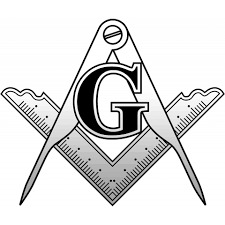
Freemasonry, founded as the Grand Lodge of England (GLE) on June 24, 1717 in England, where its de facto general headquarters is located, is the largest and oldest fraternal organization in the world, with membership now up to 6 million. Freemasonry operates under the five principles of Liberty, Equality, Fraternity, Toleration, and Humanity. Because it is called a secret society, its activities are undisclosed, and various conspiracy theories have been put forward.
Originally, the Freemasons were an organization of masons, with "Free" meaning "freedom" and "Mason" meaning "mason. Among its members were the first U.S. President George Washington, former Army General Douglas MacArthur, the first president of the Liberal Democratic Party Ichiro Hatoyama, former close associate of Yoshinobu Tokugawa, and many other great figures such as Xi Zhou.
Urban Legend File 2: The chair that will kill you if you sit on it
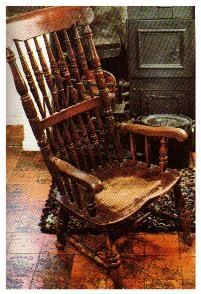
The "chair that kills you when you sit in it" was a chair in the BUSBY STOOP pub-restaurant in Yorkshire, located in northern England, where Thomas Busby, a regular patron of the restaurant, always sat in a certain chair. He was later convicted of murdering his father-in-law, Daniel Audie, in 1702 and hanged in North Yorkshire. Since then, 63 people who sat in the chair that Buzby always sat in have died in quick succession, and the chair has become known as the "Dead Man's Chair. The chair is now hanging on the wall at the Sarks Museum so that no one can sit in it.

Contents
- Chapter 1: Summary of the timeline up to the main part of the external story
- Location of Tokugawa's buried treasure
- Identity of Hattori Hanzo
- The Numbers Tell the Equation for Death
- Secrets hidden in the old 5,000 yen bill, the new 1,000 yen bill, and the 1 dollar bill
- Chapter 2: The Complete Story of the Secret Society Freemasonry
- Urban Legend File 1: General Headquarters of Freemasonry, Grand Lodge
- Urban Legend File 2: The chair that will kill you if you sit on it