
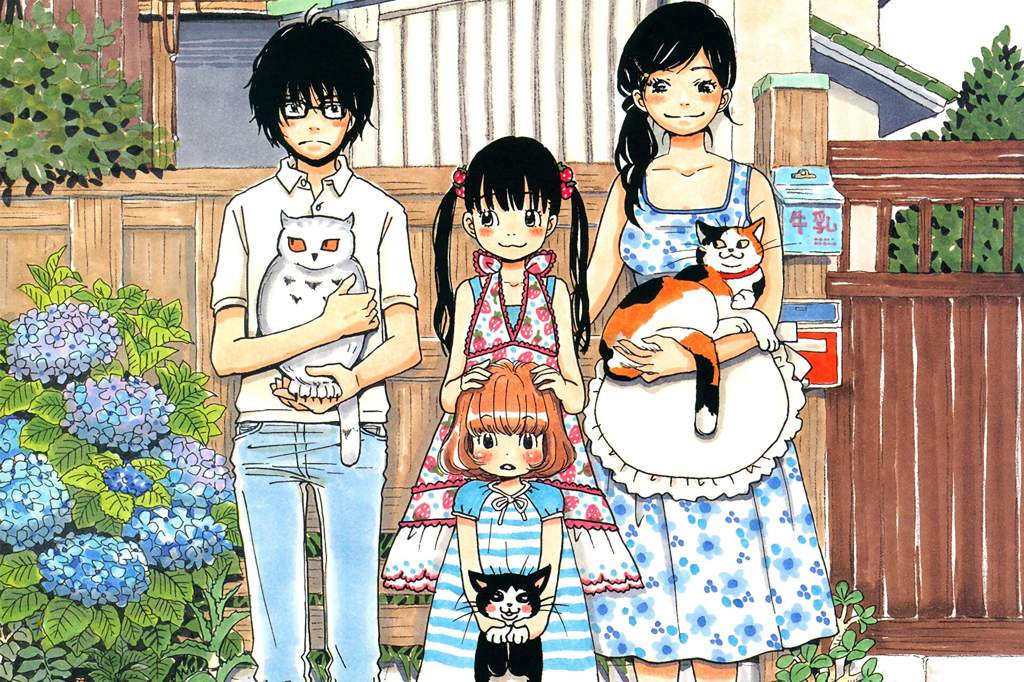
March Lion" is a manga series by Chika Umino that has been serialized in "Young Animal" (Hakusensha) since 2007. The story is about Shogi (Japanese chess) and depicts the struggles of a junior high school boy, Zero Kiriyama, who becomes a professional Go player in present-day Tokyo and the fictional downtown towns of "Sangatsu-cho" and "Rokugatsu-cho". At the same time, it is also a love story in which he and various people around him regain something they have lost. Shogi is supervised by professional chess player Manabu Saki; the story was adapted into an anime in 2016, a live-action movie in 2017, and a spin-off in 2015, which has been developed into a media series and two fan books.
Terminology for "March of Lions
Nihon Shogi Renmei (Japan Shogi Federation)
The official name is the Nihon Shogi Renmei (Japan Shogi Federation).
It is a corporation that appears in "March of the Lions," but it is an actual corporation with a long history.
The Japan Shogi Association is a public interest incorporated association that manages Shogi players' activities.
It is organized by professional Shogi players of 4-dan and above, Women's Shogi players, and instructors.
The purpose of the Shogi Federation is "to promote the spread and development of Shogi, to improve Shogi skills, to contribute to the enhancement and transmission of Japanese culture, and to promote friendship and exchange with other countries through Shogi, thereby contributing to the improvement and development of traditional culture".
Traditionally, Shogi was played under the Iemoto system. The Ohashi family, the Ohashi branch family, and the Ito family had produced hereditary masters, but the Iemoto system was abolished with the fall of the Edo shogunate.
After a period of chaos, the "Tokyo Shogi Association" was established in 1924, and in 1927, the "Japan Shogi Association" was established with the addition of professionals from the Kansai region.
In 1949, the federation became an incorporated association, and in 2011, it became a public interest incorporated association. (As of "March Lion" comic volume 3, it is an incorporated association)
Shorei Kai
The Shogi Association of Japan is a professional professional training organization of the Japan Shogi Federation.
The ranks range from 3-dan to 6-kyu. After joining the Shogi Promotion Association, players are promoted to 3-dan and then to 4-dan to enter the professional ranks.
This is not a manga setting, but an actual organization.
Its official name is "Shinshin Kishi Shoreikai," which is short for "Shoreikai.
It is actually divided into two groups, the Kanto Shorei Shorei Kai and the Kansai Shorei Kai.
Up to 2-dan, players are divided into East and West and play against each other, and if they achieve the specified results, they are promoted to higher ranks.
At 3-dan, the East and West teams join together in a league, and games are played on a half-yearly basis.
The top two players are promoted to 4-dan and officially become professional players.
apprenticeship
In the world of Shogi, it is mandatory to have a professional player of 4-dan or above as a master when joining the Shogi Promotion Association.
On the other hand, in principle, it is not possible to join the Shogi Association without a master.
However, the relationship between master and disciple is different from that of a general apprentice relationship, and the role of a master is like that of an underwriter.
Therefore, there are cases in which the master does not give direct technical guidance or practice to the apprentice. In addition, even a master and an apprentice play against each other in a Go player's game.
Zero's master is Masachika Koda, and "March Lion" also follows this master-disciple relationship.
Shimada and Nikaido are brother and sister apprentices, but having the same master makes them "brother" and "brother apprentice.
If they are female, they become "sister disciples" or "sister disciples.
private pupil
One of the master-disciple relationships in shogi.
A system in which the apprentice lives in the master's home and performs miscellaneous tasks and training.
The uchideshi system in shogi has now been abolished.
In "March Lion", Zero was under the care of the Koda family as an uchideshi (apprentice) and adopted child.
Shogi Kaikan
The building where the headquarters of the Japan Shogi Association is located is generally referred to as the "Tokyo Shogi-Kaikan" to distinguish it from other Shogi-Kaikan buildings.
In addition to the Tokyo Shogi-Kaikan, there are also the Kansai Shogi-Kaikan and the Hokkaido Shogi-Kaikan.
It is located at 2-39-9 Sendagaya, Shibuya-ku, Tokyo, and is an existing building, not a fictional building.
It houses not only the office of the Japan Shogi Federation, but also a game room, a sales department, and a relay room.
If you apply, you can not only visit but also play games.
Battle of Thoughts (Kanso Senso)
A collaborative process to reflect on and improve the game after the opponent has ended the game by resigning the game as "lost".
The game is replayed on the board with the opponent from the beginning to the end of the game, or part of the game.
The participants then search for the cause of the loss, whether the moves made during the game were good or bad, what were the best moves in the game, and whether there were any moves that did not appear in the actual game.
rank-deciding competitions (e.g. in go or shogi)
The Mainichi Shimbun and Asahi Shimbun sponsored Shogi tournaments in which players, excluding the free class, are divided into five groups from A to C level 2 to play in a league.
The league consists of five pyramid-shaped classes: A-kyu, B-kyu 1, B-kyu 2, C-kyu 1, and C-kyu 2.
There are 10 players in the A-kyu league, and the top ranked player is eligible to challenge for the Meijin Tournament.
Each class plays league games from June to March of the following year to determine the ranking of the season.
The winner of A-kyu also plays the Meijin in a seven-game tournament from April to July.
Meijin is a separate rank, so they do not play ranked games.
New professionals from the incentive association start from the C kyu 2 ranks.
Skipping a grade is not allowed. Therefore, no matter how talented a player is, it takes five years to become an A-kyu player.
The rank advancement and demotion in the Ranked Tournament is very important for professionals because it determines the rank, the game fee, and the seeding for other tournaments.
research society
One of the research and practice methods used by many professional Go players and Encouragement Members is called "Kenkyukai," which is a practice game in the form of a real game played by a large group of players.
About once a month, four to six people gather to play a game. After the game, the members reflect on the game and discuss how to improve it.
The opportunity to hear the opinions of not only oneself but also those of other professionals broadens one's perspective on Shogi.
There is no problem to participate in more than one study group, and some players even hold two or more study groups at the same time.
Famous quotes, lines, scenes, and scenes from "March of the Lions
Masachika Koda: "Becoming a professional is not the goal, but it's a long and tedious process. The further you go, the more difficult the path becomes, the more people disappear around you, and only those who can adjust and repair themselves will be able to move on anyway.
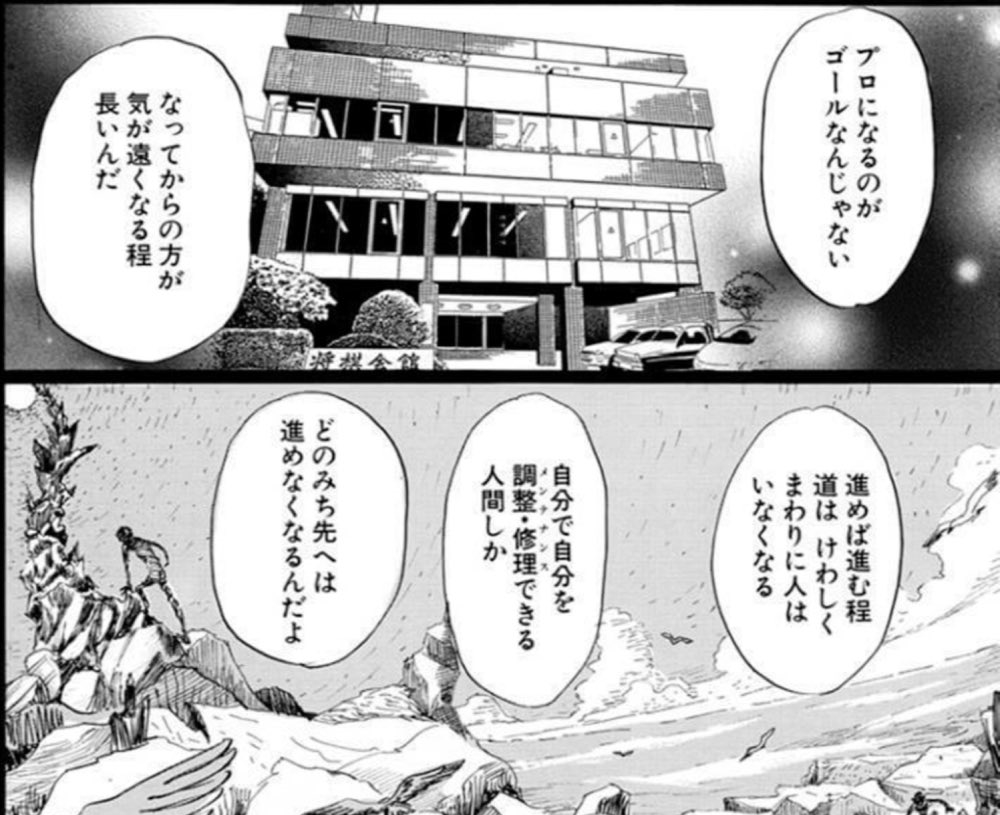
Masachika Koda talks about the severity of being a professional Go player
Ayumi, the son of Masachika Koda, says that he is quitting shogi because Zero has surpassed him in shogi.
Zero pleads with Masachika to let Ayumi play shogi again and to persuade him not to quit.
However, Masachika told Ayumi about the harshness of the professional game, saying, "Becoming a professional is not the goal; it is much longer than that. If you can't adjust and repair yourself, there is no future for you.
Rei Kiriyama: "All my days were like floating in the night sea with no legs."
Kiriyama has been lonely not only in Nagano, but also at school and home in Tokyo, where he was taken in. He tries to think, "I never had any friends, so this was normal. However, he was worried that he would be like this for a long time to come, and at night he could hardly breathe. Kiriyama likened his feelings at that time to "the days were like floating on the sea at night with no legs. He expressed his feelings when he was facing the shogi board and playing point after point after point so that he would not have to think about anything.
Takashi Hayashida: "If you borrow power like that, the next time someone is in trouble, you can help them out, and that's how the world revolves.

Related Articles
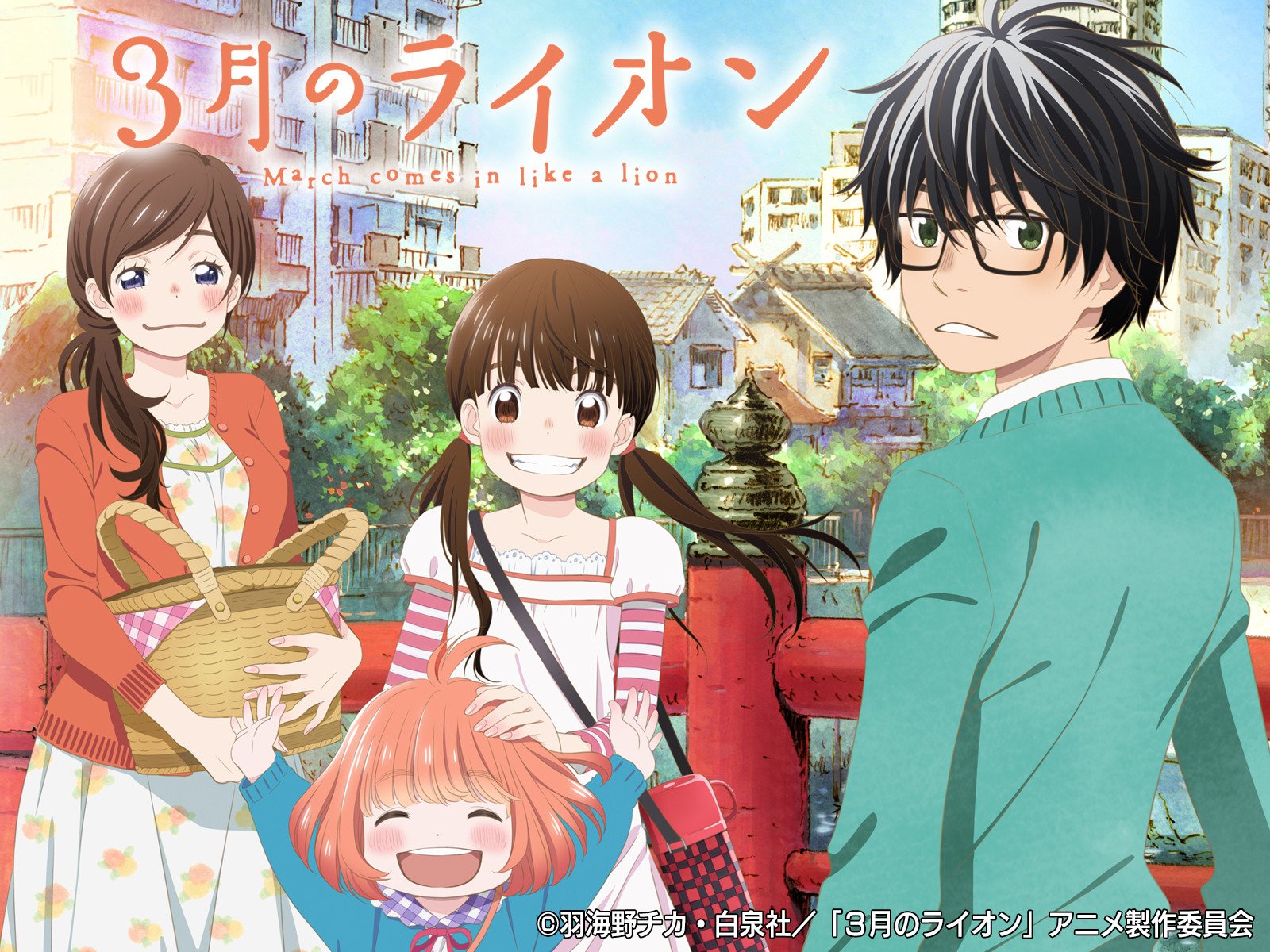
The problems faced by Zero Kiriyama and the growth he has achieved [March Lion].
Chika Umino's manga "March Lion" is serialized in Young Animal. It has been developed in various media, including an anime, a live-action movie, and an external manga. The main character, Rei Kiriyama, lost his family in an accident and became a stranger on his own. Having lived his whole life clinging to Shogi, Zero meets the Kawamoto family, plays games with many Go players, and experiences many things as he searches for his place in the world. This is an in-depth look at Kiriyama Zero, who struggles and grows while facing great loneliness.
Read Article
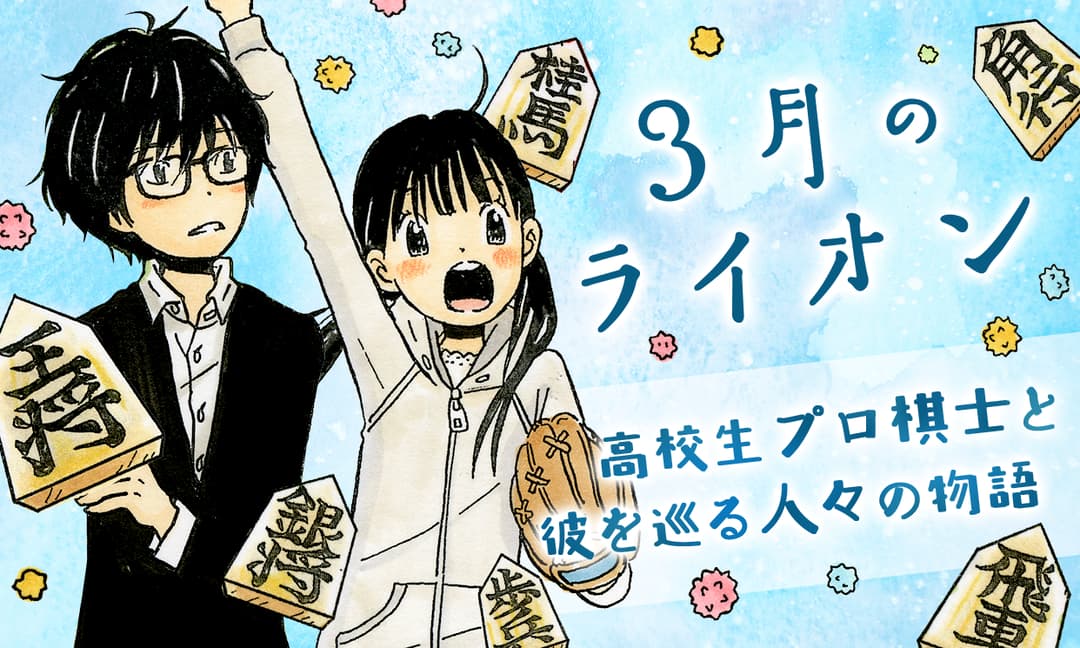
3月のライオンの名言・名セリフ/名シーン・名場面まとめ
『3月のライオン』とは、羽海野チカによる将棋を題材とする漫画、および漫画を原作とするテレビアニメや実写映画などのメディアミックス作品である。 15歳でプロ棋士になった孤独な青年・桐山零が、川本三姉妹や個性豊かなライバル棋士たちとの交流を通じて、棋士として、人間として成長していく姿が描かれる。 プロ棋士・先崎学監修による臨場感あふれる棋士たちの熱い対局に加え、彼らの生き様を表す様々な名言が注目を集めている。
Read Article
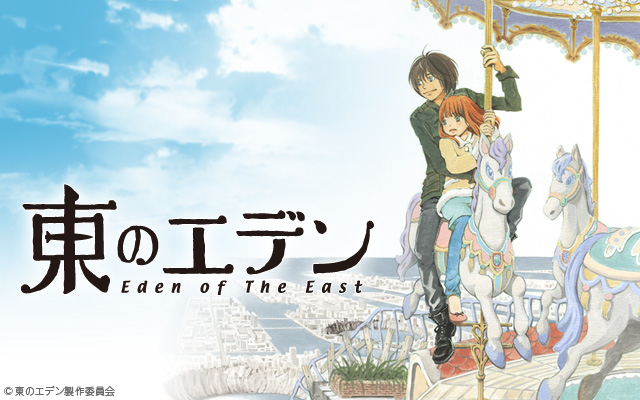
Eden of the East (Eden of the East) Spoilers and Discussion Summary
Eden of the East" is a TV animation series that aired on Fuji Television's late-night anime slot "Noitamina. It is the first original story in this slot, and was written and directed by Kenji Kamiyama, with characters created by Chika Umino, and animated by Production I.G. A young man with amnesia becomes a victim of a mysterious cell phone call, which he uses to call the police. A young man with amnesia gets caught up in a game in which the whole country is at stake when he receives a mysterious cell phone call. After the TV anime was broadcast, it was made into a movie, and this is the first movie adaptation for "Noitamina.
Read Article

Spoiler commentary and discussion of Honey and Clover (Hachikuro)
Honey and Clover" is a manga series by Chika Umino published by Takarajima-sha and Shueisha from 2000 to 2006. It is also a TV anime, live-action movie, and TV drama derived from the manga. It is popularly known by the abbreviation "Hachikuro. The first TV anime season was broadcast in 2005, and the second in 2006. Set at an art college, it depicts the unrequited love and passion for art among university students.
Read Article

Summary of famous quotes, lines/scenes, and scenes from Honey and Clover (Hachikuro)
Hachimitsu to Clover" is a manga series by Chika Umino published by Takarajima-sha and Shueisha from 2000 to 2006, as well as an anime, live-action film, and TV drama derived from the series. It is popularly known by the abbreviation "Hachikuro. The first and second TV anime seasons were broadcast in 2005 and 2006, respectively. Set at an art college, it is an ensemble coming-of-age drama that depicts clumsy college students' unrequited love and their confusion about their talents and life style.
Read Article

A compilation of handsome shoujo manga with cute fashion that I want to imitate [all in color!
There are manga in which the characters are very fashionable ♡ I want to imitate them at least once. We have compiled a list of manga with cute fashion.
Read Article
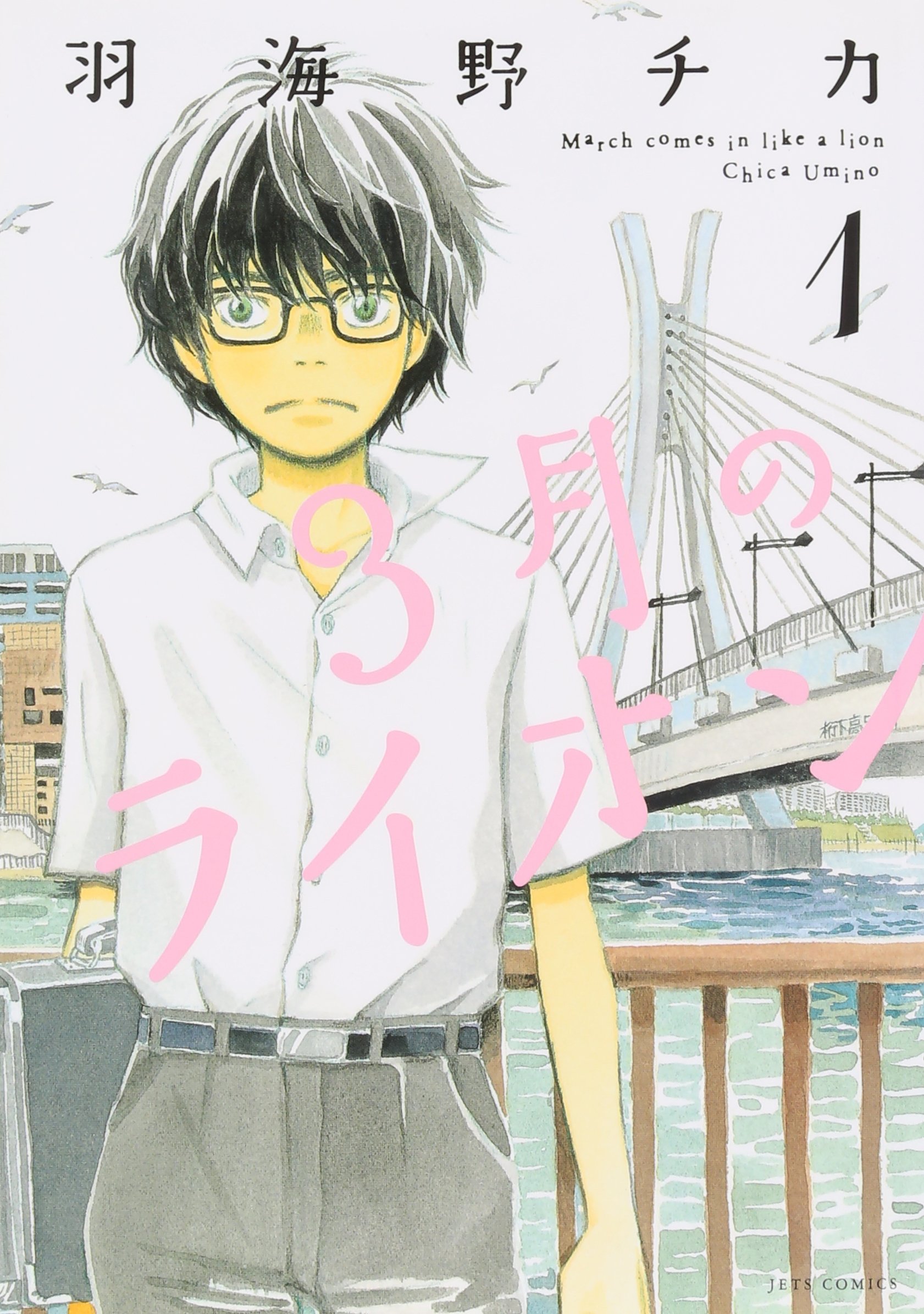
Manga recommendations on the iron plate! [March Lion, 20th Century Boys, etc.
Here are some of the most interesting manga on the iron plate. We have compiled a list of manga that can be recommended to everyone regardless of genre, including "March Lion," a human drama with a chess theme, "7 SEEDS," a harsh adventure tale, and "20th Century Boys," a manga that confronts the crisis of human annihilation.
Read Article
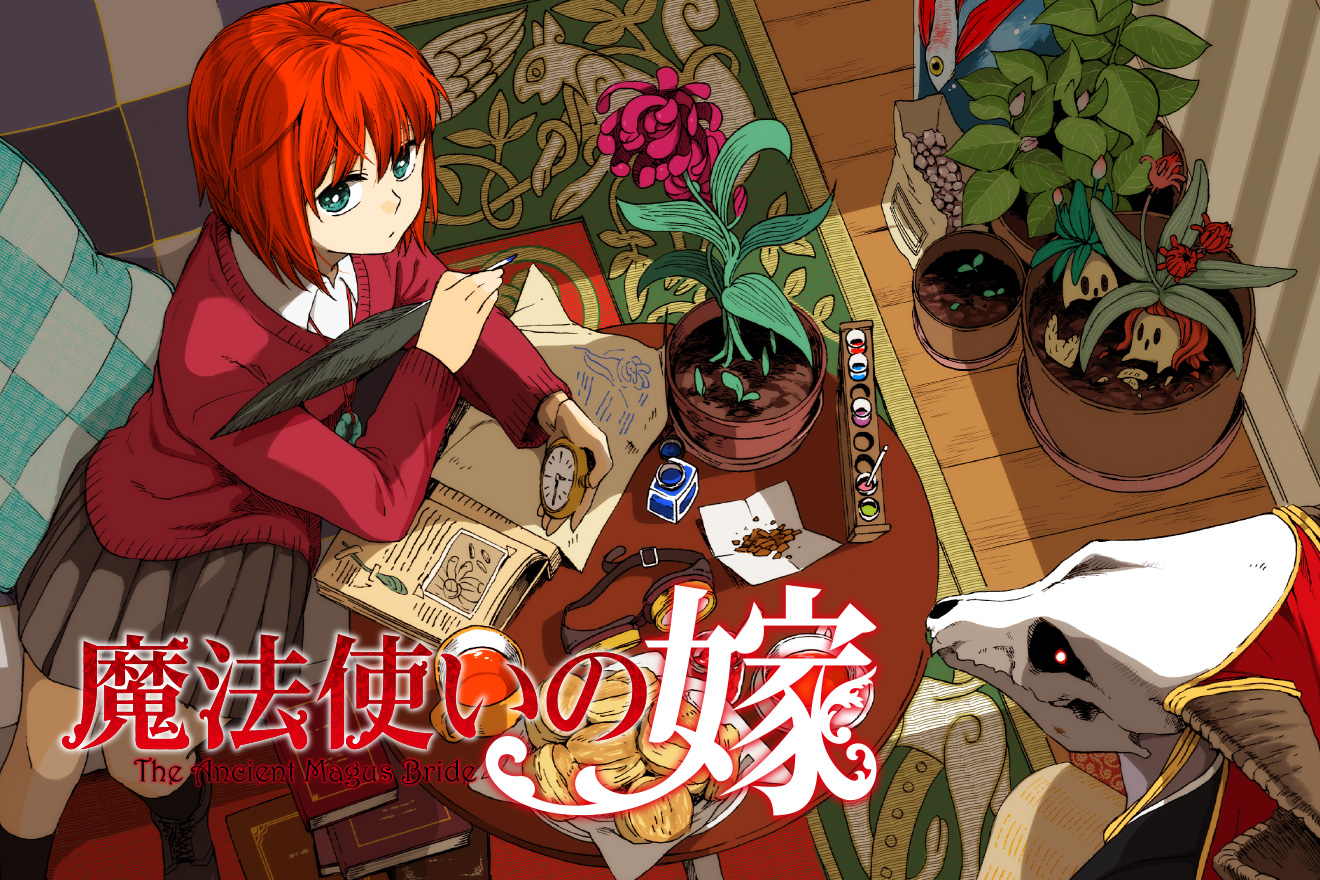
A ranking summary of anime highly rated by foreigners, including "The Mahoutsukai's Wife" and "March of the Lions!
We have compiled a ranking of anime that are highly acclaimed among foreigners, such as "The Magician's Wife" and "March Lion. Japanese anime has a reputation for being of really high quality, and as a Japanese, I'm proud of that!
Read Article
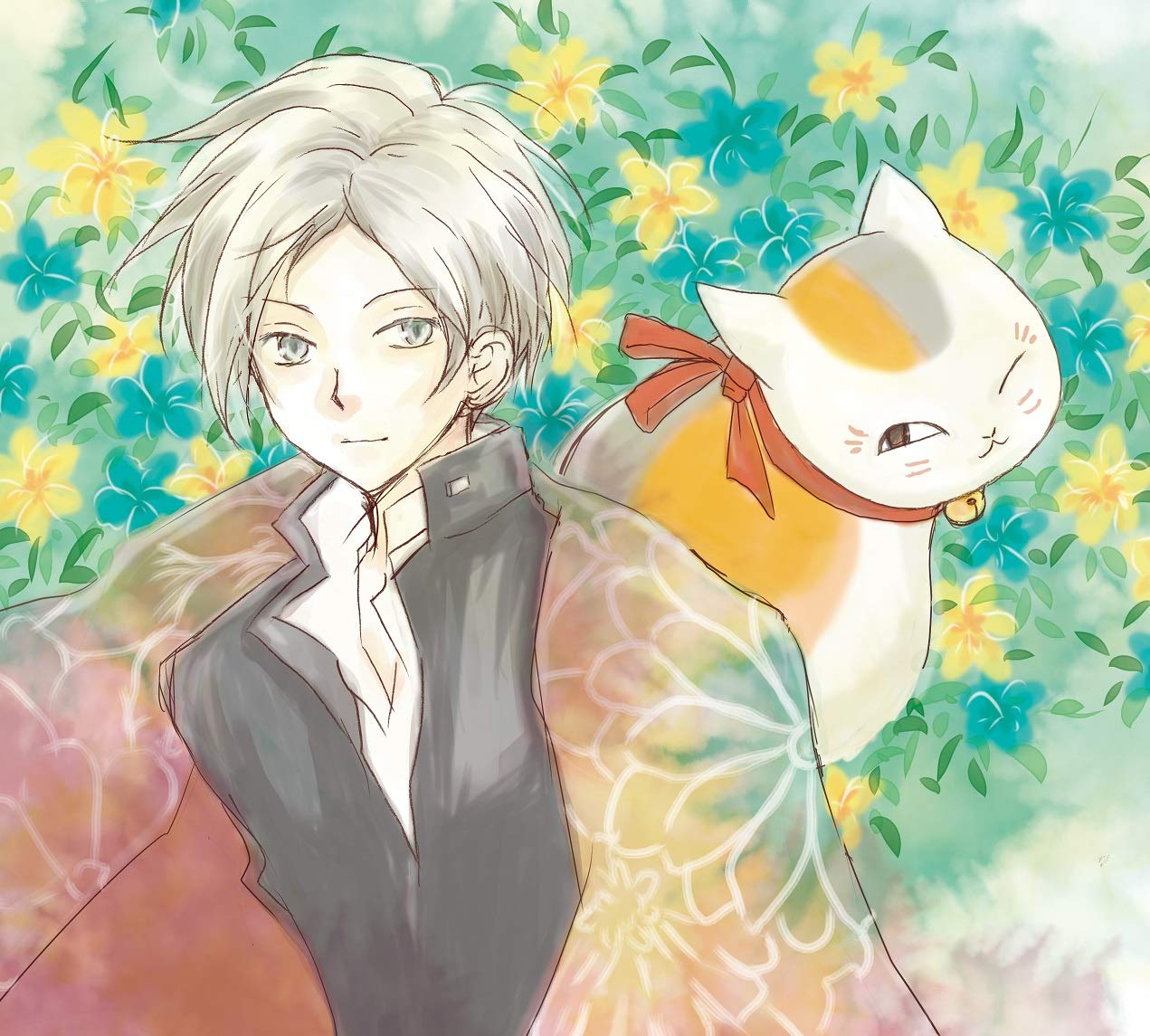
Natsume's Book of Friends: The 100 Most Interesting Manga of All Time!
Manga has now become a representative culture of Japan and is familiar to people of all generations, genders, and nationalities, transcending all differences. In this article, we have carefully selected and compiled 100 of the most interesting manga works of all time from among the world's abundance of manga works. They are all worth a read! When you have time, please take the time to read them.
Read Article
![Anime] Summary of Nishio Ishin's "Monogatari Series" in order of viewing, starting with Bakemonogatari.](https://renote.net/files/blobs/proxy/eyJfcmFpbHMiOnsiZGF0YSI6MTE2OTQsInB1ciI6ImJsb2JfaWQifX0=--937e0c0a546de3855873b0cbb5822ddc080d617b/mono17.jpg)
Anime] Summary of Nishio Ishin's "Monogatari Series" in order of viewing, starting with Bakemonogatari.
The [Monogatari Series], in the midst of an anime adaptation called the Nishio Ishin Project, depicts a boy and a girl encountering a modern-day monster. The number of anime series in the series is so large that it is inevitable to be confused before watching them, but knowing the broadcast order of each series will make it easier to enjoy them. In this article, we will introduce each series in rough outline, broadcast order, and chronological order.
Read Article
Nishio Ishin's "Kizumonogatari" Theatrical Animation Feature / Part 1〈I Iron Blood Arc
Theatrical release of "Wound Story" started on January 8, 2016. Have you seen it yet? There have already been comments here and there that the quality of the film is "half-assed! I would like to summarize the contents of "Kizumonogatari" and the information about the special offers for visitors, including the impressions of those who have seen the movie.
Read Article
In October, we'll have "The Last Tale!" But first, about the Monogatari series
In October, "Monogatari: The Last Story" will be broadcast. So I would like to introduce the Monogatari series.
Read Article

CD "Uta Monogatari," a compilation of theme songs from the Monogatari series, will be released!
A CD of theme songs from the "Monogatari" series, written by Ishin Nishio and produced by Shaft Animation, is going on sale...? So this time, I will spotlight the OP/ED songs that caught my attention with my own bias, along with information on the release of Uta Monogatari.
Read Article
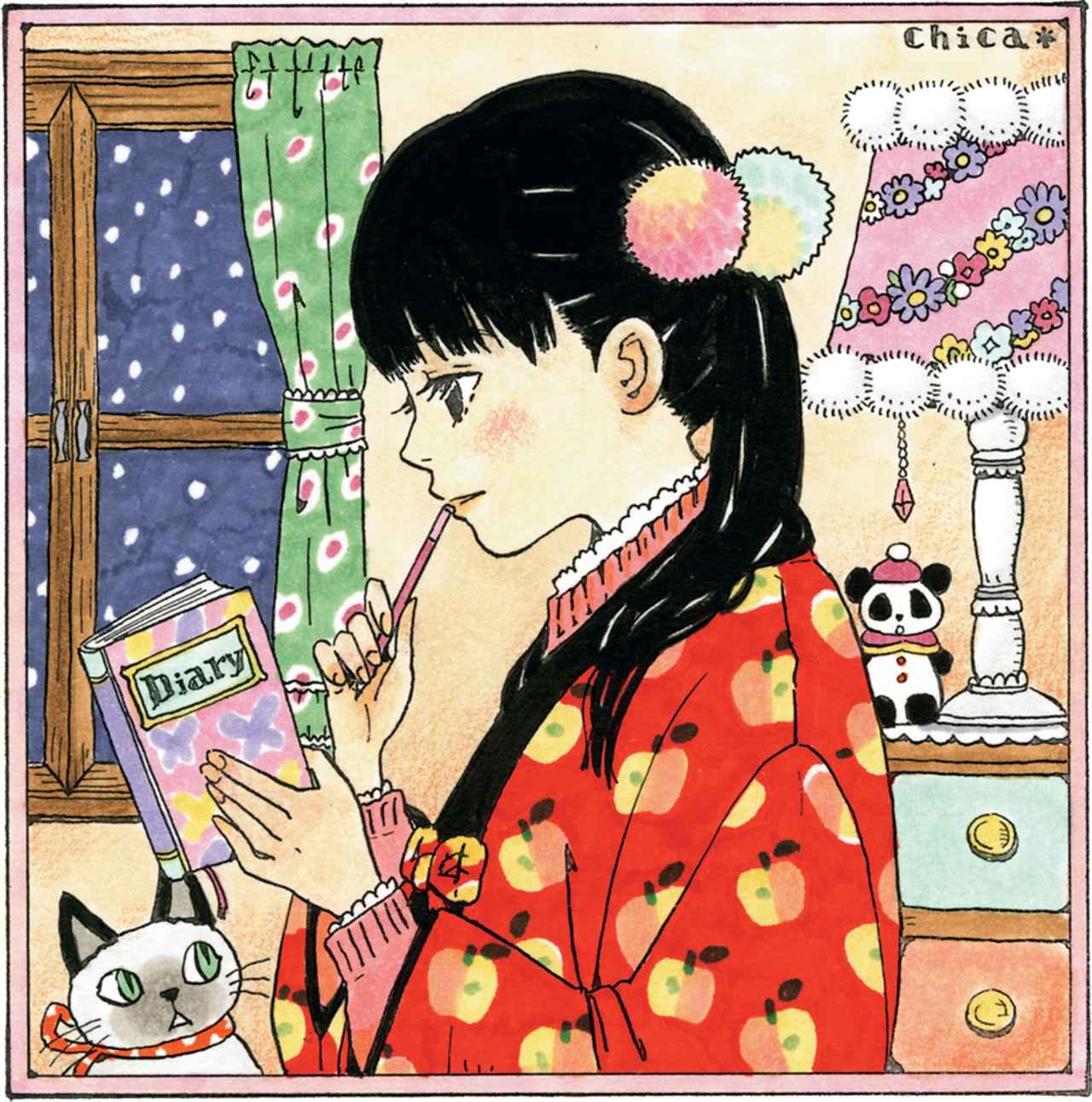
A summary of beautiful manga artist Chika Umino's illustrations and original art exhibition! Honey and Clover", "March Lion", etc.
Here we have compiled a list of popular girls' manga artist Chika Umino's illustrations and the impressions of fans who have attended her original exhibitions. Her best-known works include "Honey and Clover," a coming-of-age ensemble drama set at an art college, and "March Lion," about the interaction between a young professional Go player and three sisters who lead lonely lives.
Read Article

A compilation of lesser-known anime classics! Hyouka", "Eden of the East", etc.
The animation and manga industry is attracting worldwide attention as a part of Japanese culture. There are many anime masterpieces that are popular not only in Japan but around the world and have gained a large number of fans. On the other hand, there are many good anime works that are not well known to the public, but have steadily gained fans for their fine colors, unique characters, and excellent story settings. In this article, we will introduce a selection of recommended anime works that are not well known to the public.
Read Article
A compilation of anime with innovative settings! Let's enjoy watching shocking works such as "Eden of the East" and "TIGER & BUNNY"!
This section summarizes a number of anime works with particularly innovative settings and stories. In addition to the synopsis and storyline of each work, we have also included images and the impressions posted by viewers on SNS. Among the works introduced are "Eden of the East," a suspense action anime about a young man with amnesia and a mysterious cell phone, and "TIGER & BUNNY," an anime set in a futuristic town where unique individuals with special abilities keep the peace.
Read Article
Summary of manga and anime featuring university students [Shijohan Mythology Daikei, etc.
We have compiled a list of recommended manga and anime featuring university students. We will introduce the synopsis and recommendations for each work, including "Shijohan Shinwa Taikei," which allows you to enjoy the atmosphere of college life, and "Hachimitsu to Clover," which depicts students who are lost in love and life.
Read Article
A compilation of shoujo manga whose live-action films were surprisingly well-received! Hana Yori Dango (Boys Over Flowers), Hachimitsu to Clover (Honey and Clover), etc.
When you hear that a manga is being made into a live-action film, I am sure many of you think, "Stop!" I am sure that there are many people who think, "Stop it! Live-action adaptations usually change the content from the original work, and when you look at the cast, you tend to become disillusioned, thinking, "This person is different..." In this case, there is a shoujo manga that was surprisingly well-received when it was made into a live-action film. However, there is a shoujo manga that was surprisingly well received when it was made into a live-action version, so I have summarized it in this article. If you have only read the original, please give the movie a try. Your evaluation may change.
Read Article
Contents
- Outline of "March Lion
- Synopsis and story of "March of Lions
- Zero growing in contact with people.
- Hinata's bullying problem and Zero's newcomer competition
- Kawamoto family in a series of troubles
- Characters from "March of the Lions
- protagonist
- Rei Kiriyama (played by Ryunosuke Kamiki)
- Kawamoto family
- Akari Kawamoto (played by Kana Kurashina)
- Hinata Kawamoto (played by Kaya Kiyohara)
- Momo Kawamoto (played by Chise Niitsu)
- Someji Kawamoto / played by Gin Maeda
- Misaki (Misaki / played by Yuka Itaya)
- Mikako Kawamoto
- Aya Kawamoto
- Shimada Research Group
- Kai Shimada (played by Kuranosuke Sasaki)
- Harunobu Nikaido (played by Shota Sometani)
- Morio Shigeta
- Koda family
- Masachika Koda (played by Etsushi Toyokawa)
- Koko Koda (played by Masumi Arimura)
- Ayumu Koda
- Koda's wife
- Go player (title holder)
- Now I know Fuyuji Soya (played by Ryo Kase)
- Sakutaro Yanagihara (played by Shigeru Saiki)
- Kenji Dobashi
- Raido Fujimoto
- Go player (Class A)
- Masamune Goto (played by Hideaki Ito)
- Takeshi Tsujii
- Kengo Kumakura
- Go player (Class B, Group 1)
- Takehito Sakurai
- Go player (Class B, Group 2)
- Tatsuyuki Misumi / Smith (played by Nakamura Rinya)
- Okeyasu Yokomizo
- Taichiro Tanaka
- Rinya Namekawa, Isuya
- Kenichiro Irie
- Go player (Class C, Group 1)
- Manabu Yasui (Manabu Yasui / played by Masahiro Komoto)
- Subaru Hachiya
- Go player (Class C, Group 2)
- Shoichi Matsunaga
- Issa Matsumoto (Played by Hiroyuki Onoe)
- Junkei Yamazaki / played by Eita Okuno
- Member of Shogi Association
- Takanori Jinguji (played by Ryo Iwamatsu)
- Komabashi Private High School
- Takashi Hayashida (Played by: Issei Takahashi)
- Eisaku Noguchi
- thrush (esp. the dusky thrush, Turdus naumanni)
- Anna
- Hinata no Junior High School
- Yusuke Takahashi
- Chiho Sakura
- Megumi Takagi (Megumi Takagi / performed by: Aonisa Nakata)
- Kokubu
- Other Persons
- Hanaoka
- Seijiro Amaido
- Cancer.
- Kiriyama Family
- Father of Zero Kiriyama
- Zero's grandfather
- Chihiro Kiriyama
- Kiwako Kiriyama
- Animals that appear in the work
- eunuch
- black (horse coat color)
- white
- tiger (Panthera tigris)
- mythical carp with the head of a lion and the body of a fish (auspicious protectors of well-being)
- Elizabeth.
- Manny.
- Terminology for "March of Lions
- Nihon Shogi Renmei (Japan Shogi Federation)
- Shorei Kai
- apprenticeship
- private pupil
- Shogi Kaikan
- Battle of Thoughts (Kanso Senso)
- rank-deciding competitions (e.g. in go or shogi)
- research society
- Famous quotes, lines, scenes, and scenes from "March of the Lions
- Masachika Koda: "Becoming a professional is not the goal, but it's a long and tedious process. The further you go, the more difficult the path becomes, the more people disappear around you, and only those who can adjust and repair themselves will be able to move on anyway.
- Rei Kiriyama: "All my days were like floating in the night sea with no legs."
- Takashi Hayashida: "If you borrow power like that, the next time someone is in trouble, you can help them out, and that's how the world revolves.
- Somaiji says it's important to be humiliated.
- Rei Kiriyama, "I'm in a club."
- Rei Kiriyama: "Even if you become stronger, you will lose if you face someone stronger."
- Kawamoto, Someji: "You saved your friend well, put your heart in your mouth."
- Hinata Kawamoto: "But I don't regret it. You shouldn't. What I did was never wrong. What I did was never wrong.
- Rei Kiriyama: "The people of old gave this name to this little lovely creature, referring to its flight toward the sun."
- Takashi Hayashida: "You have to do what you can do, one thing at a time."
- Kokubu: "As I get to know myself, what I want to do will gradually become dimly visible."
- Junkei Yamazaki: "'If you believe, your dreams will come true,' that's probably true, but there's one sentence missing: 'If you believe and keep working hard, your dreams will come true.' That's the correct answer, and moreover, if you believe and keep working hard every day for one hour longer than other competitors, your dreams to a certain extent have a fairly good chance of coming true.
- Snack time scene between games of the Meijin Tournament
- Trivia, subplots, episodes, and anecdotes from "March of the Lions
- The title comes from a British proverb, Saezaki 9-dan
- Is there an actual game of go in the works?
- The models for the characters are real professionals and celebrities
- Chika Umino said "Shogi is too difficult to understand.
- Theme song and insert song for "March Lion
- OP (Opening): BUMP OF CHICKEN "Answer" (Episodes 1 - 11)
- OP (Opening): YUKI "Sayonara Bystander" (Episodes 12 - 22)
- OP (Opening): YUKI "Stand the Flag" (Episodes 23 - 33)
- OP (Opening): UNISON SQUARE GARDEN "Haru ga kita bokura" (Episodes 34 - 44)
- ED (ending): BUMP OF CHICKEN "Fighter" (episodes 1 - 6, 8 - 11, 22)
- ED (ending): "orion" by Yonezu Genji (episodes 12 - 21)
- ED (Ending): Brian the Sun "Kafune" (Episodes 23 - 33)
- ED (Ending): RUANN "I AM STANDING" (Episodes 34 - 44)
- Insert Song: "Meow Shogi Ondo" by Akari Kawamoto (Ai Chino), Hinata (Kana Hanazawa), Momo (Misaki Hisano) (episodes 7 - 9)