
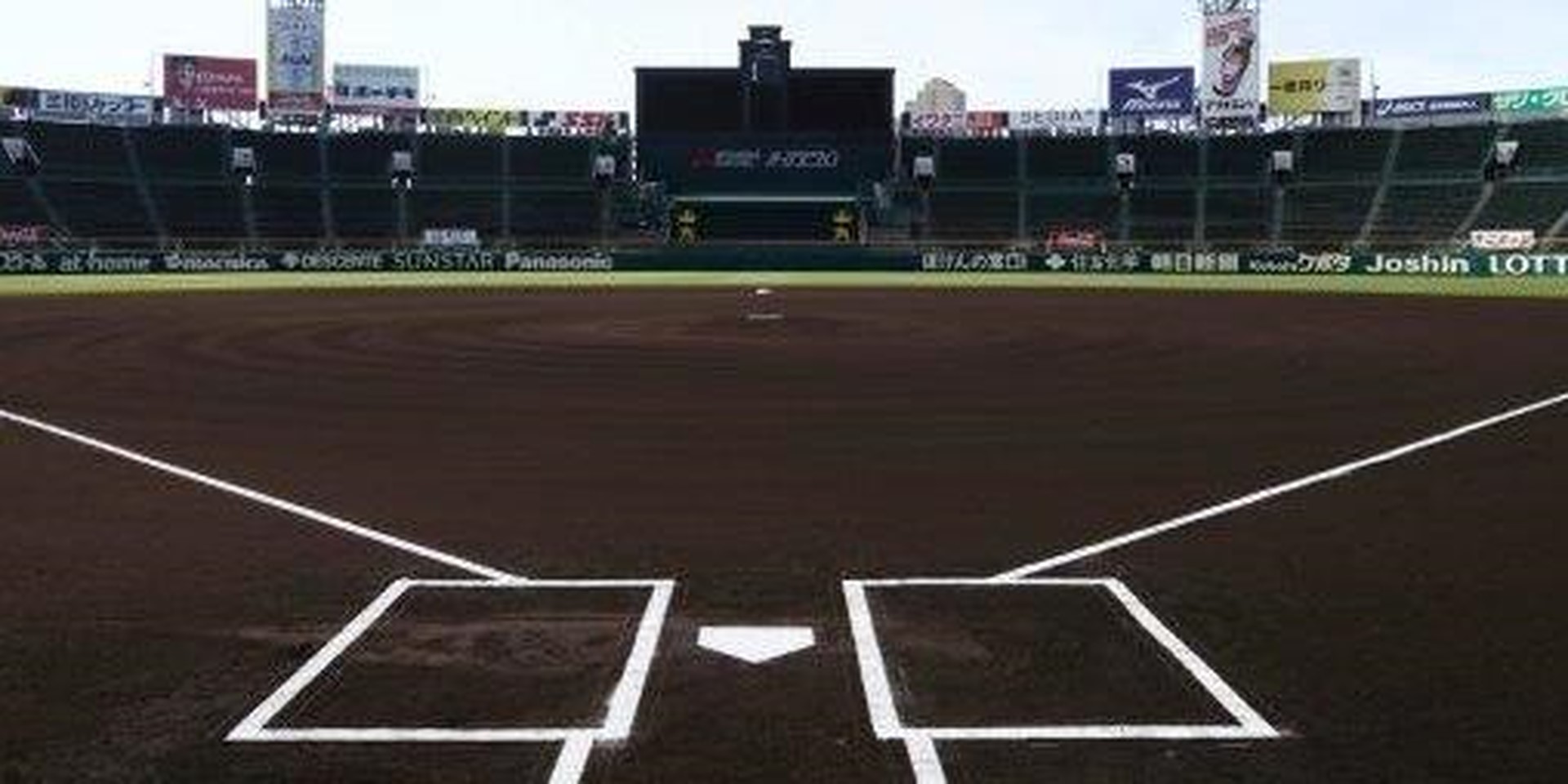
Here, we have compiled miscellaneous knowledge and trivia about the national high school baseball tournament, known as "Koshien," which is a well-known summer event. The following is a list of trivia and trivia about Koshien, including the origin of the name "Koshien," the origin of the "Alps Stand," the history of Koshien, and other information that will make Koshien more fun.
The origin of the name of Koshien Stadium
Source: nikkan-spa.jp
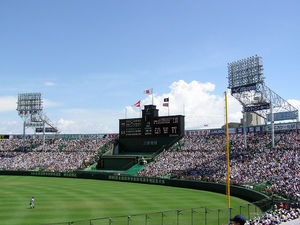
It is said that the name Koshien came from the first letter of the Chinese zodiac, Kinoe, because 1924 (1924), the year when the stadium was built, was the year corresponding to Jikkan and the first Chinese zodiac, Ko and Ne.
It is said that the baseball stadium was named "Koshien Stadium (at that time, it was a large playground)."
The Alpine Stand is named after cartoonist Ippei Okamoto
Source: hotoku-b.sakura.ne.jp
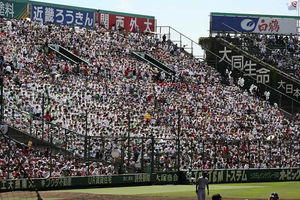
The tall infield stands at Koshien Stadium are called "Alps Stands."
It was built in 1929 (1929) and was given the name by cartoonist Ippei Okamoto, the Tower of the Sun at the Osaka Expo, and the father of painter Okamoto Taro, who is famous for "Geijutsu wa bakudan da!" (Art is an explosion!).
That year, as a reporter for the Asahi Shimbun, Ippei covered the Summer Koshien Tournament. So he named the Alps after the snow-covered Alps of the white-shirted fans of the high stands.
* However, there is another theory here that Taro, who was 18 years old at the time and was accompanying Ippei, said, "It's like the Alps," and his father gave it to him.
THERE WAS A SCHOOL THAT BROUGHT ELEPHANTS TO KOSHIEN TO CHEER ON HIGH SCHOOL BASEBALL.
Source: nishinomiya-style.jp
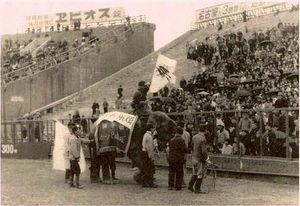
It refers to the Spring Senbatsu Competition in 1951.
The cheering squad from Naruo High School, the national team of Hyogo Prefecture, rushed to cheer with their outrageous guests.
The guest is an African elephant.
He brought them from a zoo near Koshien and enjoyed taking pictures with the players practicing on the ground.
Of course, he didn't get permission to play in the stadium, and he was forced to leave the stadium immediately.
Both teams have a one hit game
Source: fotomoment.exblog.jp
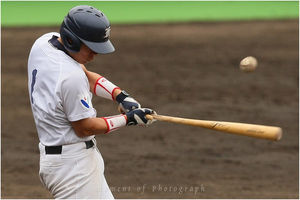
In the first round match between Keio High School (Kanagawa Prefecture) and Hokkai High School (Hokkaido Prefecture) in the summer of 1953, Hokkai High School had only one hit and Keio High School had only one no hit, resulting in only one hit for both teams.
However, the winner was no hit Keio High School, who scored two points with a squeeze and opponent's error.
North Sea 000 000 000 = 0
Keio 000 011 00X = 2
Koshien's most strikeout record holder is Eiji Bando

Source: www.maff.go.jp
Eiji Bando is now a well-known entertainer.
It is said that the records of 83 strikeouts recorded at the "40th National High School Baseball Championship" held in 1958 still remain.
For more than 50 years, he has maintained the records of both strikeouts in one game and strikeouts in all competitions.
The 40th Congress
・ 2nd round Akita Sho 17 strikeout (9)
・ Third round: Hachijo 15 strikeouts (ninth)
・ Quarter-final Uozu 25 strikeout (18 innings)
・ Quarter-final Uozu 9 strikeouts (rematch, 9th inning)
・ Semifinal Shingakuin 14 strikeouts (9)
・ Final Yanai 3 strikeouts (8)
Once there was a resurgence of losers
Source: jice.homemate.co.jp
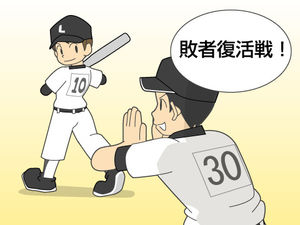
Only the second and third tournaments from 1916 to 2017 were able to bring back the losers.
In 1916 (the second competition), 12 schools participated in the national competition.
The number of in the first round and three matches in the second round, only three schools were allowed to advance to the next step. Out of six teams that lost in the first round, two schools were selected by lottery to return to the game.
In 1917, the third competition was held at 12 schools, but at that time, only four schools were able to win the prize.
But the fact that the team that lost in the first which had recovered the losers in the third tournament, won the championship raised questions, and it was abolished.
The Crimson Banner has been stolen.
Source: nekoneko-mvd.cocolog-nifty.com
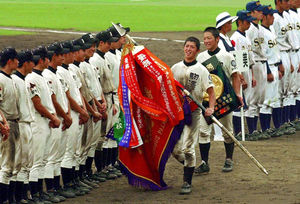
Chukyo Trading Co., Ltd. (currently Chukyo, Aichi, Chukyo University), who won the championship in the summer tournament of 1954 (1954), kept the winning flag received at the closing ceremony in the principal's office, but it was stolen.
It was discovered under the floor of a nearby middle school in mid-February, when some members of the Japan Federation of Bar Associations began calling for a new flag.
In the end, the culprit remained unknown, but the winning flag, which was safely returned, was kept in a safe and returned to the headquarters of the summer tournament at its opening ceremony.
The winning flag is given to the winning school, but actually it is said to be worth about 10 million yen.
They asked a craftsman of Nishijin-ori, one of Japan's traditional crafts, to make the winning flag for them, and it became so expensive.
The original winning flag is used from the first competition to the 39th competition, and from the 40th competition, the second winning flag is used.
Source: www.shokunin-times.com
Record big difference is 122 points
Source: pbs.twimg.com
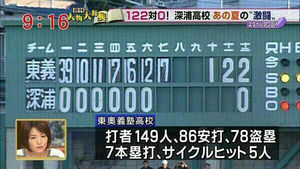
A match between Togi and Fukazawa at the Aomori Prefectural Tournament on July 18, 1998.
It greatly decorated the front page of the daily sports of the next day.
149 batters, 86 hits, 36 walks, 7 home, runs, 21 triple hits, 31 double hits, 78 stolen bases, and only one strikeout.
Fukaura, on the other hand, had 25 no hit batters, with 16 strikeouts out of 25.
A compilation of inspirational theme songs of Koshien throughout the years, including Official Bearded Man dism and Arashi - RENOTE
renote.net
Here we have compiled a list of theme songs for the "Nekuto Koshien," a TV broadcast of Japan's summer tradition of high school baseball games. The songs, such as "Shukumei" by Official Bearded Man-dism, are all hot songs that reflect the trends of each era.

Contents
- The origin of the name of Koshien Stadium
- The Alpine Stand is named after cartoonist Ippei Okamoto
- THERE WAS A SCHOOL THAT BROUGHT ELEPHANTS TO KOSHIEN TO CHEER ON HIGH SCHOOL BASEBALL.
- Both teams have a one hit game
- Koshien's most strikeout record holder is Eiji Bando
- Once there was a resurgence of losers
- The Crimson Banner has been stolen.
- Record big difference is 122 points