
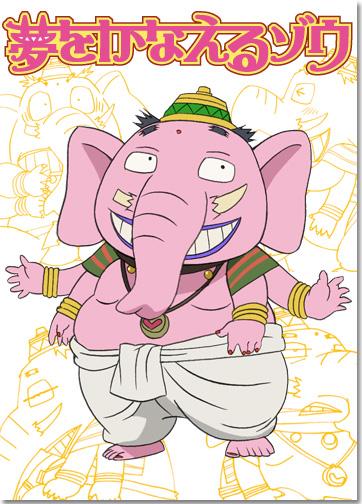
Mr. Keiya Mizuno is an evangelist of "Secrets of Success" known for "Spartan Marriage Activity School" and other works. The former comedian's first book was "Yume Kanaueru Zo" (The Elephant That Can Make Your Dreams Come True), which was his third book. This is his third book, and his first one sold 300,000 copies, but I think "The Elephant That Makes Dreams Come True" has more impact. Is this partly due to the character of Ganesha? But why was Ganesha chosen out of all the gods?
The elephant that makes dreams come true" synopsis/story
The protagonist is a very ordinary businessman. Feeling embarrassed by the fact that many famous people had gathered at a party of his former friend who had achieved great success, he went home drunk. The next morning, when he said he wanted to change his life, he found a being in his room who spoke in Kansai dialect and called himself "Ganesha. Ganesha" tells the protagonist that he will never be successful if he does not change his life, and teaches him a trivial way to "change his life. The content is really a very trivial matter. However, they are things that great historical figures and famous people in the present day have actually done....
Ganesha's character
He uses Kansai dialect for some reason, even though he is an Indian god. Perhaps because he is a god, he calls everyone from historical figures to present-day celebrities by their titles, such as "Kimi" and "Chan. According to him, "So-chan means Soichiro Honda, and Sachi-chan means Konosuke Matsushita. There is a scene in which he attempts to commit suicide in a madness, and there are many other parts of his character that are not so "god-like" but are rather suspicious.
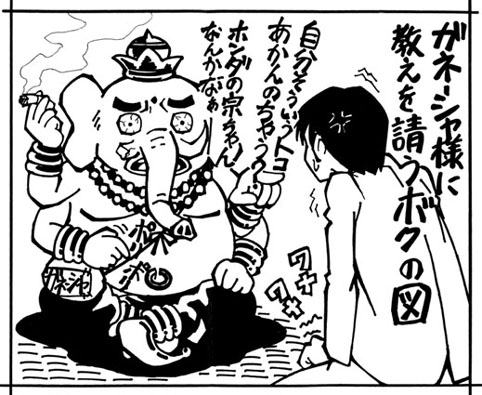
Lord Ganesha loves bacon.
But there was also a frightening aspect. Ganesha appeared to the protagonist when he said he wanted to change his life, and first asked him to sign a contract of sorts. The first thing Ganesha asks the protagonist to do is to sign a contract, something like, "If your dream does not come true, you will forget your dream and spend the rest of your life in lethargy. The main character is asked to make up his mind. I'll teach you, but it's up to you to put it into practice.
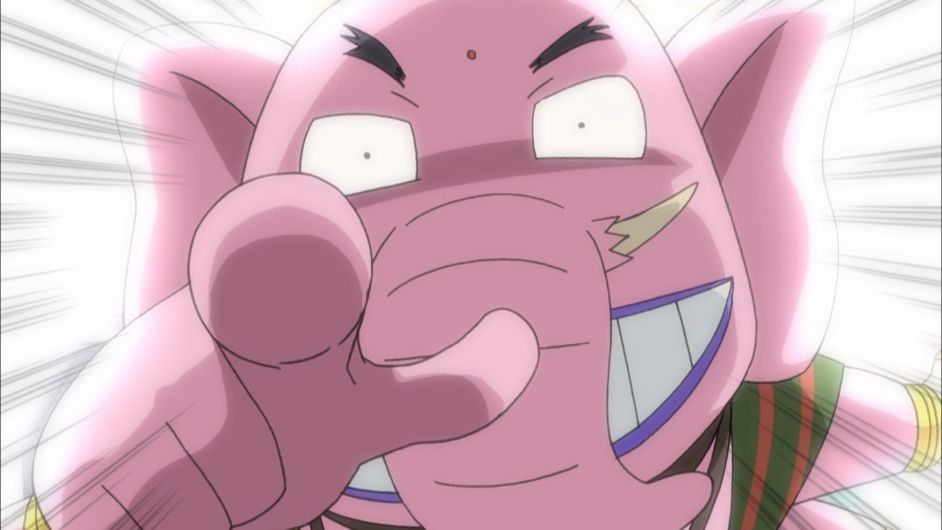
Animated version of Ganesha. Voiced by Master Tsurubi. In the anime, the main character was named after him.
While the main character is gradually implementing what Ganesha has taught him, the man himself is a useless father who plays video games and can't quit smoking. He also said, "Always put bacon on a fried egg. How can you not recognize my desire for bacon? When he taught us to donate money, he asked us to put it in a "donation box" (later renamed a piggy bank) that looked like him. When the protagonist asked why he should donate, Ganesha told him about John Rockefeller, an oil tycoon and businessman. Ganesha said, "Even when I was poor, I used to donate a certain percentage of my money to charity," and that "those who become rich want to make people happy. That is why he donated money in the form of fundraising and made people happy".
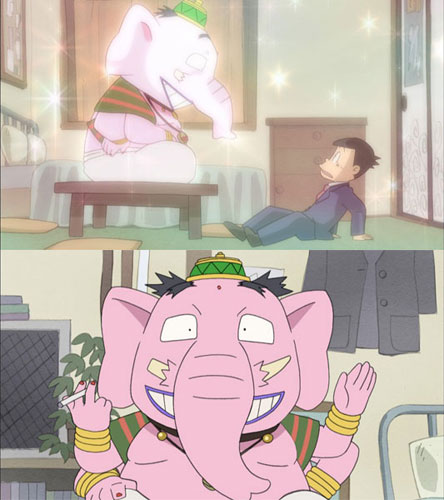
When he is talking about secrets, it is plausible. Also, the main character, now that I look at it, looks like "Osomatsu-san".
As one would expect, he is very persuasive in what he teaches, and sometimes he "teaches" the main character through real-life experiences. In the "donation" episode, the protagonist was made to go shopping at a convenience store and donate money to a donation box that he saw. By practicing the teachings firsthand, the protagonist's state of mind seems to change.
Animated video. Shakyamuni Buddha also appears.
The original Lord Ganesha
In India, he is believed to be the "god of wealth" who governs business and learning. Although he has an elephant head, he was not born with this figure. He was originally a beautiful boy. While his father, Shiva, was away, his mother, the goddess Parvati, rubbed his scruff and he was born a beautiful boy. That was Ganesha. However, when Shiva came back from guarding his mother while she was taking a bath, he chomped down on her neck without knowing that he was her son. Knowing what happened, he said, "Wait for me! I will bring you a new head!" He set the head of an elephant that happened to be passing by.............................
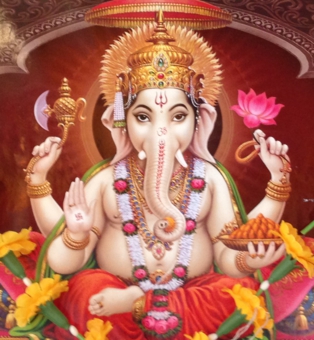
Four arms seem to be the default.
If you look closely, you will see that both Ganesha in the play and the original story have one of their tusks broken. There are various theories as to why Ganesha broke one of his fangs: he threw it at the moon, it broke when he fell from the palanquin, or he caught the axe thrown by his father Shiva. As for the theory that he threw the axe at the moon, it is said that he threw it out of embarrassment when the moon laughed at him while he was trying to pick up sweets. He was probably just a child at that time.
Why Ganesha?
But why Ganesha? Because he looks somehow humorous? Because he is the "god of wealth"? Is it because he uses the Kansai dialect to make people more familiar with him? Maybe it is because of some kind of relative effect. God! That's great!" followed by the persuasive "teaching of the secret. If the character is perfect from the beginning, such as preaching proudly as a god, it might come off as somewhat preachy. Maybe the same reason why you gave him the "flaw" of not being able to stop smoking?
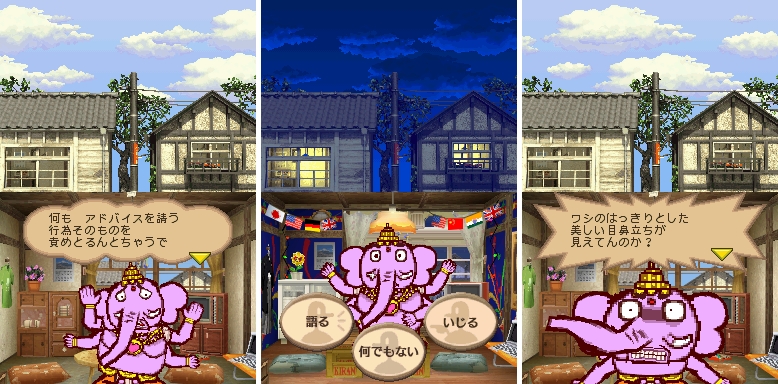
There is also a game version.
However, I think the main character has a good chance because he is doing the "secret" that was taught to him despite his complaints. Ganesha in the movie may come down to such people who "can't take the next step". It is said that Ganesha does not look like a god, but perhaps he is simply "in his natural state. After all, he has lived long enough to "see the Big Bang" (according to him) and is friends with the Buddha. He has a lot of life experience.
Finally.
A collection of quotes and "lessons learned" will be provided.
I've compiled a synopsis of all the "Dream Comes True Elephants 1, 2, and 3," their challenges, and their quotes.
www.keikawakita.com
The lesson of this work is that thinking "I can't change," and continuing to do so, creates an "unchangeable me," until the task becomes second nature to you.
Source: ja.wikipedia.org
