
Perhaps I am asking too much of fantasy works to dream, but they sometimes have unexpectedly serious developments and settings. Even so, the "Magical Land" series is interesting. Fantasy is essentially a lesson in the guise of fantasy, but this series can be read without being snarky, despite the lessons it teaches.
Synopsis, Story and Worldview
Magic" is used in the work, and the main character, Skeeve, initially planned to use his power for a "thieving family business".... However, the master dies, and suddenly a "demon" appears. The person who killed the master was someone else, but the problem is this "monster. Covered with green scales all over his body, he, Oozu, is actually from another "dimension.
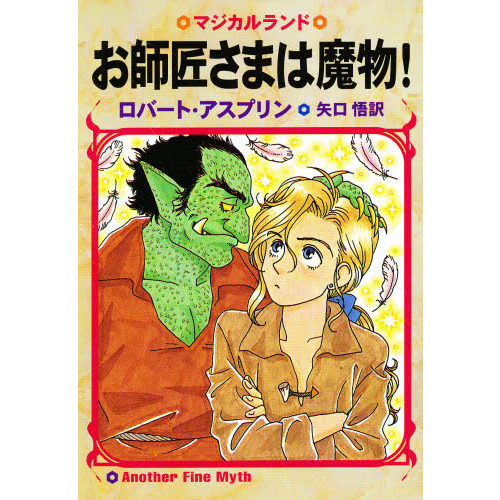
The "demons" in the play are, in other words, "gentiles" so to speak, from another "dimension. Even skeeves are treated as "demons" in another "dimension. The "dimension" and its recognition differs depending on the "dimension," and the "perv," where Ouz was born, is an advanced dimension where magic and science have developed. For some reason, he was blocked from magic, and he and Skive, who knew nothing about magic, became master and apprentice, teaching him not only about magic but also about various dimensions and "society" as well.

And even in Harry Potter, magic is learned through training.
In this world, there is a flow of magical power called "jutsu-ryoku-zensen," and magic can be used only after finding it through training and taking it into one's body. It took a certain amount of training for Skeeve, who had struggled even to light a candle, to be able to take in a line of magical power through various trials.
The lessons are not snarky, but rather encouraging.
Education, work-related difficulties and frustrations. The "I don't know what to do" events come one after another, but they are so real that you want to ask, "This is fantasy, right?" I want to ask, "Is this fantasy? In some cases, the story comes to a serious conclusion. But it does not make you feel gloomy, and you will be convinced. I feel as if I have prepared myself to some extent.
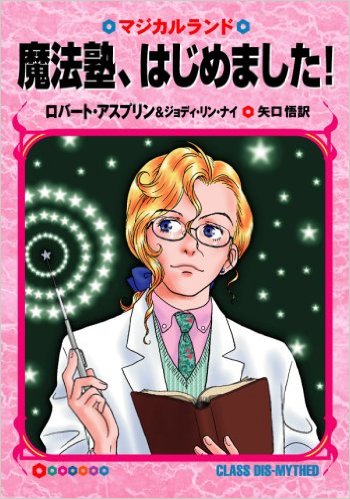
In "Magical School, I've Started!", which is practically the last volume of the series. ", he has to teach six naive "students", but even there, Skive shows his "immature" side (at least as a teacher). Even so, the reader is not disappointed. In fact, it may be encouraging for teachers and others.
First-person view expands your worldview
In the case of novels, the text other than the characters' lines can be roughly classified into third-person or first-person, but this work is always in the first person. However, this work is always in the first person, which does not necessarily mean that the skive is the narrator. Even so, the story is still told. In the Japanese translation, the style itself changes depending on the tone of voice. The interesting thing about the first-person style is that you can glimpse the unique values and thoughts of each character, who has led a different life from the original.

Even in this work, where there are many different "dimensions," the worldview expands, but it is amazing that it does not grow too large, and that the furoshiki is properly folded up. The realistic aspect of the story makes it easy to sympathize with the protagonist and other characters, who also grow.
Full of irony and humor
Above all, what sells this work, or rather the author, is his sense of humor. The author uses emoticons to express his joy, makes money through misunderstandings, and is dirty with his money. There is some sarcasm about telephones and the Internet, but that is only to add flavor. The irony is not too sarcastic, but somewhat refreshing.
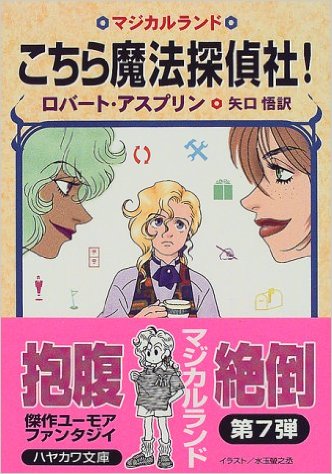
The characters and characters are fascinating.
I suppose it comes down to this. It could be that the characters are so well-defined that the story becomes fascinating. There's Skive, who, aided by "magic in disguise" and luck, has made a name for himself in many dimensions as a "big-time magician" and decides to retire and start his training all over again; there's Ooz, the experienced, if money-grubbing, master who taught Skive about magic, society, and life. The dragon Gaon, the sexy assassin Tanda and his brother (a fugly guy who looks nothing like him, but has an intelligent and gentle personality) Chamly, the gangsters, and so on.
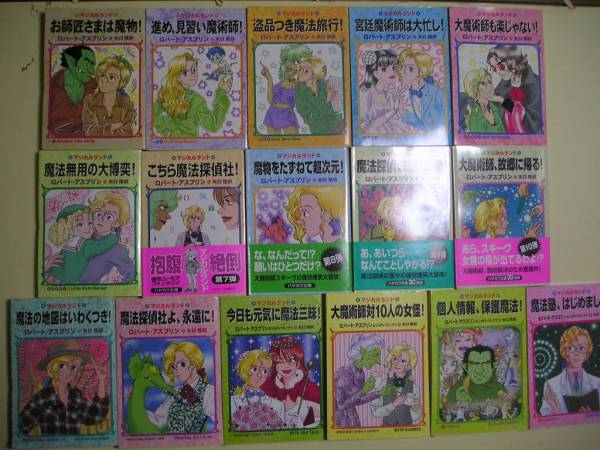
They may all be killers or work "underhandedly," but they are human and lovable characters, even if they are multidimensional creatures. Even though they are experienced, they show their weaknesses, and as storytellers, they have a sarcastic way of saying things. Guido, Skeeve's valet, is not very articulate, but when he is the narrator, he uses a very serious tone. I think that shows his humanity.
summary
Full of humor, fascinating characters, and a unique worldview, it is a great read. Hayakawa Bunko FT contains 16 books. You can read it interestingly no matter where you read it from, but some parts are not understandable unless you have read the previous works, so you may want to read them in order. But I guess I would read the first one first, "The Master is a Demon".
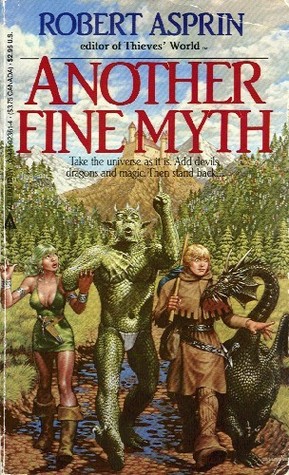
Original language version. Well, the impression is very different...
