
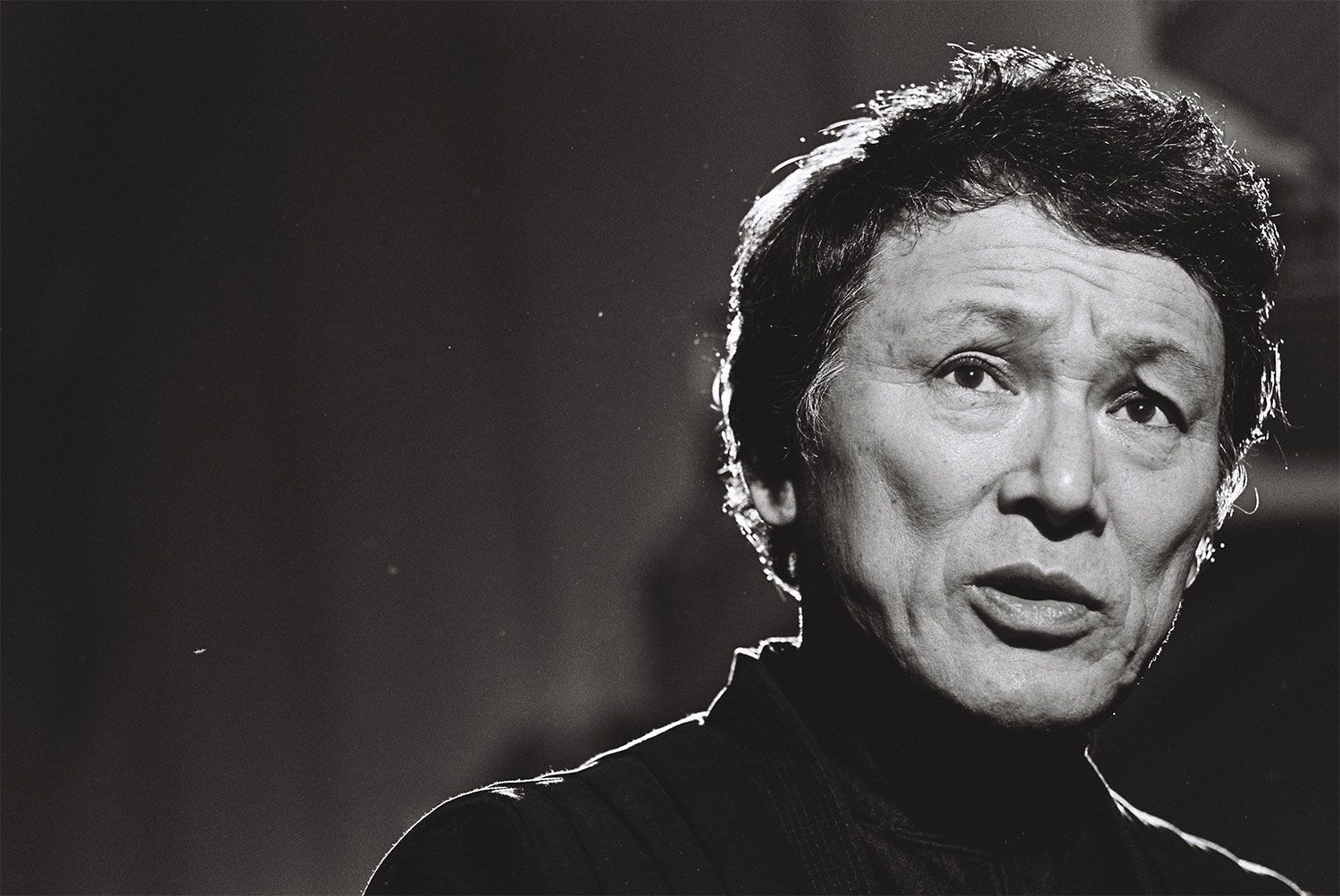
Here we have compiled a list of domestic and foreign celebrities and personalities who are rumored to have committed suicide or to have died of illness, but who are also rumored to have been assassinated. Many people are rumored to have been assassinated, including film director Juzo Itami and Liberal Democratic Party member of parliament Shoichi Nakagawa.
ITAMI Juzo (May 15, 1933 - December 20, 1997) was a Japanese film director, actor, essayist, commercial designer, illustrator, commercial message writer, and documentary filmmaker. He thought it would be okay to add one more title to his name card: "Commentator on the Proper Use of Matches in Strong Winds." His name was Yoshihiro IKEUCHI, but he was raised at home as Takehiko, so he is sometimes called Takehiko IKEUCHI. His father was the film director Mansaku Itami, his wife was the actress Nobuko Miyamoto, his eldest son was Mansaku Ikeuchi (actor), his second son was Manpei IKEUCHI, the writer Kenzaburo Oe was his brother-in-law, and the guitarist Kiyoshi Shomura was his cousin. He was also known as a cooking expert. He was 180 cm tall.
On December 20, 1997, his body was found under an apartment building in Azabu, Tokyo, where Itami Production is located. From the beginning, there were various theories about the process.
After the release of "Minbo no Onna" (The Woman of Minbo) (1992), there was a rumor that gangsters were involved in the attack. However, there was a suicide note printed on the word processor in the office, which said, "I will prove my innocence. If there was nothing, I can't prove it any other way." This led to speculation that the suicide was a protest against the fact that the weekly photo magazine "Flash" talked about my going to the SM Club and my alleged affairs. However, it was said that it was unnatural to use a word processor instead of handwriting. When asked about his alleged affairs by a FLASH reporter just before he died, Itami answered with a smile, "You can ask your wife," and "(suspicion of affairs) is usual," and this was posted on the FLASH magazine. He also continued to cover medical waste issues until five days before his death. The "suicide by jumping out" happened immediately after that (interview, immediately after the release of FLASH), and the "suicide" continues to be strongly suspected because of the unnatural appearance of the scene just before the suicide. According to Jake Adelstein's book, a person he interviewed said that Itami was planning a film about the relationship between Goto-gumi and Soka Gakkai at that time, and people related to Soka Gakkai and Tadamasa Goto, the leader of Goto-gumi, were not pleased with it, and five people under Goto grabbed Itami's body, pointed a gun at him, and made him jump out of the roof. Also, people who knew Juzo Itami from long ago, such as Nagisa OSHIMA and Danshi Tatekawa, denied suicide even after the police determined that the cause of death was suicide, saying, "He will not commit suicide just because of reports of affairs," and "He will never choose suicide by jumping out."
On December 20, 2002, Nobuko Miyamoto said in a speech at the "Appreciation Meeting" that "it can't be helped because it was decided by the person himself."
http://ja.wikipedia.org/wiki/%E4%BC%8A%E4%B8%B9%E5%8D%81%E4%B8%89#.E7.AA.81.E7.84.B6.E3.81.AE.E6.AD.BB
Akio Kuroki
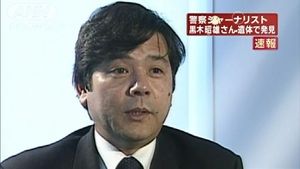
A police journalist who was found dead in a car while he was pursuing the truth about a murder in Iwate. There is a theory that he was murdered, and a TV program was broadcast to explain the theory.
Source: pds.exblog.jp
Akio Kuroki
Akio KUROKI (December 19, 1957 - November [1], 2010) was a police journalist and former police officer from Tokyo.
In March 1976, after graduating from Shutoku High School, he was appointed as a police constable by the Tokyo Metropolitan Police Department
In April, 1977, he graduated from the Tokyo Metropolitan Police Department Police School and was assigned to the Motofuji
In 1983, around this time
In July 1986, he was transferred to the Second Motor Vehicle Police Unit of the Tokyo Metropolitan Police Department.
February 1995: Transferred to the Ebara Police Station of the Metropolitan Police Department
In February 1999, he was promoted to Sergeant and retired.
During his 23 years at the Tokyo Metropolitan Police Department, he received the Tokyo Metropolitan Police Commissioner's Award 23 times. After retiring, he worked as an investigative journalist, analyzing various issues within the police and cases that caused a stir from his own point of view. On November 2, 2010, he was found dead in a parked car in Ichihara City, Chiba Prefecture. He is thought to have committed suicide, but some has been pointed out that it was a suspicious death. On April 3, 2011, a TV Asahi program "The Scoop SP: Journalist Akio Kuroki's Death Truth" aired a program that raised questions about the suspicious death.
http://ja.wikipedia.org/wiki/%E9%BB%92%E6%9C%A8%E6%98%AD%E9%9B%84
President Lech Kaczyński
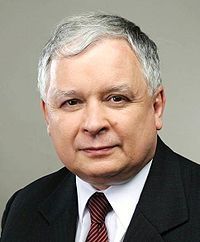
Former president of Poland. He is a hard-liner against Russia and an obstacle to Russia. His plane crashed and killed many of the family members of the Kachin Forest of Poles by the Soviet Union.
There is a theory that President Putin was involved.
Source: upload.wikimedia.org
President Lev Kaczynski
Lech Kaczyński (Kaczyński, June 18, 1949 - April 10, 2010) is a Polish politician and president who, along with his older brother Jarosław, Duke of Opole, is known to be an identical twin politician. In April 2010, a presidential plane on board to attend the 70th anniversary of the Katyn Forest incident crashed, killing him along with his wife, Maria, and a number of senior government officials who also accompanied him to the ceremony.
Born in Warsaw. 45 minutes younger than his twin brother Jarosław, Duke of Opole. [Source] His father, Raimund, is an engineer who fought as an underground army during the Warsaw uprising of 1944. His mother, Jadwiga, is a linguist. He met his wife, Maria, in Gdansk and had a daughter.
He graduated from the law departments of the University of Warsaw and the University of Gdansk. He is a doctor of law. He is a Catholic. During the period of communism, he preached to workers about their rights as a lawyer even before the formation of the famous Solidarity. He was greatly involved in the formation of the Solidarity with Andrzej グヴィヤズダ and others. He rose to the forefront of politics with the collapse of communism. He became the mayor of Warsaw and won overwhelming popularity among the citizens of Warsaw for his political skills. He then ran for the presidency and was elected president of the Republic of Poland.
His hobbies are history and philosophy. When he was a child, he and his older brother, Jarosław, Duke of Opole, played the roles of イヤツェック and プラツェック in the film "Tsuki no Kusumida Twins" (1962). played the role of Tsukino Kusumida and Jarosław, Duke of Opole played the role of Tsukino Kusumida.
After the crash, on 18 April 2010, he was buried with his wife in Waver Cathedral after a state funeral in Krakow.
http://ja.wikipedia.org/wiki/%E3%83%AC%E3%83%95%E3%83%BB%E3%82%AB%E3%83%81%E3%83%B3%E3%82%B9%E3%82%AD
Alexander Litvinenko
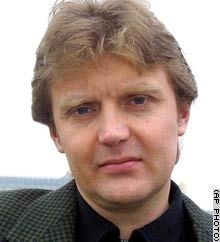
I was working with Italian professor Mario Scaramella at a sushi restaurant to learn the truth about the shooting death of journalist Anna Politkovskaya, who was known for his critical reporting stance toward the Putin administration.
Polonium 210, a radioactive substance with 10 billion times more radioactivity than uranium, was detected in his body.
Source: zam.arrow.jp
Alexander Litvinenko
Alexander ヴァリテラヴィチ Litvinenko (August 30, 1962 - November 23, 2006) was a Russian who was a staff member of the Soviet National Security Committee (KGB) and the Russian Federal Security Service (FSB). His rank at that time was lieutenant colonel. He later defected to Valterovich and became a dissident and writer against Russia. He was poisoned by someone in 2006. He converted to Islam just before his death. Вальтерович Литвиненко
On November 1, 2006, he met with an Italian professor, identified as Mario Scaramella, at a sushi restaurant near piccadilly circus in order to get to the bottom of the shooting death of journalist Anna Politkovskaya, who was known for his critical reporting stance toward the Putin administration. After the meeting, he became ill and was taken to a hospital. On November 19, the British press reported that he was suspected of having been poisoned with thallium and that it was highly likely that the Putin administration had attempted to poison him. Litvinenko was transferred to the intensive care unit the next day. Scotland Yard's anti-terrorism department launched an investigation into the attempted poisoning. On November 22, the hospital announced that the poison was a radioactive substance other than thallium. The Mario Scaramella he had met with was arrested at an Italian airport in Naples after the incident on charges of "weapons smuggling" and "leaking state secrets." ペシコフ, a deputy spokesman for the Russian presidential office, refuted, "The Russian government cannot be involved in the attempted poisoning of Litvinenko. It is completely absurd."
Litvinenko, who was in an intensive care unit, died on 23 November at the age of 44.
The BBC reported on November 24 that a large amount of polonium 210, a radioactive substance with 10 billion times the specific activity of uranium, was detected in his body. If polonium 210 were taken into his body, he would be exposed to alpha radiation. The artificial production of a large amount of polonium 210 would require large-scale facilities such as nuclear facilities. The British Foreign Ministry asked the Russian government to provide information on the incident through Fedotov, the Russian ambassador to Britain.
"The motives, the means and the opportunities all speak for the FSB's involvement," the Times said on June 25, adding that the British Interior Ministry's Information Intelligence and Security Service (MI5/SS) and the British Foreign Ministry's Foreign Intelligence and Secret Service (MI6/SIS) were also part of the investigation. Investigators searched Litvinenko's home, a hotel and a sushi bar in London where he was believed to have had tea on the day of the incident and found traces of radioactive material at three locations. The British Interior Ministry and the Health Protection Agency have set up an emergency hotline to encourage people using bars at restaurants and hotels to get urine tests to detect radiation. It was also reported that some Japanese tourists may also have been affected.
The Scotland Yard announced on the 27th that traces of polonium 210 were found in the office of Berezovsky, a Russian political merchant who defected to the UK against Putin. The Russian newspaper Izvestia reported on the 29th that Litvinenko may have smuggled nuclear materials.
http://ja.wikipedia.org/wiki/%E3%82%A2%E3%83%AC%E3%82%AF%E3%82%B5%E3%83%B3%E3%83%89%E3%83%AB%E3%83%BB%E3%83%AA%E3%83%88%E3%83%93%E3%83%8D%E3%83%B3%E3%82%B3
Less likely to be killed
Miyu Uehara

Source: ascii.jp
Miyu Uehara
It is believed that she committed suicide by hanging. It is also true that she was mentally unstable, and there is a theory that she was murdered by Kanto Rengo, but it is less credible.
Miyu Uehara (May 2, 1987 - May 12, 2011) was a Japanese former TV personality and gravure idol. Her real name is Mutsumi Fujisaki. Her nicknames include Myumyu and Miyu-chan.
She was a member of Platinum Production. Born on Tanegashima Island, Kagoshima Prefecture (Noma, Nakatane-cho, Kumage-gun).
On May 11, 2011, around 11:00 p.m., she was spending time with a man she was dating at her apartment in Meguro-ku, Tokyo, when she asked him to leave her alone for two hours. He then received a text message on his cell phone while he was out, implying her death, and when she did not answer when he called her back, he went to Uehara's house and found her hanging by her scarf and belt from the door of her room. The funeral was held on May 15 of the same year on Tanegashima Island, his hometown.
It is reported that there was no suicide note, but he left behind an indecipherable note. On a notebook in his possession, he wrote, "It's hard for me because my mother died. I wonder what the future holds for me if I continue to work in this style" was left in the note. Her father gave an interview at the family home on Tanegashima and revealed that she had called him in the morning the day before her death, saying that she wanted to go back to Tanegashima and visit her mother, and that when he comforted her and encouraged her to return to her hometown, she called him again that same night, as if she had regained her energy. Uehara's body was transported by his family to Kagoshima City by plane, and then to his hometown Tanegashima by ferry. The wake was held at 6:30 p.m. on the 14th, and the funeral service was held in secret for relatives and close relatives only, declining the attendance of people in the entertainment industry and flowers.
The number of suicides averaged 82 per day, but a week after Uehara's death, the average was 124. women in their 20s and 30s were conspicuous, and Yasuyuki Shimizu, a counselor at the Cabinet Office and representative of Lifelink, an NPO suicide prevention support center, pointed out that the Welter effect had occurred.
Incidentally, Uehara's father, who served as a mourner for Uehara, passed away in late May 2012 at the age of 78 due to cancer.
http://ja.wikipedia.org/wiki/%E4%B8%8A%E5%8E%9F%E7%BE%8E%E5%84%AA#.E8.87.AA.E6.AE.BA
Jiro Tamiya
Source: blogimg.goo.ne.jp
Jiro Tamiya
Jiro Tamiya
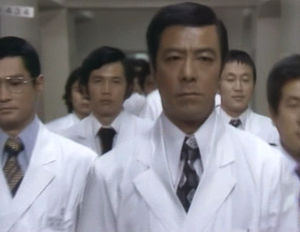
The main character in "Shiroi Kyotou. He committed suicide by shooting himself with a hunting gun to coincide with the final episode of his own drama.
This way of death is the same as the suicide of the protagonist of Toyoko Yamazaki's work, The Brilliant Family.
He was schizophrenic.
Jiro Tamiya (August 25, 1935 - December 28, 1978) was a Japanese actor and host. His real name was Goro Shibata.
He was active from the 1960s to the 1970s, and his representative works include the "Notorious" movie series, "Shiroi Kyotou," a famous host of the quiz show "Quiz Time Shock," and the TV drama "Shiroi Kyotou. He is 180 cm tall and has blood type B.
His wife is Yukiko Fuji, a former actress. His first son is Kotaro Shibata, an actor and TV reporter. His second son is actor Goro Tamiya. Actor Nao Minamikawa is a cousin on his father's side.
More than 30 years have passed since his death, but in recent years, movies and dramas starring Tamiya have been released on DVD one after another, and remakes of dramas have also been made.
In the early afternoon of December 28, 1978, when "Shiroi Kyotou" had only two episodes left to air, Tamiya woke up at his home in Motoazabu, Minato-ku, where he had separated from his family and lived alone, and ordered his valet to go to Akasaka to pick up a box lunch for delivery.
He left behind eight wills addressed to his wife, sons, two governesses, two lawyers, Tamiya's planning advisor, Tomoko Naraoka, and Keiichi Onizawa. Among them, the will addressed to his wife, along with words of gratitude, described the pain of living and his fear of death, and wrote, "I hope you will give up thinking that I have fallen ill. To his second son, Goro Tamiya, who had aspired to be an actor since that time, he left words of advice before his death: "If you want to be an actor, you have to know people.
Tamiya's suicide was reported with great shock, as he shot himself in the chest by using his toe to operate the trigger of a shotgun for hunting rifles. In the novel "The Great Family" (based on the novel by Toyoko Yamazaki), in which Tamiya also appeared in the film version, there is a scene in which Teppei Mantawara commits suicide with a hunting rifle. After the screening of the movie "The Great Family," Tamiya was unable to play the role of Teppei Mantawara, which he had wanted to do, and after the screening he said, "I could have done a better job of gun suicide. He also said in front of his wife in their living room, "If I do this, I can die! He once held a hunting rifle in front of his wife in their living room and imitated putting his toe on the trigger.
Ironically, the remaining two episodes of the drama "Shiroi Kyotou" aired in the midst of the media coverage drew even more attention, and the viewer rating rose to 31.4% for the final episode. As a result, the drama remained in the memories of many people and was a huge success in terms of viewer ratings.
Amidst the media coverage, the condolences were attended by Junzaburo Ban, Akihiro Miwa, Kinnosuke Manya, Mitsuko Kusabue, Keiko Awaji, Tamao Nakamura, Manabu Yamamoto, Eitaro Ozawa, Nagahide Takahashi, Yoshiko Mita, Kaoru Yachigusa, Hideki Saishiro, Yoko Natsuki, Ayako Wakao, Yoshiko Nakano, Keiko Takeshita, Nagisa Katahira, Chieko Matsubara, Mitsuko Oka, Akira Ishihama, Keiko Matsuzaka, and others. Akicho Sogauke chaired the funeral committee, and Shintaro Katsu read the eulogy. Kiwako Taiji, who played Keiko Hanamori in the TV drama "Shiroi Kyotou," and co-starred with Tamiya, lamented Tamiya's suicide by saying, "You idiot," in front of Tamiya's portrait.
His Buddhist name is Seiko-in Hohoho Kenei Kyugo. The cemetery is located in the cemetery of the Shibata family. It is located at Honen-in Temple in Kyoto, his birthplace.
http://ja.wikipedia.org/wiki/%E7%94%B0%E5%AE%AE%E4%BA%8C%E9%83%8E#.E8.A1.9D.E6.92.83.E3.81.AE.E6.AD.BB
Bruce Lee
Source: pds2.exblog.jp
Bruce Lee
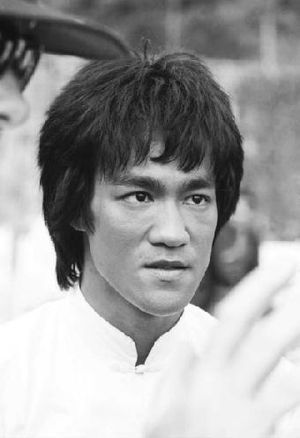
He died after taking painkillers in bed. He had cerebral edema.
Bruce Lee (李 小龍, Bruce Lee, Lee Hsiao-Lung, Lei Shi-Lung; November 27, 1940 - July 20, 1973) was a Chinese, Chinese martial artist, martial artist, Hong Kong actor, screenwriter, and film producer, born in San Francisco Chinatown. He is also known as a martial artist who founded Jeet Kune Do (Jeet Kune Do). His epitaph is "FOUNDER OF JEET KUNE DO". He and Linda Emery have one son and one daughter. Their son is Brandon Lee and daughter is Shannon Lee.
On July 20, 1973, Lee complained of a headache at the Hong Kong home of Betty Ting Pei (丁珮), an actress with whom he was to co-star in "Death Play," and took painkillers (Equagesic with aspirin) and lay in bed. She fell into a coma and called Raymond Chow, who took her to Queen Elizabeth Hospital, where she was pronounced dead at the age of 32.
Funeral services were held in Hong Kong and Seattle. Tens of thousands of fans flocked to the funeral in Hong Kong, and Lee's protégés James Cobain and Steve McQueen attended the funeral in Seattle[9]. His body was buried in Lakeview Cemetery near downtown Seattle.
After Lee's death, his long-awaited film "Burning Dragon," in which he starred, was released in the U.S. and around the world, and was a hit. In his hometown of Hong Kong, however, it grossed far less than his previous film, "The Road to the Dragon."
When "Burning Dragon" brought him international recognition as an action star, Lee had already passed away. After his death, his previous films, such as "Dragon Crisis," were distributed worldwide.
http://ja.wikipedia.org/wiki/%E3%83%96%E3%83%AB%E3%83%BC%E3%82%B9%E3%83%BB%E3%83%AA%E3%83%BC#.E6.AD.BB.E5.8E.BB
hide

Tags
Contents
- List of celebrities and entertainers who are believed to have committed suicide or died of illness but may have been assassinated
- Shoichi Nakagawa
- Ichiro Nakagawa
- Arai Shokei
- Shin'ichi Nishimiya
- Kazuyoshi Miura
- Juzo Itami
- Akio Kuroki
- President Lech Kaczyński
- Alexander Litvinenko
- Less likely to be killed
- Miyu Uehara
- Jiro Tamiya
- Bruce Lee
- hide
- Tamio Kageyama
- Ai Iijima
- An accidental death with a high possibility of suicide.
- Izumi Sakai