
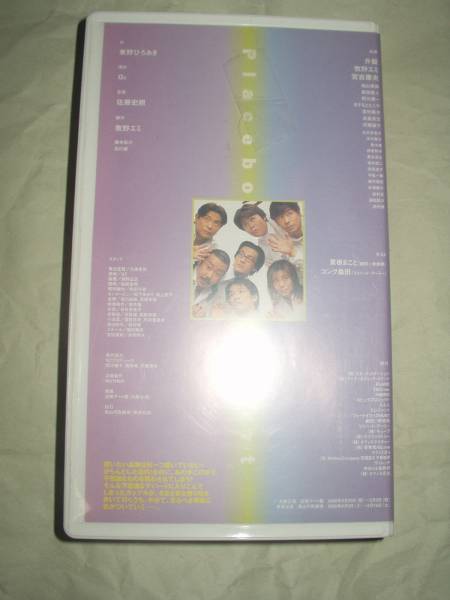
It was still the age of VHS. The work was born. It was a story about a couple who came to a strange department store. It was experimental and surreal.
MOTHER Theater Company
A theatrical company and "publicity act" founded in 1991 under the leadership of Takeshi Masu; disbanded in 2002.
Source: ja.wikipedia.org
Placebo Department Store."
Strange as it may sound, the exterior (which doesn't appear) is normal. The shopkeepers and "what they sell" are not normal. In terms of content, it is a comedy, with a few laughs scattered throughout. However, it is not just a comedy, and in fact, it is a mysterious story that makes you think it is quite profound.
world view
It is a closed place, a department store. All employees, except for customers, work in accordance with work rules, but the "work rules" and the items for sale are unique. The rooftop is a "zoo" where they keep "giant transparent worms" and "creatures so big that you can only put your feet on them," and there are three elevator girls who ramble on and on about things they don't understand. (And they even got older as they went up the floors.)
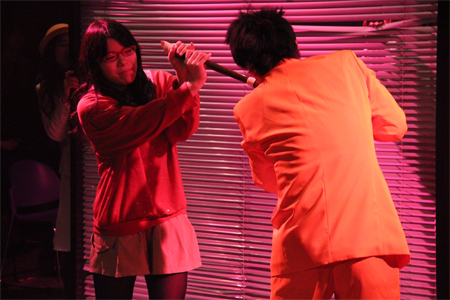
fight scene
A "fight shop" where shopkeepers who look like yakuza or delinquents are always fighting each other is sometimes introduced. I wonder if there is a demand for it...
An act at a sporting goods store
The terms of employment are "name. So the clerks were talking to each other in a sporting goods store, and they were saying "Mr. Sakai has moved" or making a playful reference to "the name, the place of assignment, and the situation reminds us of a contractor". (The name of the company was "Sakai-san" (e.g., moving company Sakai), and the sporting goods store had to have a name related to a sporting goods-related brand. When they heard the name of a "promising high school girl," they would say, "That's the sports brand! Bring me your resume right away!"

Is that some kind of irony...? By the way, she looked promising before I heard her name. It was because she had perfectly memorized the awfully long lines and movements. Let's make the hiring decision that way....
Audience Treatment
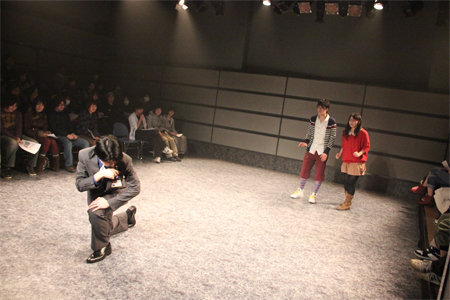
The treatment of the audience was also somewhat unusual. There were stair-like seats surrounding the stage, and the actors teased and tormented the audience. In a scene at a clothing store, a "mannequin" is used to recommend clothes to a couple playing customers.
Clerk: "How about the clothes this mannequin is wearing?"
Customer: "Well, it's tacky."
Clerk: "(panicking) How dare you!"
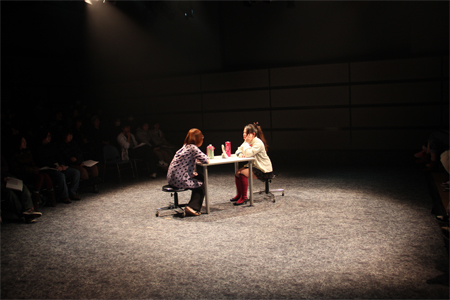
Dining scene. Her tsukkomi is fine!
On one "rooftop" of the "zoo," the zookeepers were handing out buckets of candy. The zookeepers were not only "mere spectators," but also treated them as props or as part of their roles. Of course, this was a playful gesture that came from the spirit of service. I think the audience enjoyed the show even though they were puzzled.
And then we head to the end of the play.
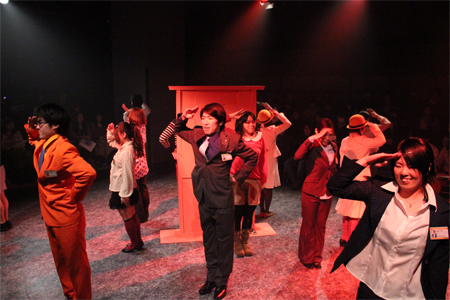
What is a sales floor, what is the position of the customer and the seller...?
The couple is enjoying shopping for some reason, but they realize that there is no exit even though they want to leave. The manager "Mr. Exit" has a meaningful line and the store clerks change their attitude as soon as they hear it. The story ends with a blur that encompasses something deeper.... The serious tone at the end is so effective because of the many "goof-ups," and the "stage," which is as closed as the department store, gives the illusion that even we cannot escape from this story in the first place.
