

A list of works in Koei's hit "Taikoo Risshiden" series. The features and added elements of each numbered title are explained, as well as the systems that were carried over to later titles.
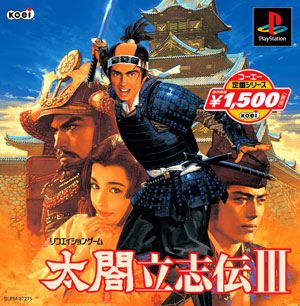
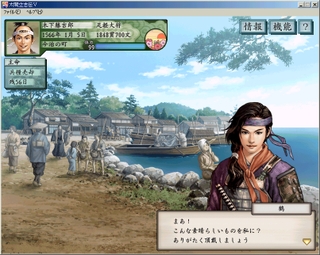
This is the third title released in 1999. This title has the least freedom of the series, with the drawbacks of "limited scope for character creation" and "no Tsujiziri or serving other families". Instead, it has a strong storyline, with many events, and includes an original story featuring a fictional warlord as the main character. The graphics are also bright and beautifully colored, with separate graphics for different facial expressions.
Although the game is not popular with players who like the high degree of freedom of previous works, elements such as "substantial stories and events" and "increased intimacy through tea ceremonies" have been carried over to later works.
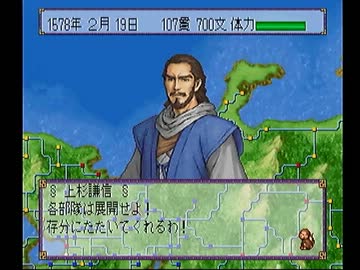
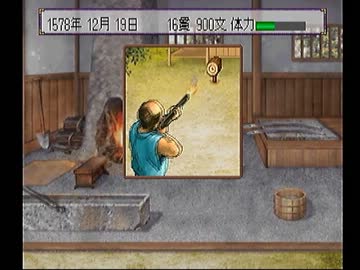
The system has been significantly changed from the previous "II," including the introduction of a faction system, the insertion of movies as the story progresses, and anime-style standing pictures for each character (several more expressions are available for the main characters).
Source: ja.wikipedia.org
Although there are only two characters in the game, Kinoshita Fujikichiro (Toyotomi Hideyoshi) and an extra scenario involving a warrior named Yanada Masakatsu (whose identity is revealed in events during the game) who serves Katsuie Shibata, the storyline is more focused than in the previous game.
Source: ja.wikipedia.org
In this work, there are factions in the forces to which the protagonist belongs. In the beginning, even if you express your opinion in a review, other vassals often oppose it and will not allow Nobunaga to adopt your opinion. By expanding your own faction, you will increase the possibility of having your opinion adopted at the appraisal, and you will be able to increase your merits more easily. Also, to raise your status, you will need supporters.
Source: ja.wikipedia.org
Taikoo Risshiden IV
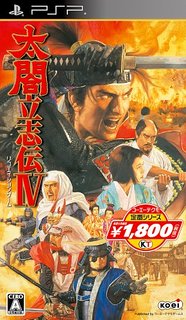
The fourth work released in 2001. The card system was introduced, a complete change from the system used in the previous games. The acquisition of cards and skills is expressed in the form of "acquiring cards," and battles are now card battles. It is now also possible to play as a merchant or ninja.
At the start of the game, the main character can only be selected as Fujikichiro Kinoshita (Hideyoshi Hashiba), but by acquiring cards of other generals, the number of generals that can be selected will increase. The hero card can be acquired by "maximizing the intimacy level of the warlord," "sending a gift of your choice," or "causing certain events to occur," etc. Part of this card system was later carried over to "Taikō Ritsuden 5".
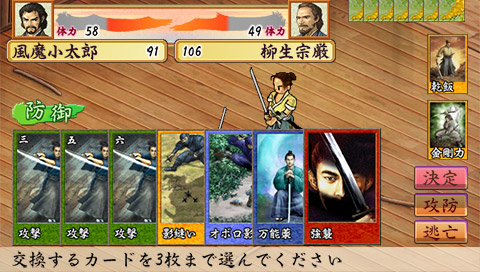
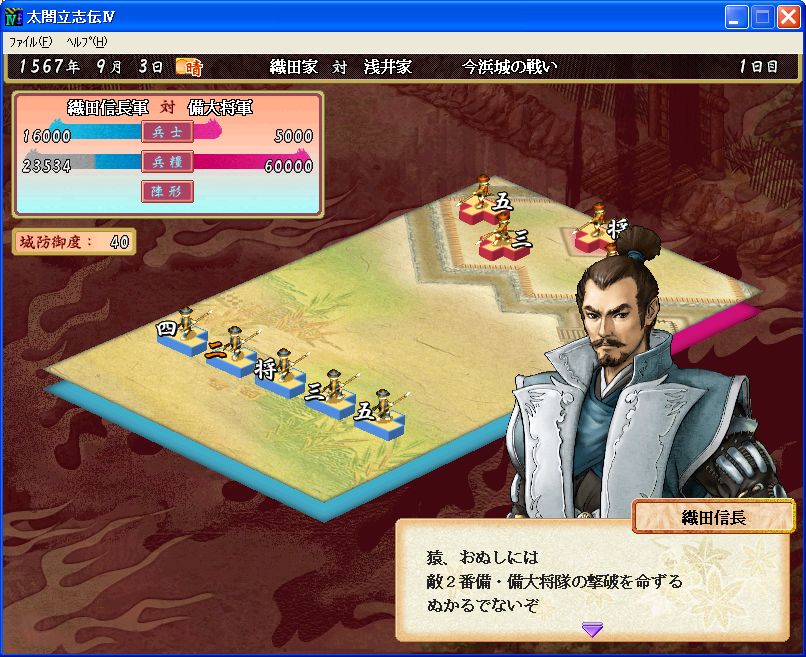
In addition to the main character's cards, most skills, titles, and other items are expressed in the form of cards, and even individual battles, field battles, and sieges are now card battles (thus, luck plays a large part in drawing cards). In addition, almost all of the training and internal administration activities used to improve skills and abilities are now mini-games, and the number of types has increased dramatically.
Source: ja.wikipedia.org
There are multiple scenarios set for each era, a large variety of mini-games, marriage with innkeepers' daughters, and the addition of elements such as trading at "za" or visiting famous places, as in the "Age of Discovery" series, also a Koei product.
Source: ja.wikipedia.org
The number of endings has also increased, with some protagonists having special endings, while others have special endings at the time of regional unification or under special conditions. The regular endings also tell the story of the protagonist's life and the state of Japan after unification, depending on the content of the previous games.
Source: ja.wikipedia.org
In this work, the BGM is the same as in the ronin era, even if you become a merchant or ninja, as if playing as someone other than a samurai is a bonus. Also, in the Windows version, there is a pre-ending by an event for those who are not samurai, but there is no official ending (this was added in the PS2 version and later, as described below).
Source: ja.wikipedia.org
Taikoo Risshiden V
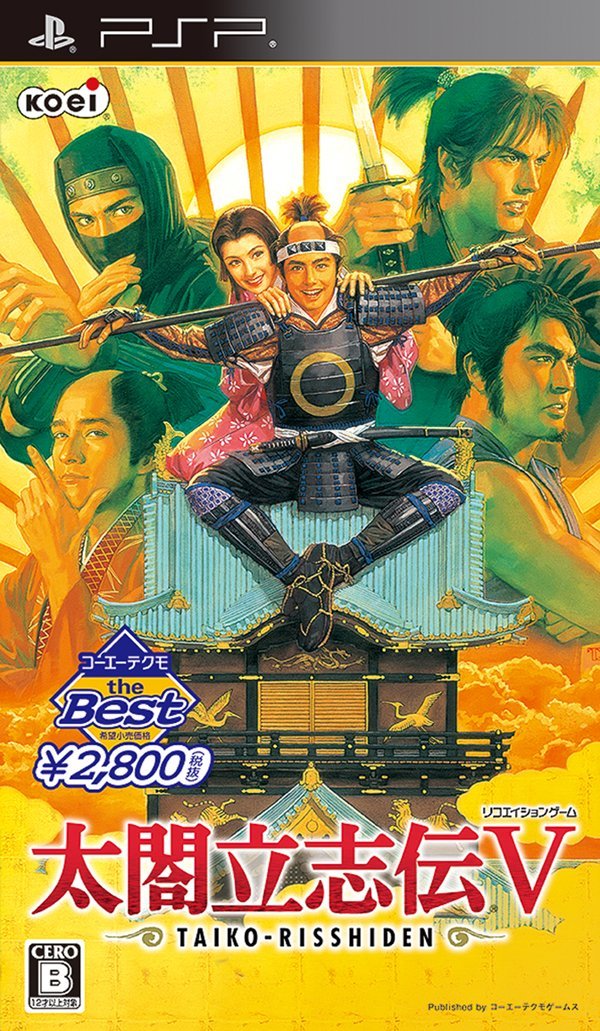
The fifth work was released in 2004. In this title, it is now possible to belong to a ninja or pirate clan. In addition, "side jobs" are also available, such as doctor, blacksmith, tea master, and swordsman, and you can aim to become the best in the world as an individual. These can be pursued at the same time as the main business, but they are more serious than the previous title, with exclusive events and endings.
Fame" and "infamy" have been added as elements from this work. Depending on your fame, you may receive discounts at inns and bars, be allowed to meet the lord of the castle personally, or be intercepted while he is in the middle of an interrogation. However, there are also disadvantages such as not being able to enter the ninja ranks if your face is too well known, or being more likely to be attacked by ninjas. On the other hand, a high "notoriety" has the disadvantages of being refused an official position and being more likely to be assassinated or to be involved in a duel, but it also has the advantage of not being attacked by bandits.
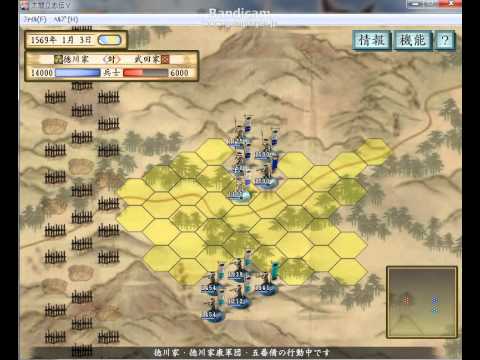
In addition to the card system from the previous "IV," players can now play as pirates, swordsmen, blacksmiths, doctors, and tea masters, in addition to warriors, ninjas, and merchants. Pirates and merchants can now travel to four overseas bases: Naha (Ryukyu), Pusan (Korea), Ningbo (Ming Dynasty), and Lu Song (Southern China).
Source: ja.wikipedia.org
There are two main types of play: the main occupation (samurai, ninja, pirate, merchant: cannot concurrently serve as a warrior, ninja, pirate, or merchant, but there is a regular ending in which the player becomes the best in the world) and the secondary occupation (swordsman, doctor, blacksmith, tea master: can concurrently serve as a swordsman, doctor, blacksmith, or tea master).
Source: ja.wikipedia.org
In this work, the parameters of "fame" and "infamy" exist, and if you do something that attracts attention in a good way (winning a personal battle against a general with high skills related to personal battles, such as being a "great swordsman," obtaining a title tag, etc.), your "fame" will increase, and if you do something bad (attacking generals, sabotage (if you ask the ninja to do it, the client will not get a raise), rebelling or encouraging rebellion by your superiors, giving ineffective medicine during medical treatment, etc.) your "infamy" will increase. ), committing rebellion or encouraging a superior to commit rebellion, giving ineffective medicine during a medical treatment, and so on) will increase your "notoriety". Depending on these two pieces of data, the game can be played either positively or negatively.
Source: ja.wikipedia.org

Related Articles
Summary of spoilers and discussion of the Ambition of Nobunaga series (games)
Nobunaga's Ambition" is a historical simulation game set in Japan's Warring States Period, released by Koei Tecmo Games, and has been made into a series. The game's producer is Ko Shibusawa. The player takes on the role of a daimyo in the Warring States period, and his goal is to expand his power by developing domestic policies and building up his army, fighting other daimyo, and eventually unifying the whole of Japan.
Read Article
信長の野望・新生(ゲーム)のネタバレ解説・考察まとめ
『信長の野望・新生』はコーエーテクモゲームスが開発・販売している歴史シミュレーションゲームである。 『信長の野望』シリーズの16作品目である。 2023年7月20日には編集機能・攻城戦・籠城戦等を実装した『パワーアップキット』が発売された。 戦国時代の1大名となって全国統一を目指す戦略的国盗りゲームであり、今作では「AI」がパワーアップし武将たち自らが意志を持った「生きた武将」として行動するのが魅力である。
Read Article
How did this happen?" A collection of terrible facial expressions in the "Ambition of Nobunaga" series [Facial Graphics
This is a collection of the terrible facial features that appear in "Nobunaga's Ambition. You may think they are all dignified, but there are some generals who have been made to look like the most ridiculous. Here are some of them! Of course, we also introduce "that warlord" who became famous on the Internet.
Read Article
Internal Affairs or Warfare? Summary of recommended titles of "Nobunaga's Ambition" by gamer type [Event or character-oriented?
A popular work that has appeared in several titles, "Nobunaga's Ambition" has various characteristics for each title. This summary divides gamers' tastes into four categories: those who want to play internal politics, those who want to fight wars, those who focus on events, and those who focus on characters, and introduces titles that can be recommended for each type.
Read Article

4 knowledge that you can get from the game and use in real life
When you play games, you unconsciously acquire a lot of knowledge. And some of them are useful not only in games but also in real life. In this article, we will introduce some of the knowledge that you can acquire through games and that is useful in real life.
Read Article
Contents
- Taikoo Ritsuden," a historical game with a high degree of freedom
- Toyotomi Hideyoshi's "Legend of the Toyotomi Hideyoshi" (1582 CE)
- Taikoo Risshiden II
- Mobile Taikoo Risshiden
- Taikoo Risshiden III
- Taikoo Risshiden IV
- Taikoo Risshiden V
- The latest work is a collaboration with "Nobunaga's Ambition! The Ambition of Nobunaga: The Creation: Sengoku Risshouden"!