
When a popular manga series comes to an end, we feel very sad. Some manga have a good ending, while others have a "Huh? Some manga have a good ending, while others have a "Huh? Sequels to those manga are a joy for the fans, but on the other hand, some people say they don't want to see them anymore because they have a good ending. Here's a list of those popular manga sequels!
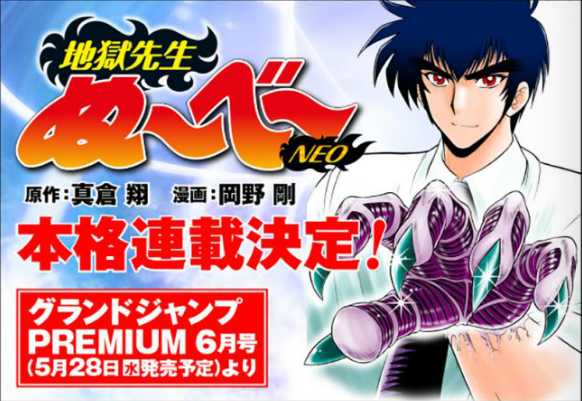
1) Jigoku Sensei Nu~be~ -> Jigoku Sensei Nu~be~ NEO
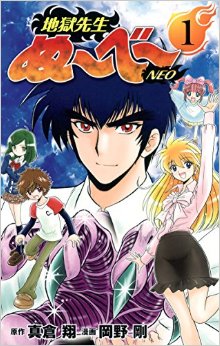
Sequel "Jigoku Sensei Nu~be~NEO
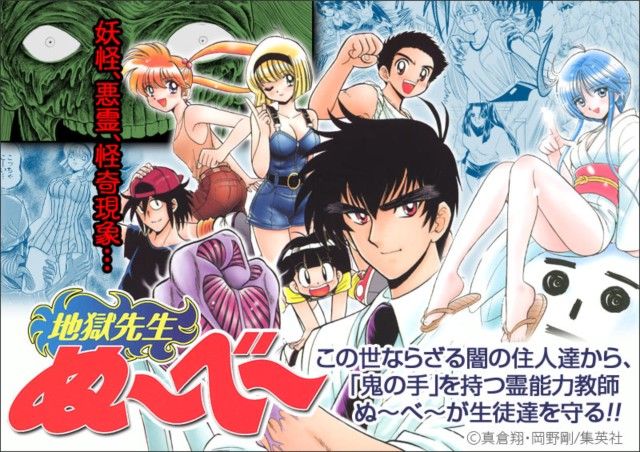
What is JIGOKU SCHOOL TEACHER Nu-Be~?
A school comedy action in which a psychic elementary school teacher "Nu-Be" aka "Nu-Be", who has "demon hands", exterminates monsters and evil spirits to protect the students.
It was serialized in Shueisha's "Weekly Shonen Jump" from issue 38 in 1993 to issue 24 in 1999. In addition to the traditional JUMP concepts of friendship, effort, and victory, the series incorporated various elements such as horror, urban legends, ghost stories, romantic comedy, education, erudition, and sex appeal, and the stories with richly varied plot development and unique characters gained the support of a wide range of people of all ages and both sexes. In the late 1990s, when the popularity of JUMP was beginning to decline, it became a major hit, playing a role in JUMP along with "Rurouni Kenshin: Meiji Swordsman Romantic Tan" and other works [Note 1]. It has been adapted into a TV anime series (April 1996-June 1997, August 1998, 49 episodes), an anime movie (3), an OVA (3), and a PS game (PS game). The total number of comics editions published is 31 volumes, with a sales record of 20 million copies [Note 2]. In addition, a 20-volume paperback edition was released in 2006.
Source: ja.wikipedia.org
It became a very popular manga in JUMP and has been loved by many fans as an anime and movie.
Recently, it was adapted into a live-action TV drama on Nippon Television. The drama received a lot of positive and negative reviews.
What was your impression of the drama?
The sequel, Jigoku Sensei Nu~be~NEO, is the first official sequel in 15 years to be published in Shueisha's Grand Jump.
It is set 12 years after the original work. The story is set 12 years after the original, and Nu~be returns to Domori Elementary School.
Nu~be~ returns to Domori Elementary School, reunites with his former student Goko Inaba, and confronts a mysterious phenomenon.
Nu~be~ himself is now 37 years old, but his appearance has hardly changed.
The story is set in the 2010s, and some of the issues of modern society are also addressed.
Also, his former students appear in the film, and it would be interesting to see how they have grown up!
(2) Prince of Tennis -> New Prince of Tennis
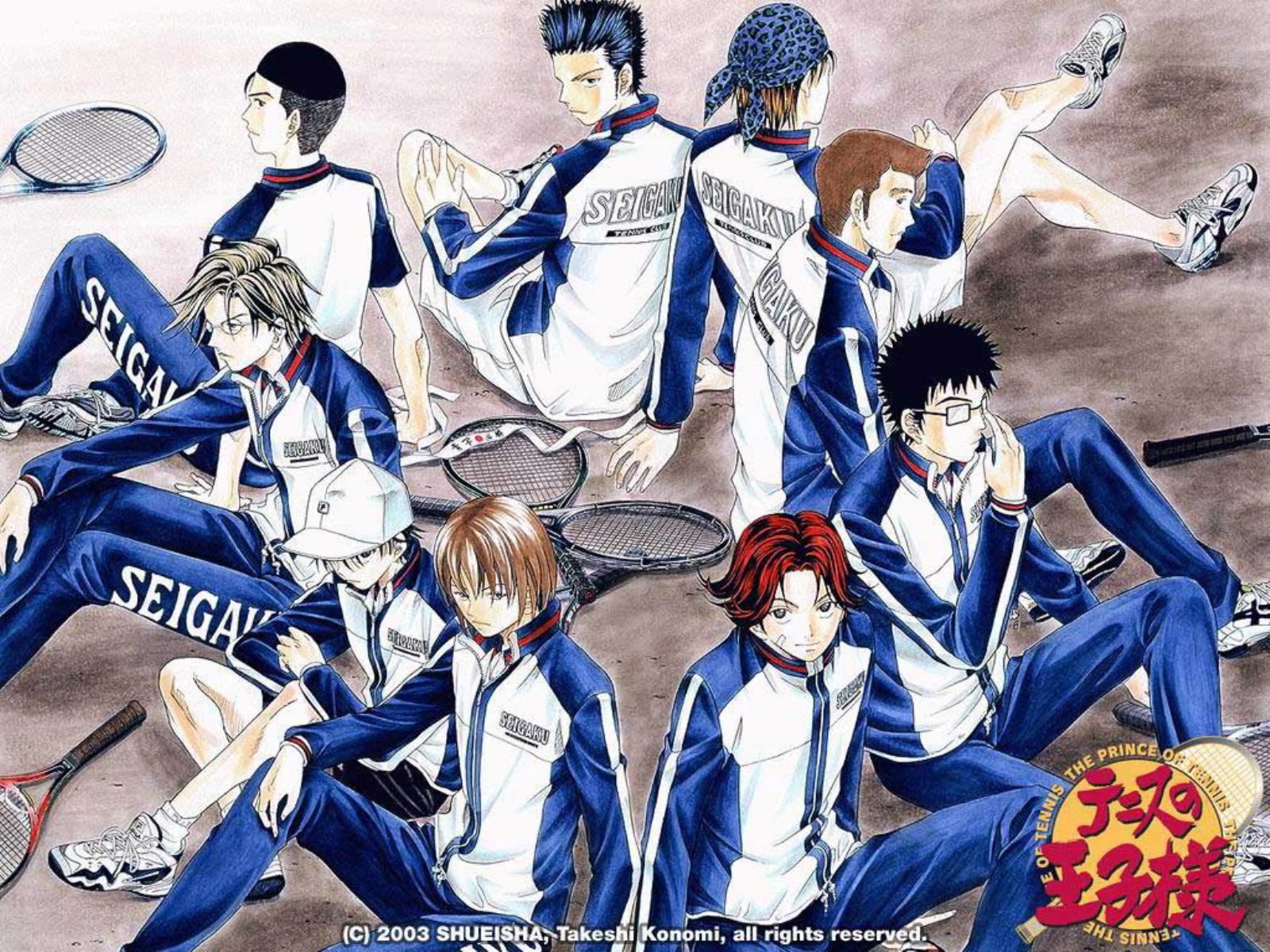
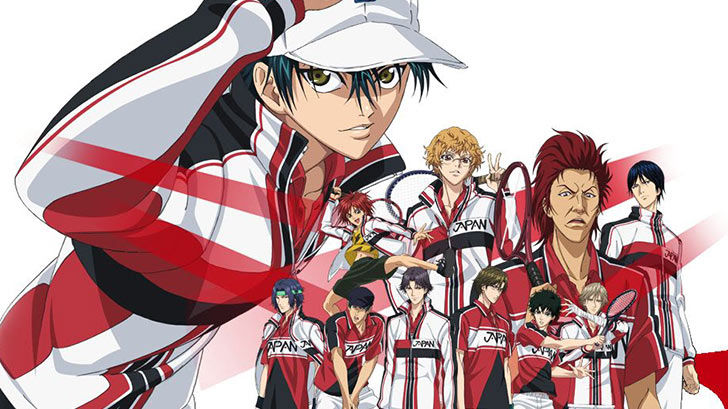
Sequel "The New Prince of Tennis"
What is Prince of Tennis?
The series was serialized in "Weekly Shonen Jump" (Shueisha) for about 9 years from 1998 issue #41 to 1999 issue #32, and ended in 2008 issue #14. In March 2009, the second series, "Shin Tennis no Oujisama" ("New Tennis Prince"), resumed serialization in "JUMP SQUARE". Abbreviated as "Tenipuri". The first series consisted of 42 volumes. The official fan books are 10.5, 20.5, and 40.5 volumes. The illustration collection is 30.5 volumes. The number of books published in "Shin-" is 17. The number of fan books is 10.5. As of September 2011, the series had sold 50 million copies[1].
The story is about the main character, Ryoma Echizen, who enrolls in a prestigious tennis school, joins the tennis club, and wins matches in the team competition in order to win the national tournament (note that individual matches are not depicted in the story at all). The story includes explanations of the rules so that even those who do not know tennis can understand it, and at the beginning of the serialization, it depicts techniques that tennis players can actually use. However, from the middle of the series, the manga changed to a manga in which the matches are centered on bizarre and fictitious techniques, and especially in volume 26, after the main character achieves the state of selflessness (described later), the description of inhuman techniques becomes more pronounced. In addition, the depiction of matches in which the protagonist hits his opponent with a ball to render him unable to continue the match also becomes prominent.
The series has been widely mixed in the media, starting with an animated TV series from 2001 to 2005, followed by a CD series, TCG series, and game series (ongoing as of 2009), a musical series from 2003 (ongoing as of 2013), a live-action movie series in 2006, and a sequel OVA series to the animated TV series in 2008. In 2006, a live-action film and a sequel to the animated TV series were made into an OVA, and in 2008, a live-action drama was made in China. A number of goods related to this development were released by Movic, Animate, and Konami. The product development targeting female fans[2] has been successful, and as a result, the genre has become a popular genre that has become the top selling character goods[3] for the year.
Rikkyo Junior High School (now Rikkyo Ikebukuro Junior High School) in Tokyo served as part of the model (reference) for Prince of Tennis, and a message of thanks for their cooperation was included in the author's comment on the last page of the 1998 issue 41 serialization. Rikkyo Junior High School won the group championship in the National Junior High School Tennis Championship in 1997. There are many theories, but the model for the main character, Ryoma Echizen, is Yu Haneishi, a graduate of Waseda University. The author Xu Hui himself testified to this when he was filming the live-action version of the movie.
Kei Nishikori, a professional male tennis player, has been reading this work since he was in elementary school.
Source: ja.wikipedia.org
The sequel, "The New Prince of Tennis," began serialization in "JUMP SQUARE" in 2009.
The story depicts the story of the competition between the friends and former rivals of Aogaku and the high school students who were allowed to participate in the U-17 selection tournament that began in the fall after the national tournament.
The story depicts him competing against his friends and former rivals of Aoyama Gakuin, as well as the high school students who are regular participants in the U-17 selection tournament.
The popular characters who have been rivals up to now fight together for the regular position in the tournament.
During the training camp, you can also see dream matches that you have never seen before.
The impossible settings, such as hitting the opponent with a pitch to make it impossible for them to continue, and the state of selflessness, have also been carried over.
Kinnikuman
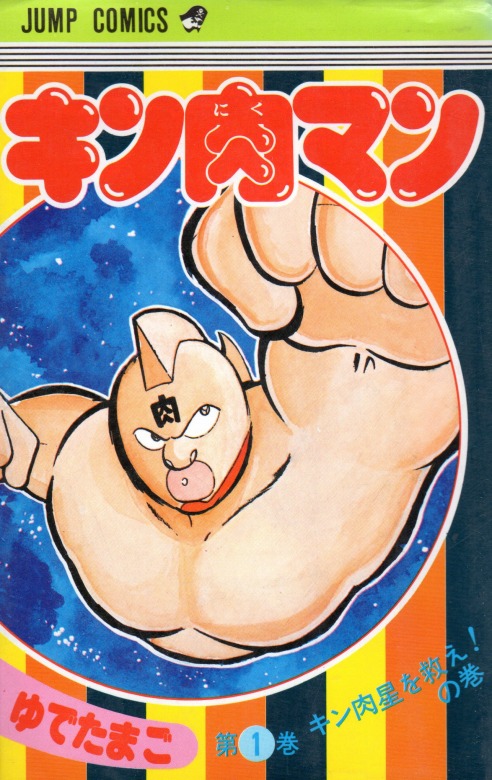
Volume 37 of the serialization resumed.
What is Kinnikuman?
Kinnikuman was serialized in Shueisha's manga magazine "Weekly Shonen Jump" from 1979 issue 22 (May 28, 1979) to 1987 issue 21 (May 4, 1987). Kinniku Suguru, a.k.a. Kinnikuman, a superhuman being that transcends human beings living in Japan, along with his fellow righteous superhumans, fights in the ring against powerful enemies that stand in their way one after another in this wrestling-style fighting manga. It is the debut work of Yudetamago and is also his masterpiece.
The main focus is on the beauty of friendship formed through fighting, and the story is not simply one of good versus evil, but also depicts the growth of the main character who, despite being ridiculed as a "useless superhero," continues to fight to protect the peace of the earth.
At first, it was a gag manga[2] (a parody of "Ultraman"[3]) about a transformed hero, but the storyline was changed to a fighting storyline starting with the 20th Superhero Olympics in episode 28, and it gained popularity. After the change to a fighting storyline, the storyline remained gag-oriented for a while, but serious battles took center stage from the middle of the storyline, and by the end of the storyline, the gag elements were almost completely eliminated.
One of the distinctive features of this work is the numerous ridiculous developments that emphasize the excitement of the moment, without considering foreshadowing or narrative consistency. This is due to the author's belief that "if you are obsessed with detailed settings, the content will become boring as a result," and if he comes up with a better setting, he dares to discard past settings[4]. 4] Therefore, although there are many inconsistencies in the work, this is the reason why it is still loved today, and the author himself has said, "Readers feel more familiar with the work if there are many points that need to be pointed out.
The majority of the superheroes and monsters that appear in the series are created by soliciting ideas from readers. Important characters such as Robin Mask, Ramen Man, Wars Man, and Buffalo Man were also conceived based on reader ideas. This system was well received by the readers, and after drawing the readings for the sequel "Kinnikuman II," a number of new superheroes were submitted by readers, even though they had not been solicited.
Kinnikuman's real name, Kinniku Suguru, was named after Taku Egawa, a baseball player for the Yomiuri Giants at the time. His older brother Kinniku Ataru (Taku Egawa's own brother), his father Kinniku Mayumi (Akinobu Mayumi), and his grandfather[6] Kinniku Tatsunori (Tatsunori Hara) also have similar roots.
The series has sold more than 70 million copies[7].
Source: ja.wikipedia.org
After Kinnikuman ended, "Kinnikuman II," which depicted the activities of Kinnikuman's son, began to be serialized.
Kinnikuman II," which depicts the activities of Kinnikuman's son. Many fans felt sad to see the characters of yesteryear appear in a much older state
I think there were many fans who felt sad to see the characters of the past appear in a much older state. Later, in the "Ultimate Superhero Tag Team Arc," the characters travel back in time and fight their fathers.
Kinnikuman II also appeared in the serialized version.
Kinnikuman II also ended its serialization, and finally the sequel to Kinnikuman was reunited after 24 years.
At the end.
When I hear that it is a sequel, I feel happy, but I wonder if the excitement of that time will fade away. There is also a sense of loneliness.
I also feel a sense of loneliness. Everyone has his or her own way of feeling, but I hope that the sequel will win over new fans,
Kinnikuman, in particular, is a very valuable work that can be shared between parents and children.
