
Celebrating its 130th anniversary, Coca-Cola is sold in more than 200 countries and 1.8 billion cups per day worldwide. The world's most famous beverage has been the subject of various urban legends called "Cokelore. We will find out the truth behind them.
The Man Who Created Coca-Cola
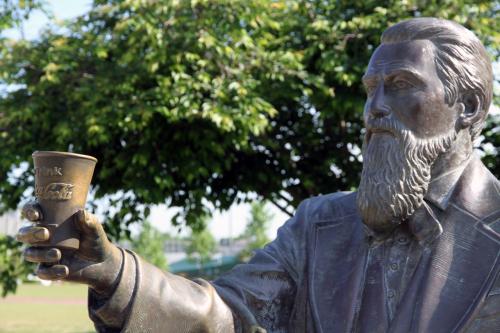
Bronze statue of John Pemberton outside the Coca-Cola Museum in Atlanta
The inventor of Coca-Cola was John Stith Pemberton (January 8, 1831 - August 16, 1888), a pharmacist born in Knoxville, Crawford County, Georgia. He was a very accomplished student and was once praised by a local newspaper as "Dr. Pemberton is one of the most eminent pharmacists that Atlanta has ever produced.
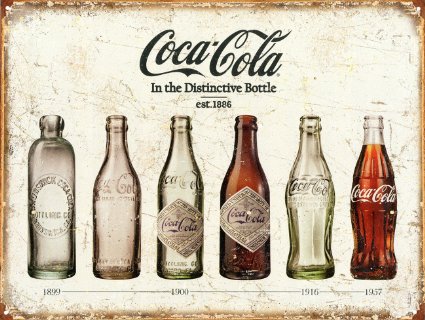
Coca-Cola was born in Atlanta on May 8, 1886, when Dr. Pemberton was 55 years old.
Dr. Pemberton used his knowledge as a pharmacist to develop and market Coca-Cola syrup as a new refreshing and energizing beverage. The syrup was initially served with water, but one day at a coffee shop, he inadvertently served water and soda water to the wrong customers, which was so well received that the present model of Coke was born.
Are there only two people in the world who know the recipe for Coca-Cola?
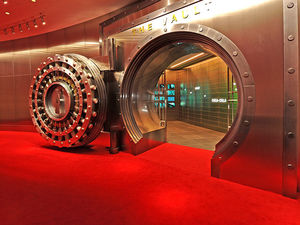
Vault housing the recipe for Coca-Cola (World of Coca-Cola Museum)
Urban legend has it that "from the time Coca-Cola was first made in 1886 until today, the syrup recipe has been an absolute trade secret, with only two people in the company knowing about it." In reality, however, the document describing the process has been kept in a bank vault for nearly 100 years and has now been moved to the Coca-Cola Museum in Atlanta, where it is accessible to onlookers. Why are these rumors whispered?
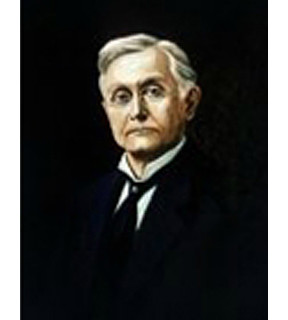
Asa G. Candler
In 1887, Asa G. Candler, an Atlanta medicine dealer, purchased the rights to manufacture and sell Coca-Cola from Dr. Pemberton. In January 1892, he and Dr. Pemberton's partner, Frank Robinson, founded The Coca-Cola Company. In order to strictly adhere to the new and improved Coca-Cola process, Candler made an agreement that only two people would be allowed to know the recipe. The first two were, of course, Candler and Robinson. Syrup was made in a locked room, labels for ingredients were removed as soon as they arrived, and everything from opening mail to accounting was done by two people to prevent leakage of ingredients to other employees through paperwork. Apparently, this rule in the early days of the company was the cause of the birth of the urban legend.
Coca-Cola coca is "cocaine" coca
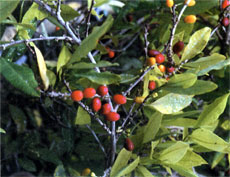
coca leaf
Coca-Cola was originally developed as a "headache remedy.
The two main ingredients were coca leaves from South America from which cocaine could be extracted, cola nuts from West Africa, and damiana, which had headache-relieving properties, boiled down with water and sugar to form a brown syrup. The godfather was Frank M. Robinson, Dr. Robinson's partner and accountant.
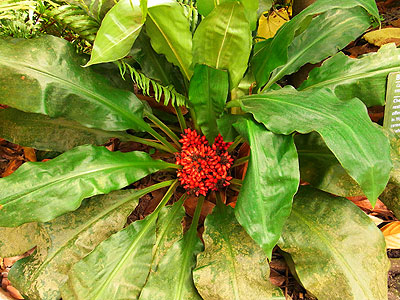
kola nut
At the time of its development, there were no regulations against cocaine, but as Coca-Cola sold well, public criticism of the drug's ingredients grew stronger. In 1903, the use of cocaine was discontinued, and caffeine was used instead, becoming the ingredient in Coke as we know it today. Pepsi Cola, by the way, was originally created to develop a stomachic called "Pepsin.
A 1971 commercial determined the globalization of Coca-Cola.
It is said that it was this 1971 TV commercial that gave the impression that Coca-Cola was the world's favorite drink. Young people from around the world gather on a hill in Italy and sing "Like to Buy the World a Coke. The commercial symbolized a rebellion against a world in constant war and upheaval, and at the same time, it was intended to expand Coca-Cola's global presence.
Scatto Sawayaka CM Collection
On September 1, 1920, Coca-Cola was sold for the first time in Japan. However, the drink was not well received by drinkers, who said it smelled like medicine, and sales were almost non-existent, so the drink was soon discontinued. After World War II, Coca-Cola became popular in Japan, and with the liberalization of trade in 1961, Coke became available to the general Japanese public, making it an explosive hit.
