

Sentai Mono and Rider starring handsome men, a staple of Sunday mornings. But there used to be such a thing as a "fushigi comedy" series starring female characters.
Poitrine" (1990)
Synopsis: A very ordinary high school girl (named Yuko Murakami) is forced to protect the peace of her town (and the universe) by a god she meets at a shrine. If she is discovered, she will be turned into a frog. During the story, her younger sister, Momoko, also acts as "assistant" as "Poitrine Petite," but since she is transformed into a crayfish, neither of them knows each other's true identity until the last episode.
Characteristics: Because his name is French, he has a graceful manner in his stance and fighting style, and his speech changes as well. His tone of voice also changes.
Enemy: Basically, he is an unusual villain. For example, an old man who takes on elementary school children's homework. ("Let me do my homework! ) and intrudes through the window. The kids were waiting for him to do their homework, so he prepared their favorite drink, barley tea, etc.)
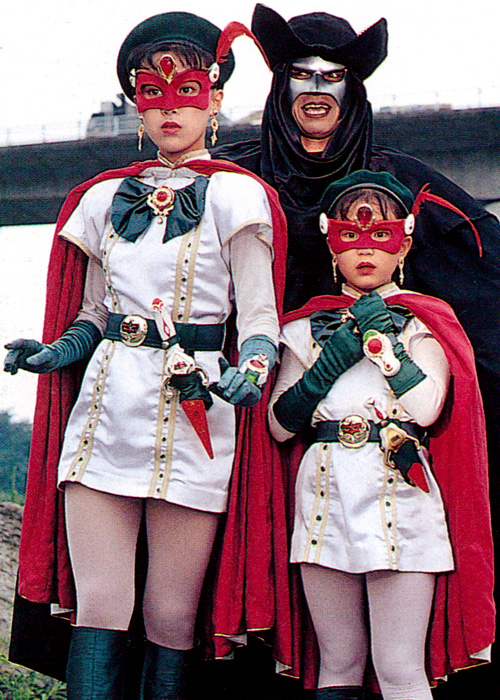
The name is not a free gift. The sound of "Powatrin" is.... I looked it up and found that it has a meaning. It means "breast" in French. So, this Poitrine. For some reason, her tone of voice sounds like an upper class lady. Her lines are somewhat embarrassing when seen in print. But when you see it, it looks cool in its own way.
"We will fight as long as we love, until our lives burn up!"
Even if 00 forgives you, Poitrine here will not!
(The "00" is the name of the person or persons involved in each case.)
Source: ja.wikipedia.org
The Mysterious Girl Nair na Totmes" (1991)
Synopsis: The family tomb of the main character, Sanae Nakajima, was unusual. For some reason, it is pyramid-shaped and even has a sphinx. While cleaning the tomb, she destroys part of it, and something strange overflows from inside and goes to the town... It is the "Devil of the Nile," sealed by her former ancestor. As "your responsibility," the ancestors give Sanae the ability to transform into Thotmes...
Characteristics: Counting the number of remaining after the sealing of the Devil of the Nile.
Enemy: A demon of the Nile. They possess humans, but some are eaten by ghosts.
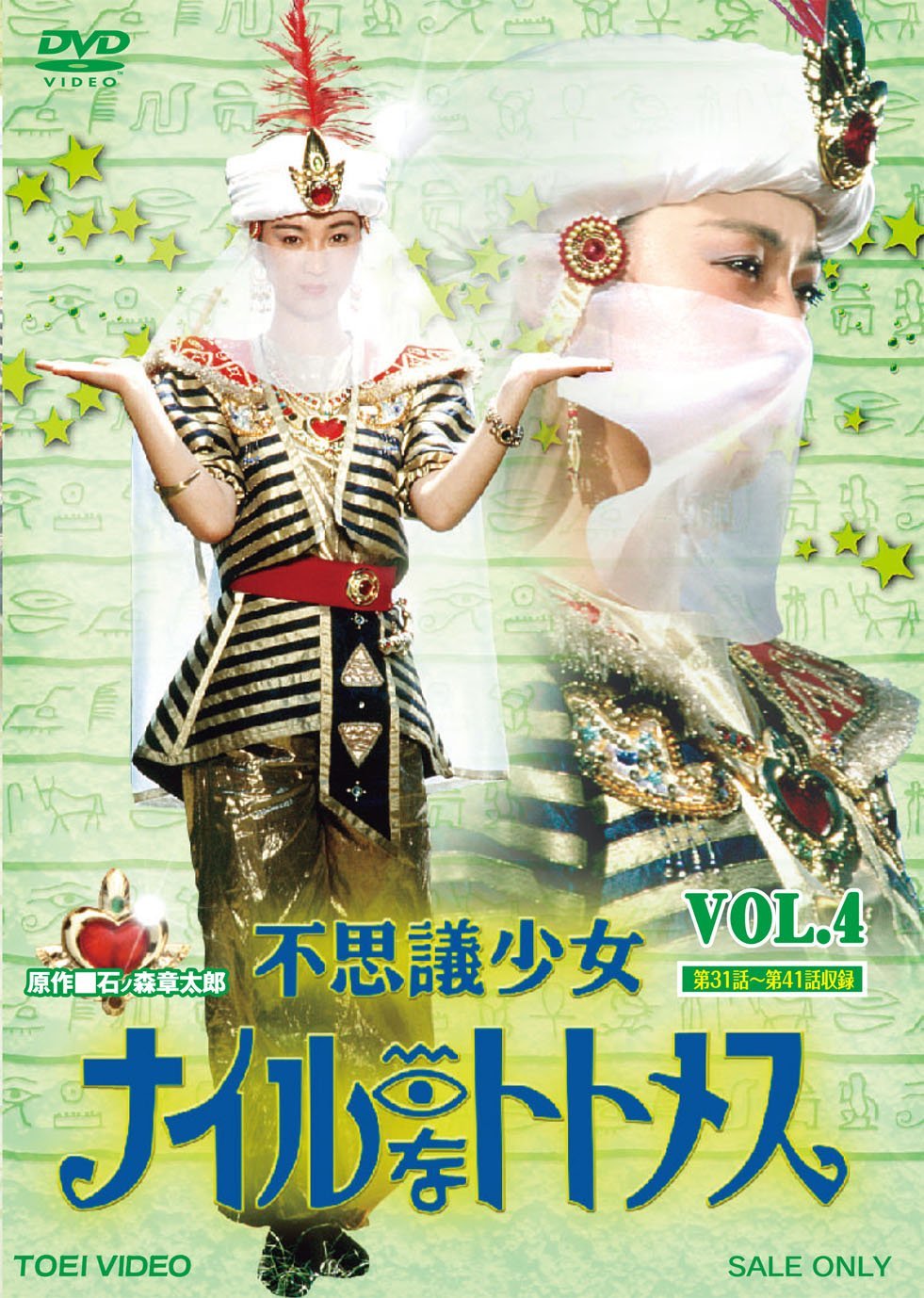
The decisive line & pose was nice again. Whether it was cool or not.
There were 51 Nile demons in all, and when bound with "papyrus" (weapons), they were potted on the ground away from the possessed person. They were quickly sealed in small pyramids, and so on. I think one of them got stronger after eating chili once.... I don't think there was any particular sanction for this one, even though his true identity was revealed. The last episode made me cry in a way.
Uta! The Great Dragon Palace" (1992)
Synopsis: Taro is a boy who is fed up with the daily routine of being forced to study by his mother. When he helps a cab driver named Kameyama, he is taken to the Dragon's Palace in the sea, but it has collapsed. This was due to seawater pollution caused by humans. When Otohime asks for his help, Taro lets Otohime stay with the Urashima family as his guardian (with an ulterior motive), since her parents have been posted overseas and she doesn't have to study.... Along with her parents.
Source: ja.wikipedia.org
Characteristics: As the title suggests, this is a musical-style story that is sung each time. The subtitle is the name of the guest seafood, and there is also an explanation about the seafood.
Enemy: Taro's grandmother?
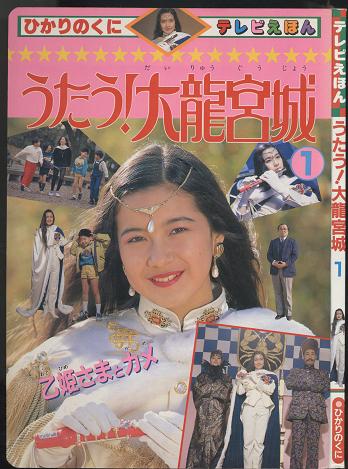
It was a sad story with all the fishes disguised as humans and living in the world. The contrast between Taro, who hates studying, and Otohime, who is not allowed to study due to the rules of the Dragon's Palace. The reason why they are forbidden to study is because "they won't be able to play honestly." There were some unique scenes such as a child studying behind his parents' back or a fish secretly studying while dressed like a delinquent. Parents brought sweets to children who were reading (or pretending to read) manga and asked, "Is it interesting?" and "Is it funny? A delinquent fish says to Otohime, "I'll teach you how to study. (The fish, by the way, became a strict teacher.
There was a development where Otohime's parents were brainwashed by Taro's grandmother to try to steal Otohime's voice (king crabs have that ability) and appeal to the other fish on the radio saying, "This company is a good company~" and it was terrifying.... My grandmother, or rather, the depth of human greed. It was originally my grandmother's company that ruined Ryugakusei.
The Three Argumentative Sisters Streisand (1993)
Synopsis: Every year, there is a guardian god for each zodiac sign, but the rooster in charge of the year of the rooster "has lost his motivation" and puts the role on the three Yamabuki sisters, whom he met by chance. With a threat to turn them all into roast chicken if they are found out, the three sisters end up keeping the peace in the Year of the Rooster.
Characteristics: Each time, he teaches them a proverb or saying, "According to the ancients. The three sisters are named after "Yukigetsu Hana" (snow, moon, and flowers), and "Wa" (harmony) is at the forefront of the story.
Enemies: All those who disturb the peace of the Year of the Rooster. Ultimately, it is Nekohime.
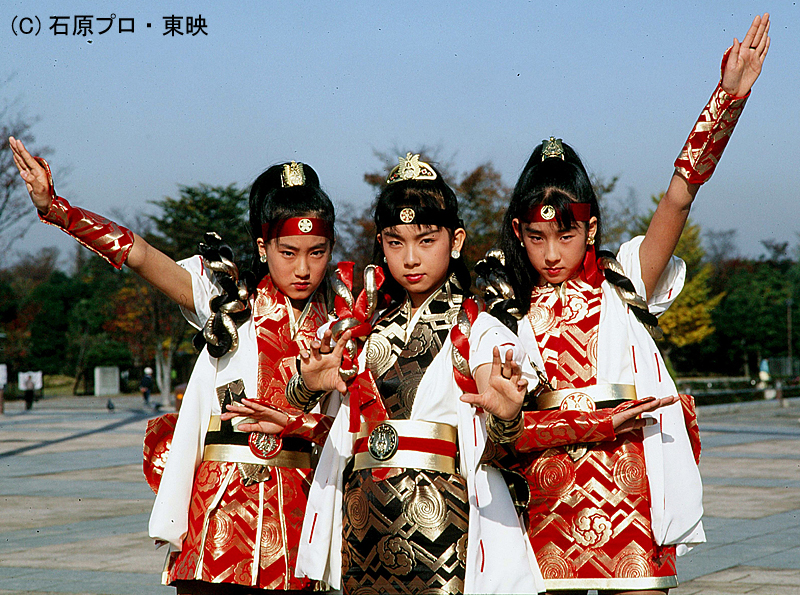
As I thought, the last boss was a cat that did not make it into the Chinese zodiac.... I remember that the scene explaining the proverb was easy to understand. There was an episode in which a cake baker born on February 29 of a leap year broke into a house where a birthday party was being held (he knew the address because he had received the order), ruined the party, burned the calendar, and left. The three sisters threw a birthday party for the craftsman who had taught them this lesson, and although it was obvious, it was warm.
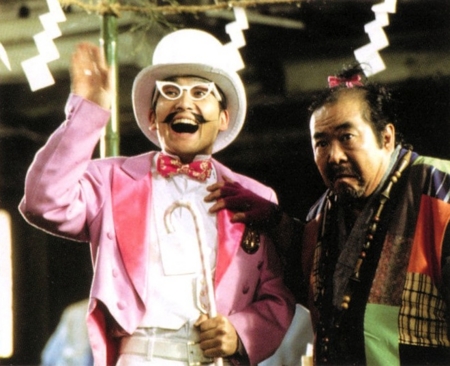
The rooster is on the right and the "messenger" fried chicken man is on the left. Terrible naming....
The proverb was explained by the fried chicken man.
