
A game that combines the first six Mega Man games into a single title was recently released on the 3DS.
This article focuses on the last piece of the game, which is the final trump card used by Mega Man, who has also become a topic of conversation due to his participation in the latest Super Smash Bros. game.
Mega Man (original)
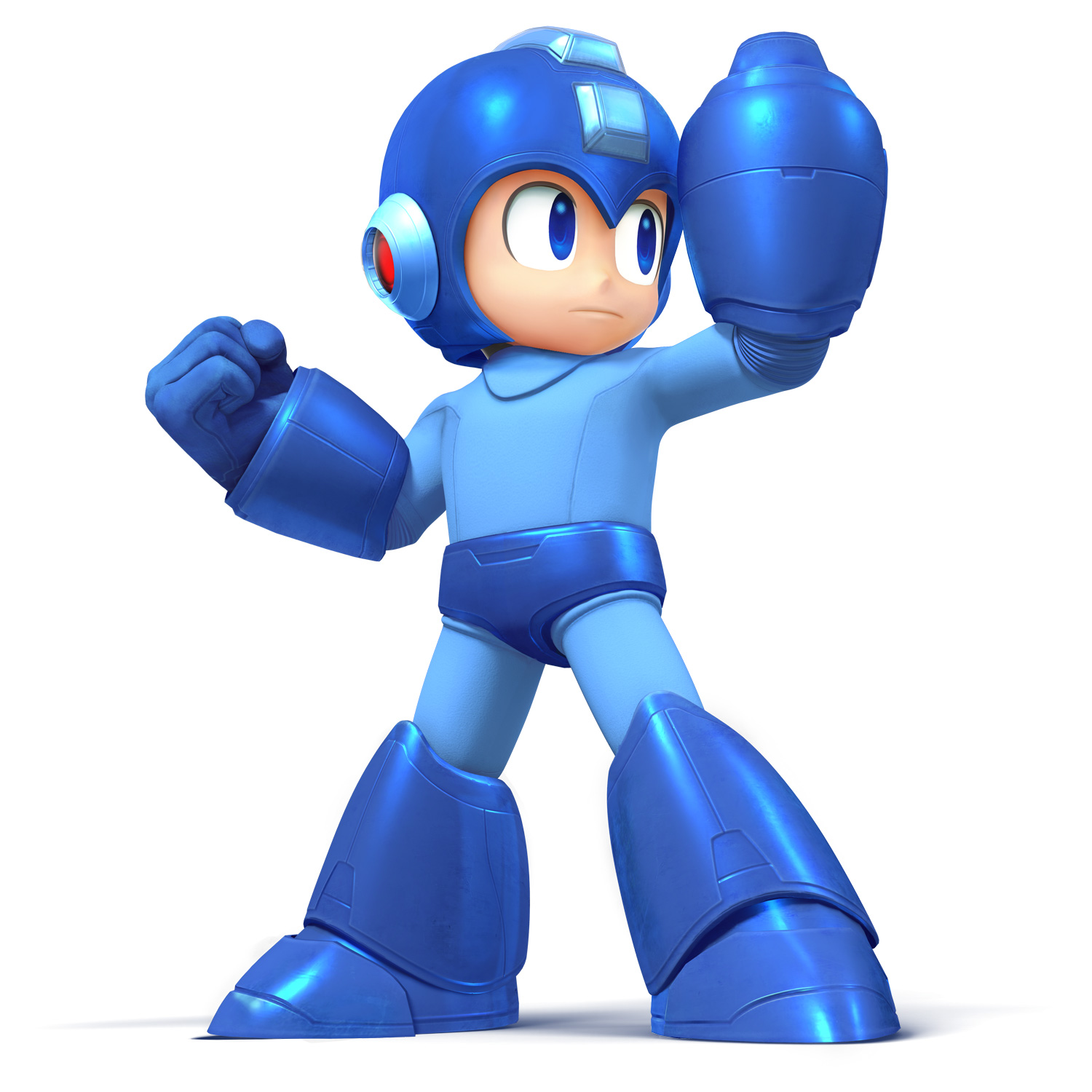
Image from Super Smash Bros. for Nintendo3DS/WiiU
The Mega Man series began here.
The first game was released in 1987 on the franchise, followed by 10 more, the latest of which is "Mega Man 10: Threat from Outer Space! which was distributed on WiiWare.
The main game system is a side-scrolling stage in which players use weapons such as jumps and rock busters to defeat enemies and clear the stage by defeating the stage's boss.
The key to the game is to conquer the eight stages while considering the compatibility between the weapons you have acquired and the bosses. (Six in the first game)
The boss characters have very strong personalities, and from "Mega Man 2" to "8," there was a project to publicly solicit character designs for the boss characters.
Some celebrities had their boss character designs selected through this project, and two of them were designed by Yusuke Murata, a manga artist known for his work on the "Eyeshield 21" and "One-Punch Man" manga.
The original Mega Man has made many external appearances in Capcom productions, with Mega Man and Roll appearing as player characters in fighting games.
In "Super Smash Bros. for Nintendo3DS/WiiU," in which he participated as a guest character, his coloring is based on the color variations of the special weapons of defeated bosses, and his special moves default to the special weapons from "Mega Man 2. but by using the customize function, you can also use special weapons other than those from "2".
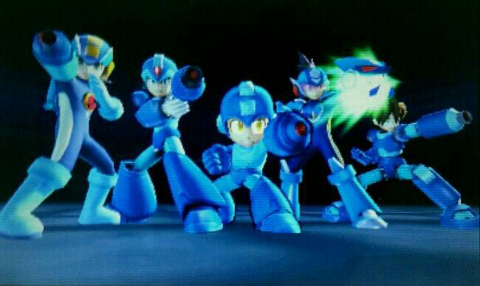
As we will see later, by using the last trump card, you can see the "Mega Man Special," a technique in which Mega Man from "Mega Man X," "Mega Man DASH," "Mega Man Exe," and "Mega Man of the Meteor" appears and fires a charge shot in a horizontal line.
A game called "Mega Man Classics Collection" was released on the 3DS this past February.
In this game, you can play from "Mega Man" to "Mega Man 6", and "Time Attack Mode" and "Museum Mode" where you can view setting materials were added.
Mega Man X
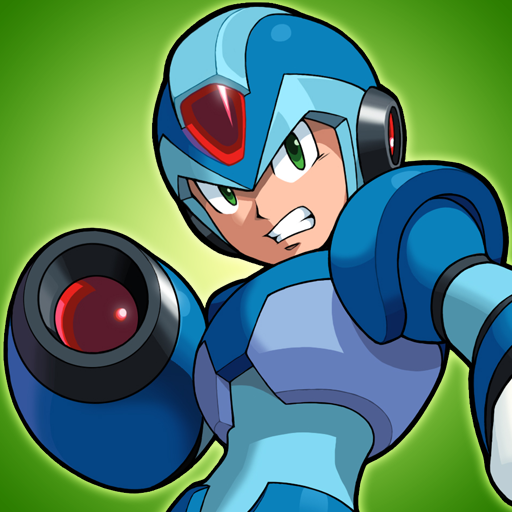
The first game was released on the SFC in 1993.
It is set 100 years after the original Mega Man series.
The game is the same as the original Mega Man series in that players use special weapons to defeat defeated bosses, but there are original elements such as wall-kicking, dashing, and picking up items hidden on the stage to boost their power.
Some of the techniques that appeared in the "Street Fighter" series, such as Hadoken and Shoryuken, can be used by inputting commands in some games.
Eight numbered games have been released, and the game is also available on the PC, making it as popular as the original.
In "Super Smash Bros. for Nintendo3DS/WiiU," X appears as Mega Man's last trump card, and Zero appears as an additional Mii costume.
Mega Man DASH
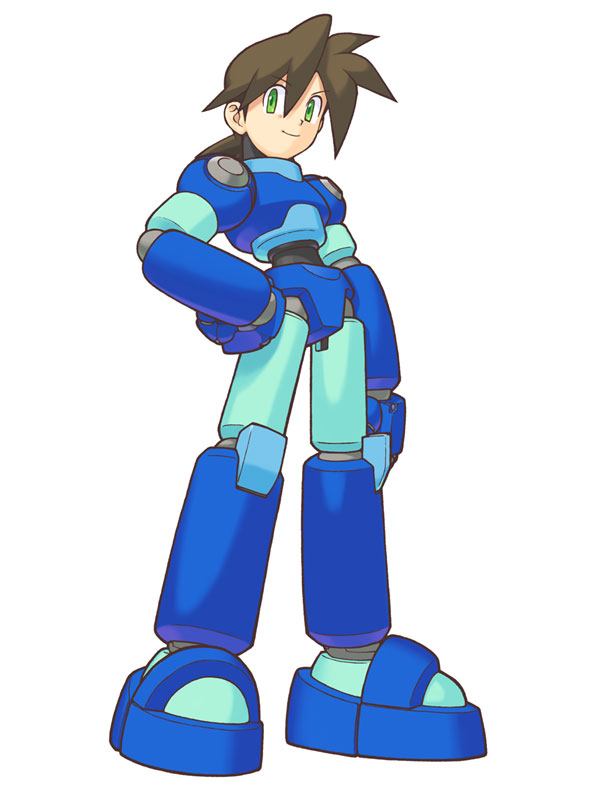
The first game was released on PS in 1997.
It was the first 3D action game in the Mega Man series of derivative titles.
It was created to commemorate the 10th anniversary of Mega Man's birth, and in addition to 3D shooting action elements, there are RPG elements such as exploring towns and purchasing and strengthening weapons.
Only two games were released in this series, but a new version was released as a cell phone application in 2008.
A new game was announced in 2010, but development was cancelled the following year.
Mega Man Exe
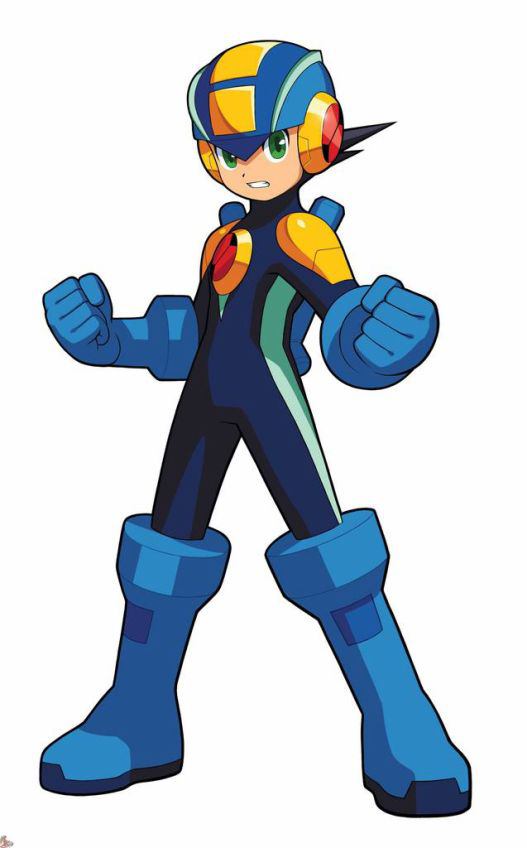
The first game was released on the GBA in 2001.
Until "Mega Man Exe 3", the title had "Battle Network" at the beginning, but from "4" it was removed and the subtitle was added.
The setting is a world where the Internet has rapidly developed, and in a society where humans coexist with Net Navis that have personalities, an elementary school student "Kouto," who is good at virus busting, and his Net Navi "Mega Man" confront an organization that operates in the background while solving Internet crimes and other cases.
The story moves back and forth between the real world and the cyber world, and while advancing the story in the real world, they plug into the cyber world to perform virus busting when necessary.
When you encounter a virus, you will be in a battle, and the battle will take place on a field of 3x6 squares.
I move in the 3x3 field on the left.
After selecting the battle chips to equip to Megaman (up to 5 chips), the battle begins and the player attacks using the unlimited-use Rock Buster and equipped battle chips.
When the custom gauge at the top of the screen reaches MAX, the player can equip another battle chip at will, and after equipping it, the battle resumes, repeating the process.
The game is won by annihilating all the enemies, but it is game over when the HP of Mega Man reaches zero.
By combining multiple Battle Chips, a phenomenon called "Program Advance" can be generated that transforms them into powerful chips.
There is also "Soul Unison," which allows you to use the power of other Net Navi, and "Beast Out," which uses the power of the Dennou Beast that will appear in the final game.
Six games were released in the Mega Man Exe series, and many extra games were released as well.
The series has been adapted into an anime five times, and many media mixes have been made, including the commercialization of battle chips.
The series has also collaborated with Konami's game "Bokura no Taiyo" and the card game "Duel Masters," nicknamed "DUEMA.
The collaboration with DUEMA was realized with the simultaneous release of the theatrical version of the game, and the film's first main character, Kirifuda Katsura, and Mega Man co-star in the OP.
In addition, "Forte," the netnavigator from "Mega Man Exe," has been made into a card in DUEMA, and cards from DUEMA have appeared in "Mega Man Exe 5".
Meteor Rockman
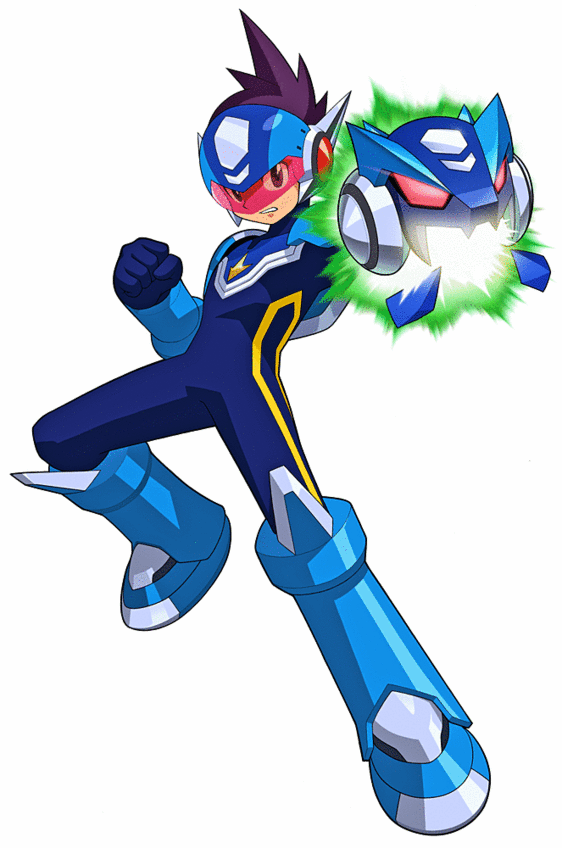
The first game was released on the DS in 2006.
It is set 200 years after the aforementioned "Mega Man Exe" series.
In a society where electronic devices are controlled by radio waves, "Subaru Hoshikawa," a fifth grader living in Kodama Town, meets "Warlock," an alien from FM Planet, and when Subaru gets involved in a case caused by the FM aliens, he merges with Warlock and becomes Mega Man to solve the case. The work is based on the concept that the world of the electric brain has become a world of radio waves.
This title has some changes from the "EXE" series, such as the electric world becoming a radio world, the battle chip becoming a battle card, and the range in which Mega Man can move during battle becoming narrower, but the general battle system remains the same.
The system and name have been changed to include an element in which Mega Man transforms, similar to the Soul Unison feature in the "Exe" series.
The Meteor Rockman series includes three DS games, which have also been adapted into anime.
In 2009, Mega Man Exe: Operation Shooting Star was released on the DS with an additional scenario in which Mega Man Exe and Mega Man Exe co-star.
In this work, he is referred to as Mega Man.EXE and S.S. (Shooting Star) Mega Man to differentiate between the two.
summary
How was it?
This time, we introduced the Mega Man series, which is the final trump card for Mega Man's entry in the latest Super Smash Bros. game.
Next year will mark the 30th anniversary of the series.
I hope that this series will be loved for a long time.
