
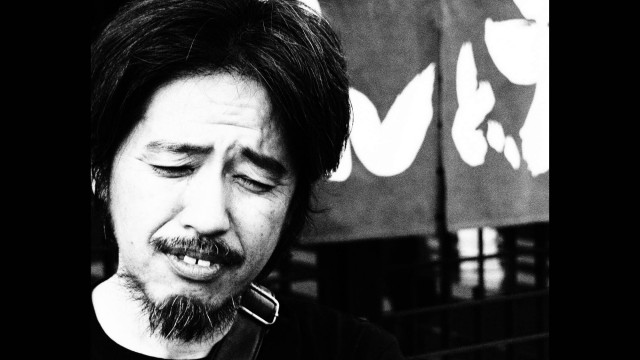
I wrote about W.C. Callas, a late supernova in the Japanese blues scene who made his debut at the age of 48, including his biography and songs.
Please forgive me if this article is a bit of a hobby of mine.
(There is also a brief explanation of the blues!)
I am happy if I could bring out even 1% of the charm of W.C. Callas.

His debut album was released in 2013. He was born in 1964 and was 48 years old when the album was released! We pick up on W.C. Callas, who made an impact on the Japanese blues world.
First things first - about the blues.
Blues is a type of music that originated among African Americans in the Deep South of the U.S. It is said to have developed from Negro spirituals and field hurrahs (labor songs) in the Deep South around the late 19th century.
Source: ja.wikipedia.org
A melancholy song in four-fourths time. A lament sung by black Americans. It became the musical foundation of jazz.
Source: www.weblio.jp
What is blues anyway? "I don't really know," "It's hard to understand.
I think there are many people who have such a feeling.
So, let me give you a brief explanation of the blues.
Please forgive me if this is a simplified version, as I have not studied it very much.
~What is the blues? ~The Blues
As you can see from the quote above, it is a music that strongly expresses the influence of the life of black people at that time. It was created by blacks who were forced to work in order to find enjoyment in their lives.
There is a difference between the early blues and the more recent blues.
Let's listen to them.
Let's start with the early blues.
I chose one that had good sound quality and was rather easy to listen to.
It's a storytelling with a single acoustic guitar. It's kind of a peaceful atmosphere.
The lyrics, however, are said to be something like "I was put in jail" or "The crops are failing.
By the way, you don't need to remember, but the early blues is called Delta Blues (sounds cool).
The man in the video
Charlie Patton (1891-1934)
I'll introduce this person as well.
This one may be easier to listen to.
Robert Johnson (1911-1938)
Continuing with the blues of recent years.
A charismatic blues musician who passed away just last year.
We pray for his soul rest in peace.
B.B. King (1925-2015)
Song: Every Day I Have The Blues
This song has matured and has a somewhat stylish feel to it. The main difference is the use of electric guitar in the performance. The other difference is that there is an instrumentalist behind the band.
(*The band starts playing about 1 minute into the video.)
Also one of B.B. King's most famous songs. Here is another one.
The Thrill Is Gone.
His guitar is nicknamed "Lucille".
Well! So much for a brief description of the blues, let's get down to business.
What is W.C. Callas?
Listen to one song first, by W.C. Callas.
W.C. Callas, "There ain't no salvation in life."
I thought, "This is kind of like the blues, isn't it?
Now, here's where his name comes from.
W.C. Callas~The Origin of His Name
The name "W.C." was borrowed from the harmonica player Wild Child Butler.
Source: www.wckarasu.com
I am not defending crows, but don't you think they are creatures struggling to survive in a way?
What a good name that expresses his sense of style.
But it takes courage to name yourself a crow.
W.C. Callas, "I Cried at the Udon Restaurant"
This is one of the author's recommendations, which is also the title track of his album, for you to listen to based on the above.
Incidentally, it has reached No. 1 on the Japanese iTunes blues chart.
Finally.
The video of Wild Child Butler, from which the "W.C." part of his name is derived.

The mischievous W.C. Crow, who is also on Twitter. He is not a bare udon.
By the way, he is a lumberjack by profession.
W.C. Callas' "I Cried at the Udon Restaurant" on iTunes
itunes.apple.com
Preview, buy, and download songs from the album "I Cried at the Udon Restaurant" including "I Cried at the Udon Restaurant," "Just Like a Boy," "Arigaten BLUES" and more Preview, buy and download songs from the album. Buy the album for $1,800. Songs from $250.
