
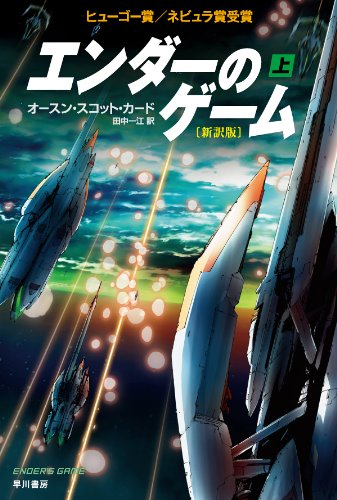
Many of you may be familiar with this story since it was made into a movie a few years ago with Harrison Ford. But in fact, if you enjoy the story, the novel is definitely recommended. Let us introduce you to "Ender's Game," with its nonstop storyline and astonishing twists and turns.
First published in 1987.
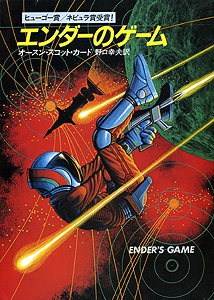
Ender's Game" by Orson Scott Card was first published by Hayakawa SF Bunko in a translation by Yukio Noguchi. From the feel of the cover and the title, many people had an image of what we now call a light novel. It is an image like Starship Troopers or Starfighter. Once out of print, a new translation of the book by Kazue Tanaka was released in both upper and lower volumes along with the movie adaptation.
Double Crown of the Hugo Nebula Awards
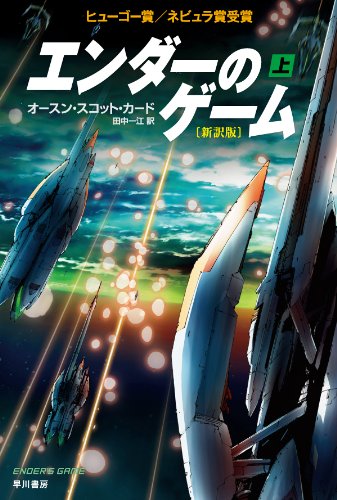
This work has won the double crown of the Hugo and Nebula Awards in the United States. The Hugo Award is determined by science fiction fan votes, and the Nebula Award (Nebula) is selected by writers who belong to the Science Fiction and Fantasy Writers Association. Winning these two awards means that your work is unquestionably "the best! The Nebula Award (Nebula) is a prize selected by writers belonging to the Science Fiction and Fantasy Writers' Association.
Amazing worldview, characters and characterization at the time
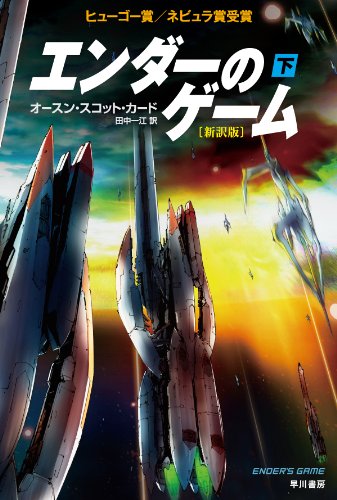
The story starts before the third attack from the invader, Bagghar. Since the invaders are unable to communicate with Bagghar and the human race has suffered tremendous damage, a facility called "Battle School" is being built in space to prepare for a full-scale war.
First of all, there are three settings that stand out here. The world is not in the middle of a war or just after the start of a war, but in the interval. This means that there are no direct battle scenes. I imagine this is why the title is "game" instead of "battle," but there are actually some great implications. Secondly, the ages of the men and women gathered in this school are very young. The protagonist, Ender, is a special exception among them, entering the school at the age of six. This low age is surprising, as the protagonists of war stories are usually boys and young men in their late teens or twenties. And the lack of information about the enemy "baggers". Although it is a war story, the peculiarity of the enemy's almost non-existent appearance is comparable to that of "Space War.
a shocking turn of events
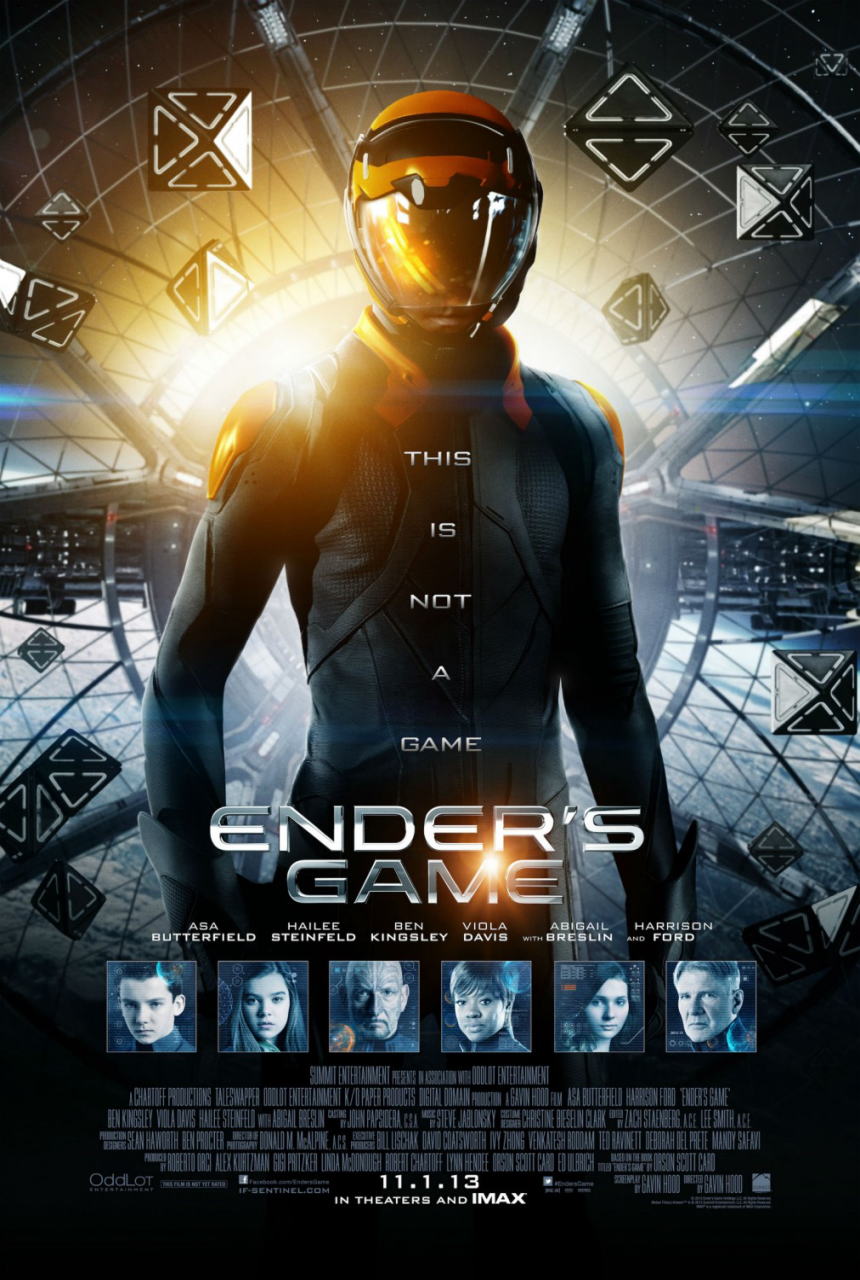
The curriculum that is set up to take command of the fleet that will be formed to strike the enemy in the future is harsh and very demanding. The pressure placed on a six year old boy, even with a clear head, is far beyond the norm. It is said that the boy, Ender, who originally disliked to fight, but still went on with no way out, later became the model for Shinji Ikari, the main character of "Evangelion. The term "third boy" was already coined at this time.
After this, it is a spoiler, so be careful!
The most shocking part is the battle simulation that was called the final test. The simulation to hit the enemy's home planet was extremely difficult, and Ender led his team's fleet to attack from the front, but his fellow ships were destroyed one after another. The remaining ships still attacked hard, obliterating the enemy home planet, and the mission was over. Just when Ender and his team thought that the simulation was finally over for another day, they were hit with a startling revelation. Everything they had thought of as a simulation was a real fleet mission. The ship that was wrecked in the simulation was a space fleet with real people aboard, and the one that attacked and obliterated the enemy's home planet. At this time, Ender was only 11 years old. He was so shocked that he withdrew.
Still, he investigates the enemy, of which he knows very little, and goes to the home planet of the enemy he destroyed, even though he did not know it, to seek what redemption he can offer.
It is a battle for the survival of a species, a record of a boy's growth, and a profound story that questions the value of his own existence, that of other humans, and that of other species.
Lots of sequels.
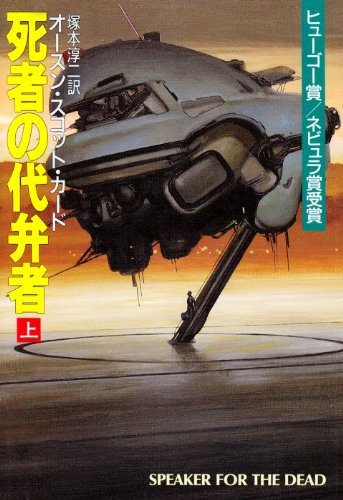
Ender's Game has actually had many sequels. The Advocate for the Dead, Xenocide, and Ender's Children. Among them, "The Advocate for the Dead," which was published after "Ender's Game," is another terrific work that was double-crowned with the Hugo and Nebula awards.
Other spin-offs include "Ender's Shadow," "Shadow of Hegemon," and "Shadow Puppets. The main character is a small boy named Bean, who served as Ender's second-in-command. This one is also interesting. The story starts before he meets Ender, so we can see "Ender's Game" from Bean's point of view. You can enjoy "Ender's Game" in a different way.
I recommend reading the book and then the movie.
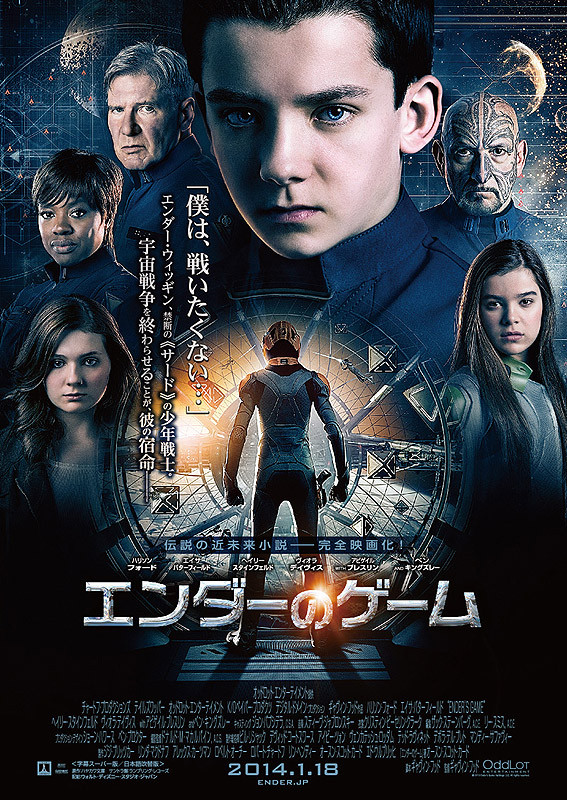
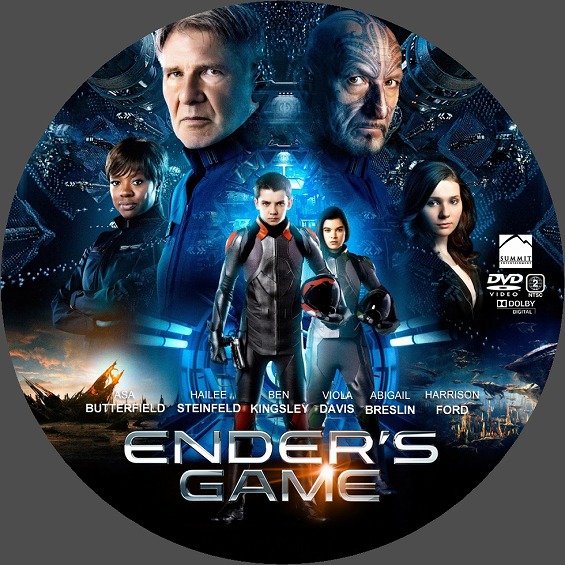
Since time is limited in the movie, many parts could not be expressed in depth, and the latter half of the story is difficult to understand without knowing the story, it would be several times more enjoyable to watch the movie after carefully reading the novel first. I think you will enjoy "Ender's Game" more than ever if you first read the novel carefully and then watch the film.
