
The setting is "another world. However, there is a sense of "4,000 years of China" in his place... We introduce such a work.
The Mysterious Play.
Original story: Yuu Watase (manga)
Worldview: In a book called "The Book of Four Divine Heaven and Earth" found in the library stacks. There are countries in the east, west, south, north, and west, and the blue dragon, white tiger, genbu, and vermilion sparrow, which protect each direction, are worshipped as divine beasts. Each divine beast is invoked by a priestess, and only three wishes can be fulfilled.
Miko: A girl from another world, and she must be "pure". After the divine beasts are summoned, they are forcibly returned to their original world.
Seven Star Warriors: Warriors who protect the miko. Their name is derived from the 28th house of the zodiac. When using their powers, a "character" appears somewhere on their body as a sign of their status as a sevensheishi. The miko is never "united" with any of the seven star priestesses, even if she falls in love with one of them, because of this condition.
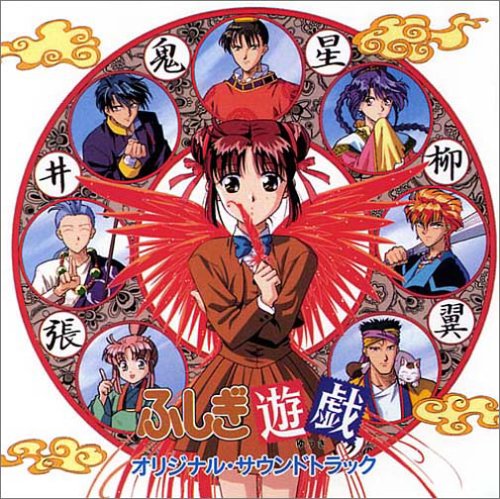
Miaka, the main character, agrees to become a miko (shrine maiden) after hearing that she can make any wish come true for a divine beast. And just when she thinks she is in a reverse harem paradise of handsome men, her best friend turns out to be on the side of her enemy, the blue dragon. The feud with the best friend also has the element of "having the same love interest," so the story unfolds more and more like a daytime drama. It would be a complete slog if it weren't for Biju's cheerful personality, voracious appetite, etc.
Besides, there is also this element. The word "miko" sounds good, but in reality, it is a kind of sacrifice, and if you are not strong in spirit, the divine beast will eat you from the inside out.... The best friend, perhaps not having been told this explanation, became delirious when she saw her body being eroded by the blue dragon (scales appeared on her legs, causing severe pain, etc.) and was taken in....
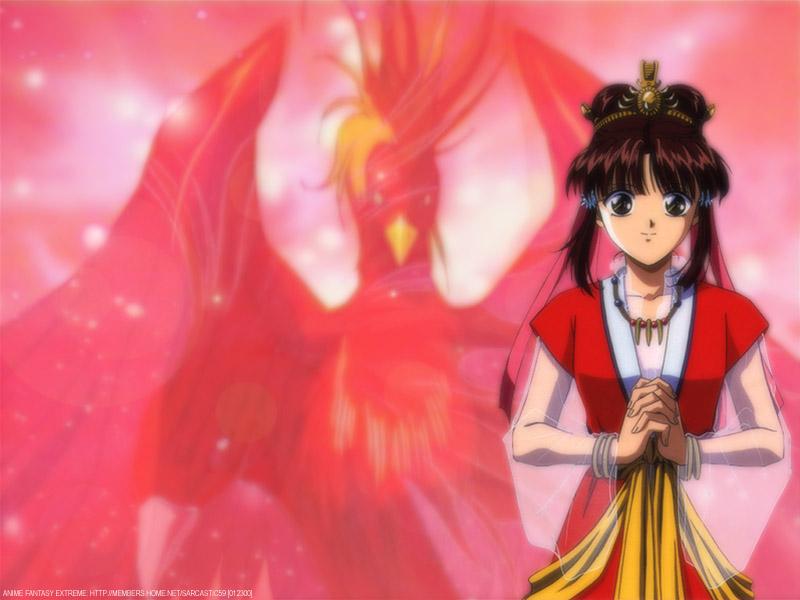
The scene where Suzaku is summoned gives me goosebumps. Putting aside the fact that Bishu, who had bad grades, had memorized the summoning spell, the character for proof that appears in the same place as the seven star warrior. What can I say, it was so cool. It was a sense of "supported by everyone," but it was also a summoning of determination, knowing the risk that you might be sacrificed.
Fushigi Yuugi - Episode 51 [English Subbed] - YouTube
www.youtube.com
This is one whole episode before the last episode.
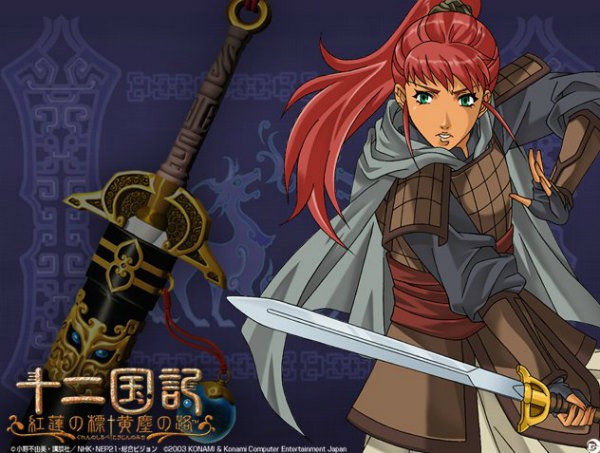
The Twelve Kingdoms.
Based on a novel by Ono Fuyumi
Worldview: A different world. The twelve countries are combined to form a unique pattern, like the petals of a flower. The creatures of the world of the Twelve Kingdoms bear fruit as "nuts (called ogokatsu)" in the form of plants, beasts, birds, and even people. Monsters and female monsters (like the mother and bodyguard of the qilin) also make appearances. I heard that when the king dies, the country is disturbed.
Kaikaku: Those who were swept away from Japan due to an erosion (like the space-time turbulence in "Doraemon").
Tainokatsu: Those who are from the Twelve Kingdoms but were swept away to Japan or other countries in the state of oviparity and have returned.
Kings: The rulers of each of the Twelve Kingdoms. They are chosen by the Kirin. Once they become kings, they cease to be "human" and stop aging. Unless he is beheaded or his kirin dies, he will continue to live. There are also kings who are born in the womb.
Qilin: A being that can choose a king. There is one in each country. Sometimes they are humanoid, sometimes they look like the ones in the lore. It is said that the change of form is "as natural and simple as raising one's hand. There is also a Qilin in embryonic form.
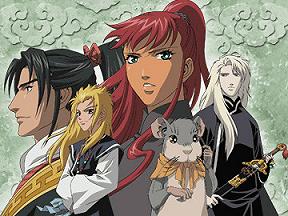
According to Rakushun (rat), "It is more unbelievable that they are born from the belly. Qilin dwell in a special tree.
Yoko, a high school girl who has lived her whole life by listening to other people's opinions, is suddenly confronted by a beautiful blonde-haired guy who says, "You are the king," and "Nandatte! That seems to have been the beginning of the story. She is repeatedly deceived, and as she gets sad, Rakutoshi saves her in many ways, and he is a real angel. If he becomes king, the country will prosper, but there seems to be a rule that "no one can have the same surname as the previous king," so he was not chosen because his country's previous king had the same surname...though he probably doesn't care about such things at all.
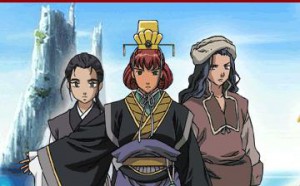
It is a bit dark, but it is a story of growth that shows steady steps forward. The worldview and status system are so detailed that it is almost easy to forget that it is a fantasy.
Like Clouds, Like Wind."
Original story: Kenichi Sakami (Novel), "A Novel of the Later Palace
World view: Generally close to historical fact, but weapons around "Ming" also appear.
Sokien Province: The setting. The emperor dies suddenly, and a storm of intrigue ensues...
Palace girls: Gathered regardless of their status, tested, and those who passed the test were admitted to the inner palace. The first wife is called the "Queen.
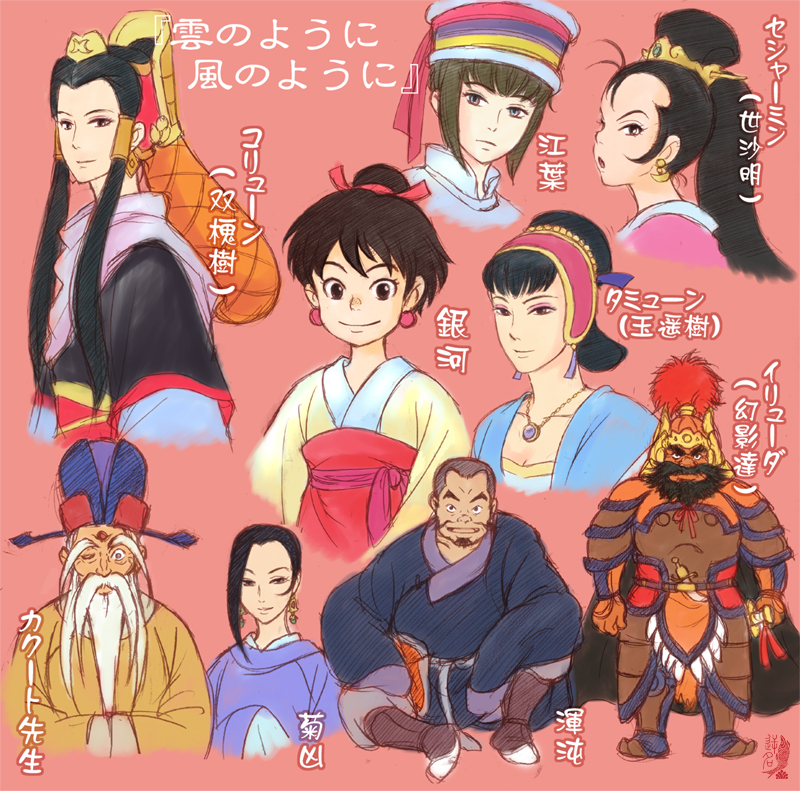
The main character who accepts for the "with three-color nap" is amazing... He has tremendous energy, including the fact that he accepts the offer. The scale of this work, including the last scene, is very large.
But...
Why are there so many ancient Chinese style fantasies? After all, the Japanese style, no matter which period it is modeled after, seems "somehow grounded and false. So, why not use the Chinese style? There are all kinds of great legends, and there are some flowers that we don't have in Japan. In my opinion. This was a special feature on "fantasy with a Chinese touch.
