
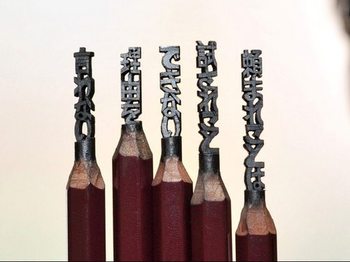
The field of art is advancing day by day and is diverse. In this issue, we will excerpt various artists from the art world that has spread like a fan.
The originator of the "unusual technique"? Kiyoshi Hasegawa, printmaker
Rather than "changing," he is the one who "revived" a technique that had long been out of use.
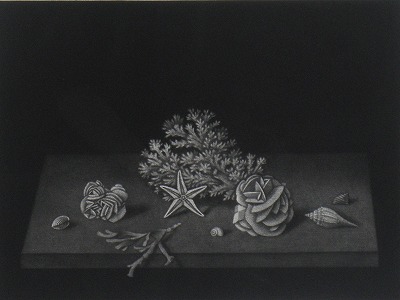
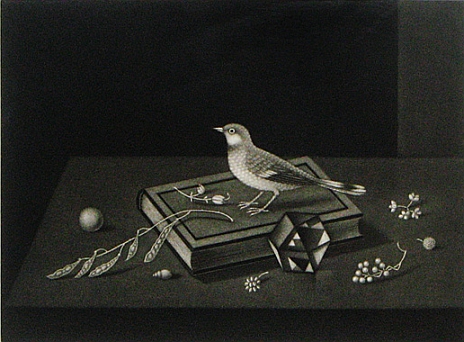
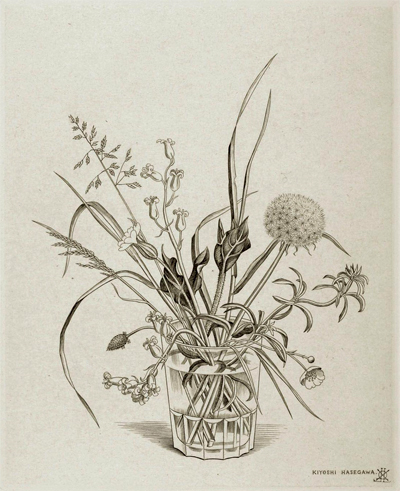
The black and somewhat detailed prints are an old printmaking technique called "mezzotint," which seems to have been revived by Mr. Hasegawa and reborn in his own unique style. However, until "a certain time," he painted "relatively normal, rather bright" works like those on the tongue. What happened to him...?
At the age of 27, Kiyoshi moved to Paris. She continued to live in Paris and even married, but was imprisoned in a camp during World War II.
Source: ja.wikipedia.org
It sure is tough to be sent to a camp after 50...and then there are other episodes like this.
Kiyoshi Hasegawa and "One Tree
During World War II, he was taking a walk to see if he could find any good subjects, when a tree spoke to him, "Bonjour. Hasegawa replied, "I'm beginning to think that tree is a wonderful thing.
Source: ja.wikipedia.org
He is the moe father of the painting world...no, no, it is because of his philosophy and view of nature. Even though he suffered the sorrow of being imprisoned during the Great War, natural objects spoke to him gently, didn't they? When I think of this, the beauty and magnificence of the black prints seem to increase.
According to Kiyoshi Hasegawa, "Black has seven colors.
Called a "black printmaker," he says, "There are seven kinds of black."
Source: ja.wikipedia.org
I don't know if it's deep or what I'm talking about.... Is this an area that only those who have mastered it can understand? Whatever the case, he has won two prizes in France and is more than well-received in Japan as well. As he is known as a "black printmaker," Hasegawa's work, which is different from the all-encompassing black, continues to impress us even today.
And what's a "mezzotint"?
A dented metal plate with a comb-like blade is used to create countless nicks and nicks. The metal spatula is then used to scrape off the nicks and scratches while the painting is being done. Ink is then printed on the fine indentations and wiped off from where there are no indentations. In this way, the ink remains on the areas where there are still nicks, while the areas where the nicks have been scraped off or smoothed down turn white.
Source: ja.wikipedia.org

It is colored. It is a further improvement.
It's great to come up with the idea, but I also admire the energy that goes into doing it. This was an artist feature.

Contents
- Eikanji (English Kanji), Tomomi Kunishige (Calligrapher)
- Miniature-style scene, Naoki Honjo (photographer)
- With a pencil lead...Toshiyuki Yamazaki (Sculptor)
- Real Goldfish, Ryusuke Fukahori, artist
- The originator of the "unusual technique"? Kiyoshi Hasegawa, printmaker
- Kiyoshi Hasegawa and "One Tree
- According to Kiyoshi Hasegawa, "Black has seven colors.
- And what's a "mezzotint"?