
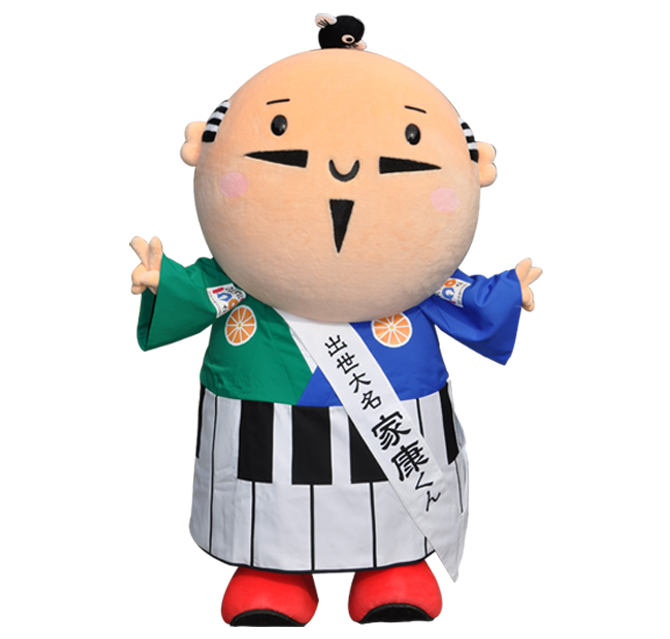
This year marks the 400th anniversary of the death of Tokugawa Ieyasu. Ieyasu, who waited and waited in the spirit of "wait until it cries," took the reigns of the country and established a peaceful world for several hundred years, has been played in various ways by many different actors and actresses. This is a special feature on Tokugawa Ieyasu, who has been portrayed in a variety of ways by many different actors. Other characters are also mentioned.
Aoi: Three Generations of Tokugawa" (performed by Masahiko Tsugawa)
Until Sekigahara, I didn't find it interesting as if it was a battle of gut feelings, but after the battle, I was drawn in. He kicked Hidetada and acted as if he was the embodiment of the phrase "tanuki geezer," which means an old man with no bottom. He was a monstrous actor who seemed to embody the words of the bottomless "tanuki jeezers. He also bites his nails as recorded in the history of Japan, and makes his vassals throw them away. It was so interesting that I was worried that he would become boring after Ieyasu died.
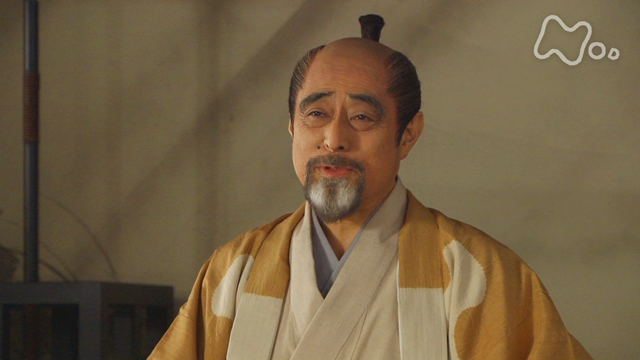
He also had a considerable number of fights with Hidetada, who became the second shogun.
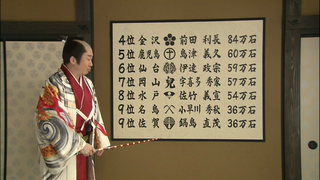
The other star of the show was Mitsukuni Tokugawa (Nakamura Umejaku), aka "Komon-sama" (the Yellow Gate). Together with Suke-san and Tadasu-san (the originators of "Suke-san" and "Tadasu-san"), he taught us about the rules of the time and trivia about the Edo Shogunate, which had just begun.
O-OKU Chapter 1" (performed by Makoto Fujita)
The main character is the future Kasuga-no-Kagura, but even when he learned of her origin (daughter of Akechi Mitsuhide's chief vassal), he told her not to worry about it, showing the kindness that comes from being a big shot. Oeyo hated her more than just being her uncle's avenger (daughter of his vassal), but Ofuku hated her more than just being her uncle's avenger. She would have hated him if he had taken her child right after she gave birth.
Takechiyo (later Iemitsu), whom Ofuku had brought up as a nanny, was even shunned by his birth mother, and his younger brother Kunimatsu (later Tadanaga) might become the next shogun...so she went all the way to Sunpu to see him. He blackmails Fugu, saying, "Don't be so intrusive! Later, he suddenly visited Edo Castle. He made Takechiyo sit on his lap and gave her a steamed bun in his hand, saying, "You've grown up. Kunimatsu rushed to her and changed his behavior. He changed from being a "kind old man" to a "naturalized man" and "the first shogun". This is a famous episode in which Kunimatsu made it known to everyone that the eldest son must succeed to the throne so that warfare would never occur again. I do not know if this is a historical fact or not.
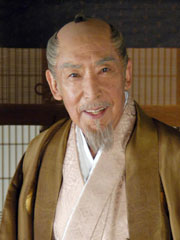
I played the role of Mitsukuni in another film.
Kinya Kitaoji in "E - Hime-tachi no Sengoku
I didn't watch much of this drama (only the first and last episodes), so I don't have much to say about it, but I got the feeling that it was "good Alexandria".... Unlike Tsugawa's version, there was a sense of "waiting for the right moment". If Tsugawa's version was "motion", Kitaoji's version was "stillness".
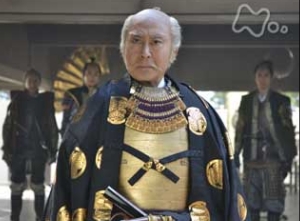
This drama was about Oe, or the second Shogun Hidetada's wife, and the theme seemed to be "a woman who lived for peace despite being at the mercy of the times and warfare," which may have been a sort of parallel to Ieyasu's "wait-and-see" approach. It seemed to me that he was trying "not to create too bad an image."
The same person looks somewhat different in only three works. The other two were in the form of "supporting roles," but in terms of leading roles, we may be able to see a different Ieyasu.
