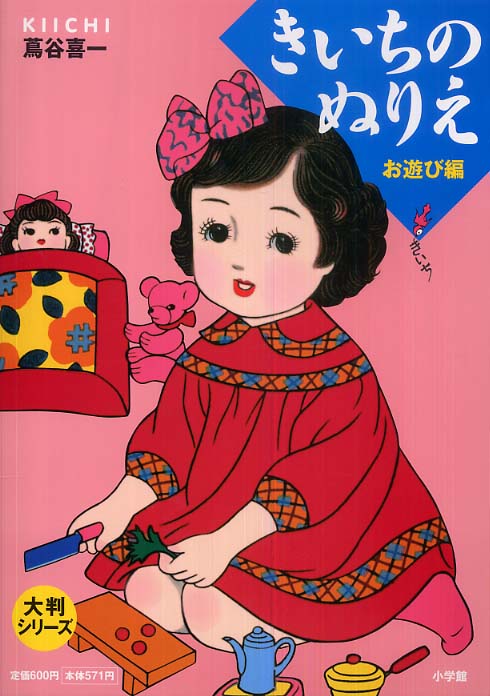
Kiichi's Coloring Book" is a coloring book created by Kiichi Tsutaya, an illustrator active from the prewar to postwar periods. Kiichi's coloring books brought many young girls into the world of dreams at a time when toys were not yet plentiful. In recent years, Kiichi's melancholy style has been reevaluated as retro and nostalgic, and his works can be seen at the "Nurie Museum" in Tokyo.
Kiichi Tsutaya Biography
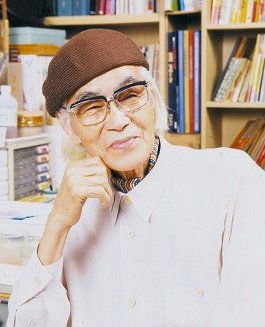
Born in 1914 as the fifth son of nine brothers and sisters in the Tsutaya family, a paper wholesaler in Kyobashi Ward (now Chuo Ward), Tokyo.
He is the fifth of nine siblings in the Tsutaya family, a paper wholesaler in Tokyo's Kyobashi Ward (now Chuo Ward).
Kiichi enjoyed drawing portraits from an early age,
At the age of 17, Kiichi saw Yamakawa Shuho's "Sodori" at the Teiten Exhibition and was so impressed that he decided to become a painter.
He was so impressed that he decided to become a painter.
In 1940, at the age of 26, Kiichi decided to become a child artist.
His coloring pictures, which he drew under the name "Fujiwo," became popular among children.
In 1947, he began to publish coloring pictures under his real name, Kiichi,
Around 1948, he began producing Kisekae coloring books.
He remained active as a coloring book artist until around 1965.
On average, Kiichi's coloring books sold 1 million sets per month,
The highest sales of "Kiichi's Coloring Book" reached 1.6 million sets per month on average,
Kiichi's coloring books sold an average of 1 million sets per month and 1.6 million sets at their peak.
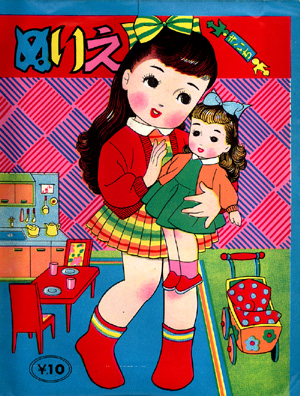
The "coloring" business started when an acquaintance brought it to my attention,
During World War II, the business was slowed down, but after the war, it was revived.
It was revived after the war, and became a valuable tool for girls to play with amidst the scarce supplies.
It became a valuable tool for girls to play with in times of scarce supplies.
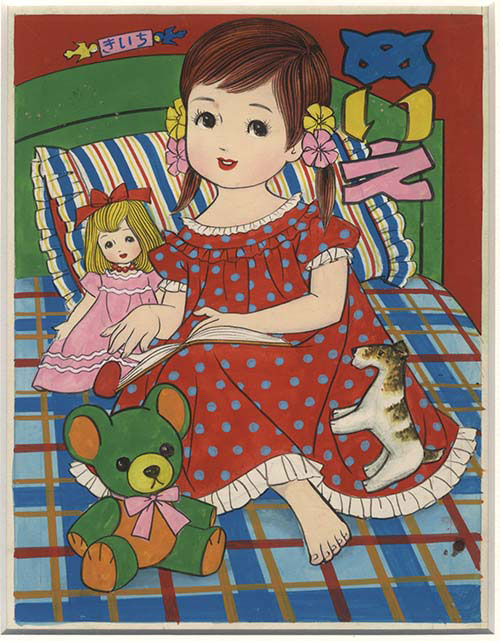
In 1978, an exhibition was held at "Art Space" in Shiseido The Ginza.
The exhibition was held at the "Art Space" of Shiseido The Ginza in 1978, and women who had already grown up at the time began to
women who were already adults at the time began to reminisce about their childhoods and re-evaluate their work.
I'm conflicted inside.
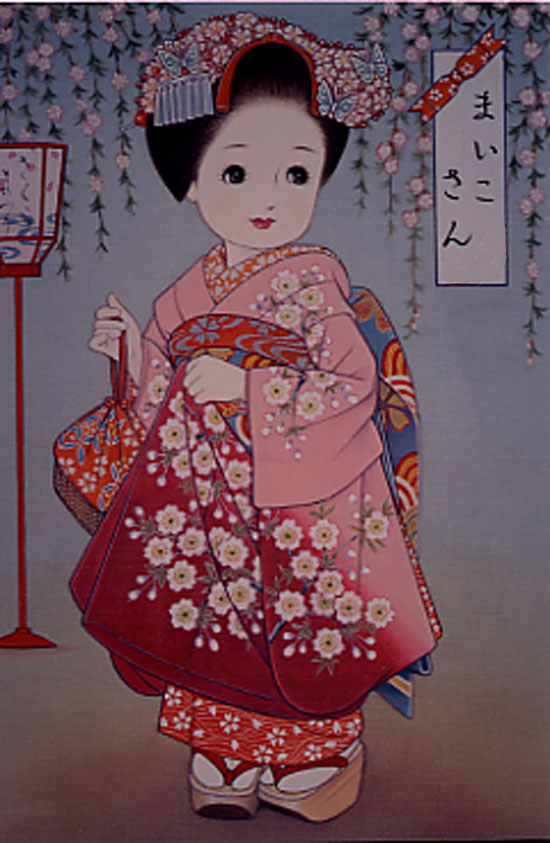
When I was not writing well, or when I met a friend, or when I saw a good painting, I suddenly came back to myself and wondered if it was OK,
I sometimes wondered if this was the right thing to do, if I could go on like this.
My original dream had become distant, and I was left with the idea of coloring,
I am living an easy life in an isolated place where people don't
I am living an easy life in an isolated place where I am not considered by others, such as coloring. I often asked myself if I was not lonely because of it.
I often felt like asking myself if I am not lonely because of it.
But when I heard people say that coloring stifles children's creativity,
I was shaken when I heard that coloring was seen as a bad thing, as an obstacle to children's creativity.
Coloring is not an art education, it has nothing to do with education,
It is a child's game. It is a play of the mind that nourishes the emotions of young children.
It is a play of the mind to nurture the emotions of young children. If I had painted only for the sake of painting
I think I would have painted something more educational if I had painted only "pictures to paint.
I painted because I wanted to paint beautiful pictures.
I wanted to draw beautiful adults and children.
(From "Kiichi no nurie" (Coloring for Kiichi *Soshisha)
Kiichi's coloring book is once again attracting attention from the elderly and young children alike, who are nostalgic for those days.
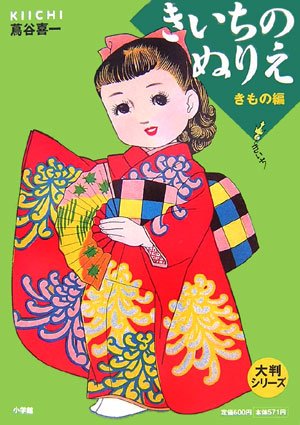
Large format series Kiichi's Coloring Book - Kimono version
Kiichi's coloring books are sold to elderly people who remember their childhood and
Kiichi's coloring books sell well to the elderly who reminisce about their childhood.
Coloring exercises the hands and brain, and is said to help prevent dementia.
It is also said to help prevent dementia.
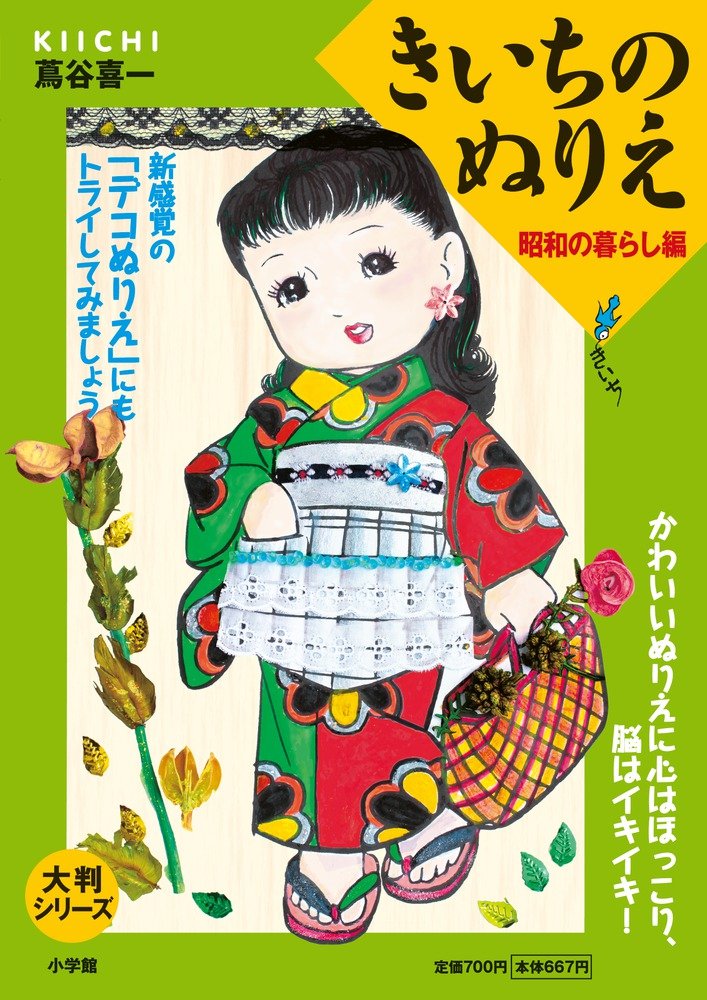
Large format series Kiichi no Coloring Showa no Kurashi (Life in the Showa era)
Kiichi's designs fascinate even today's children who do not know what it was like back then.
Kiichi's designs fascinate even today's children, who are not familiar with those days.
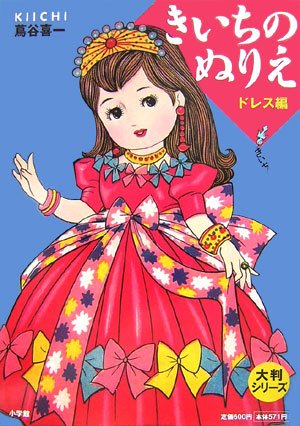
Large format series Kiichi's Coloring Book: Dress version
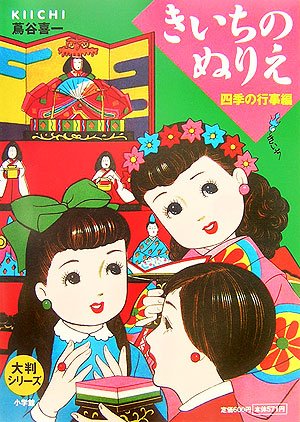
Large format series Kiichi no Coloring - Events of the Four Seasons
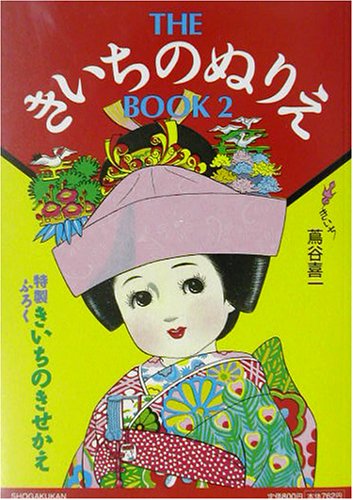
THE Kiichi's coloring book <2
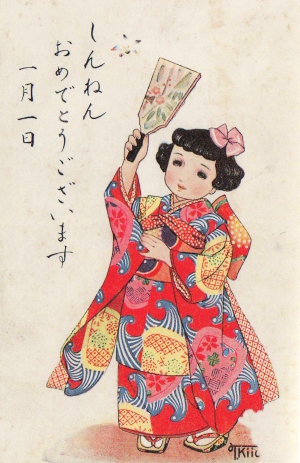
In his later years, Kiichi began working on "children's paintings" and "paintings of beautiful women" depicting children,
He never tired of trying to find his desire for "beauty" in his paintings,
In 2005, he became an active painter for the rest of his life,
He continued to paint until his death in 2005 at the age of 91.
Coloring Museum
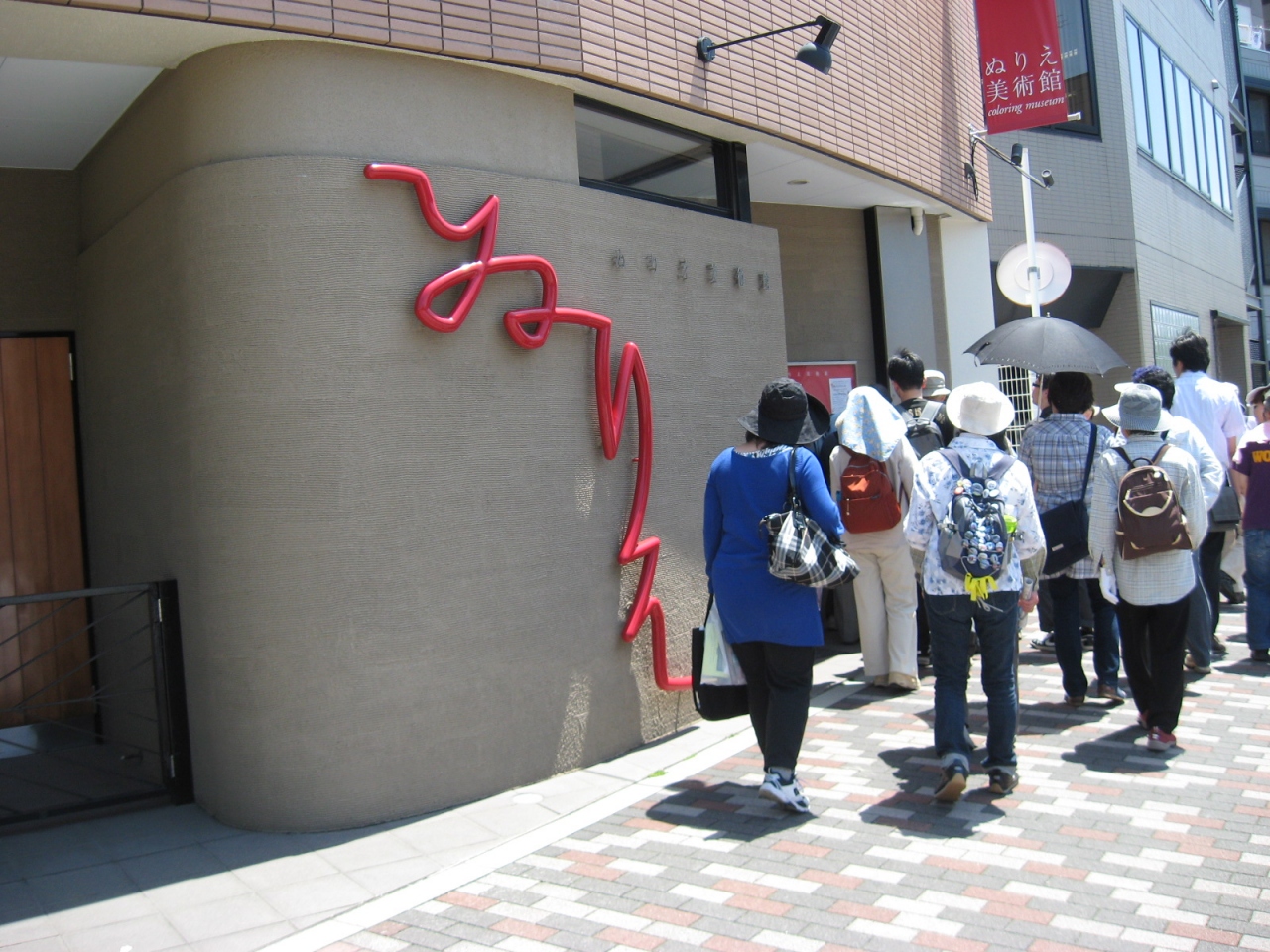
The Nurie Museum, located in Arakawa Ward, exhibits a variety of Kiichi's works, as well as original coloring pictures.
The museum exhibits various original works of Kiichi's works and other coloring books.
There is also a corner where visitors can try their hand at coloring.
Machiya, Arakawa-ku, Tokyo Open only on weekends and holidays
Hours: (March - October) 12:00 - 18:00 (November - February) 11:00 - 17:00