
A work that is considered a masterpiece is "interesting" because it contains a great deal of information and is dense in content. However, some of them have hooks with information that we don't know how to take in. Interesting is interesting, but is it "interesting" or "funny"? Is it "funny" or "interesting"? We have collected some works that make us wonder "interesting" or "funny".
Family Game" directed by Yoshimitsu Morita
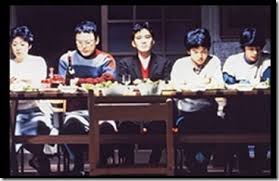
This movie was written by Yohei Honma and starred Yusaku Matsuda.
It was also made into a TV drama series starring Tsuyoshi Nagabuchi, and in 2013, it was dramatized for the first time in 28 years, starring Sho Sakurai of the idol group Arashi, which is probably still fresh in your memory.
The most famous scene in Morita's works is the one in which the family and the tutor played by Mr. Matsuda eat together in a row. I want to say, "No way!
"How dare you waste food!" "How dare you lay a hand on a woman!" There are many points that can be argued to be hysterically offensive, but for some reason, we can't help but laugh at them.
Abel Ferrara, director, "Bad Lieutenant - Cops, Drugs and Christ
Harvey Keitel plays the role of a police lieutenant who, as the title suggests, delves into all sorts of taboos, including drugs, religion, gambling, and blackmail.
While "cops" are generally thought of as the heroes of society, and "faith" as a sense of justice that stops all kinds of evil ......, such common sense does not apply to the protagonist of this film.
The protagonist, a typical "bum" who is unconscious due to drugs and alcohol, is so outrageously amoral that he makes the audience laugh.
Although "scum" does not necessarily mean "funny," his outlandish scrappiness and outlandish words and deeds make us want to laugh at him. I want to laugh at him.
Love Exposure" directed by Sion Sono
This film, released in 2009, is a representative Japanese film among the "films that tend to violate taboos" as well.
The 237-minute film contains various taboos, yet it won the Caligari and FIPRESCI awards at the 59th Berlin Film Festival, as well as the Best New Actor and Best Supporting Actress awards at the 83rd Kinema Junpo Best Ten, and 4th place among the Best Ten Japanese Films of all time.
The "guilt" that is the main focus of the story and "voyeurism" as its symbol may seem to be treated in a lighthearted manner with a sense of erotic coming-of-age comedy.
What is interesting, however, is the fact that the film runs through its four-hour length with its youth and vigor. The final scene, which seems to be pushed through only with the weapon of energy, and the theme song, "It's Hollow," by Yurayura Teikoku Teikoku that plays afterward, can leave the viewer in a stunned, hollow state.
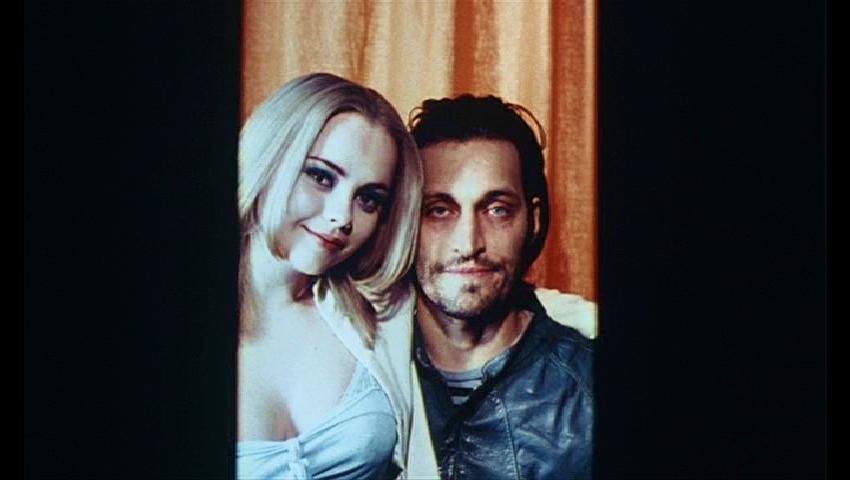
Buffalo '66" directed by Vincent Gallo
This much-talked-about film was directed, written, scored, and even stars Vincent Gallo, who is also a well-known artist.
The film begins with a scene in which a man is released from prison, and then he meets a girl who brings him closer to her and leads him on a mysterious escape.
Vincent Gallo's crazy performance and Christina Ricci's motherly role, who was only 18 years old at the time, are so unbalanced that you will want to get your pants on.
The film also uses classic progressive rock songs loved by all generations, such as YES's "Heart Of The Sunrise" and King Crimson's "Moon child.
And the scenes in which these classic songs are used are all over the place. and the scenes in which these famous songs are used have a texture so different from the other scenes that you can't help but smirk.
The charm of this film is that it has beautiful images and scenes with heat and roughness, but also a kind of relaxed atmosphere that somehow makes you laugh.
Tsutomu Shibayama and Yumiko Suda "Chibimaruko-chan: My Favorite Song
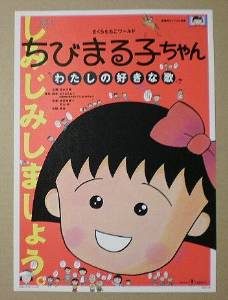
The movie version of the popular manga "Chibi Maruko-chan" by Momoko Sakura, like the original and the animated version, is dominated by gags that are generated by the interactions between Maruko and the people around her.
However, "My Favorite Song," released in 1992, has a slightly different atmosphere from the anime version, just as the movie versions of "Doraemon" and "Crayon Shin-chan" are designed to make you cry, and it is truly a "heartwarming" film.
The theme of the film is "music," and there are many songs and plays that are played during the film.
The scene in which the rock band Tama's "Eat the Stars" is used as background music to reflect Maruko's jealousy and sadness is one of the most impressive.
It is a masterpiece that is not only beautiful and interesting, but also described as "crazy" and "insane.
