
War movies are not a big genre of movies, and it is a genre that chooses people, but in some of them, there are hidden realities and emotions that cannot be found in the news, that are not written in books, and that are far from the reality and war that we cannot imagine in reality.
Therefore, I would like to introduce some recommended military movies.
Thin Red Line
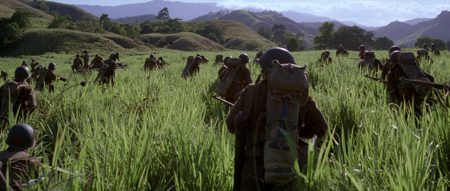
1998 Director: Terrence Malick Production: USA
The catchphrase is "Paradise is in the souls of the young."
In 1942, the U.S. receives information that a Japanese air base is to be built on the island of Guadalcanal, a fierce battleground in the Pacific Ocean. The top brass decides to land on Guadalcanal, but they are unexpectedly hit by heavy machine gun fire and forced to retreat. However, they are ordered by their superiors to land again and make a dash for the bridgehead.
The film is modeled on "The Thin Red Line," in which young soldiers live through life and death on the battlefield. The film is filled with beautiful scenes of mountains in the distance, grasslands spreading out, and rolling green hills, etc., while also presenting the horrors of war, young soldiers who die fighting only to live, not for their comrades, and their anguish over life and death. The film is like watching a documentary film without any glamour or emotion, and without even describing each individual.
Schindler's List
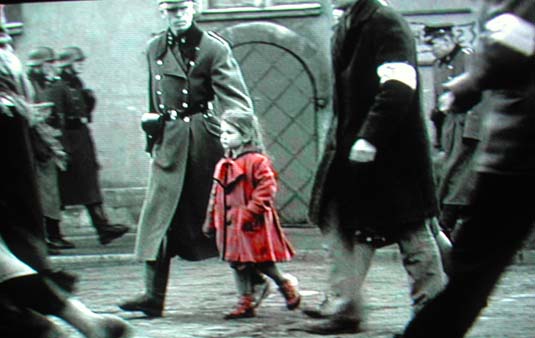
1993 Directed by: Steven Spielberg Produced by: USA Starring Liam Neeson
The catchphrase is "He who saves one life saves the world."
In 1939, Poland was occupied by Nazi Germany, and living Jews were being sent to concentration camps one after another. At that time, Oscar Schindler, a member of the Nazi party, visited Poland to make a fortune and bought a factory and started an enamel container business. Schindler's company was mostly made up of cheap Jews, including excellent workers and excellent accountants, but at last a hard-line SS officer was posted to Poland, and the Jews in Schindler's factory were in danger. Schindler, who had only ever been interested in making money, begins to change his mind as he comes into contact with more and more Jews, and begins to compile a list.
Based on the true story of the German businessman Oskar Schindler, who saved the lives of as many as 1,100 Jews, the film is considered one of the best Holocaust films ever made.
It is also director Spielberg's first Academy Award-winning film and has received numerous other accolades and awards.
Air Force Grand Strategy
1969 Director: Guy Hamilton Production: UK
In 1940, the Germans occupied France and made Britain their next target, fighting for air superiority over the Germans, who had 2,500 planes and the British, who had only 600. At one point, the Germans mistakenly bomb London. Thanks to the angry and spirited Luftwaffe pilots, the British army, which had been outnumbered, rapidly regains its strength, and the Prime Minister Churchill decides to launch a major operation to force Germany to give up its invasion of Britain.
The film is based on the "Battle of Britain," the struggle between Britain and Germany, and is an ensemble piece with no protagonist. The film is a work that shows a great deal of attention to detail, with the use of actual fighter planes and other aircraft in flight, as well as the cast being exclusively British. The scene near the end of the film, where real aircraft fly around the screen, is a masterpiece in itself.
The Greatest Operation in History
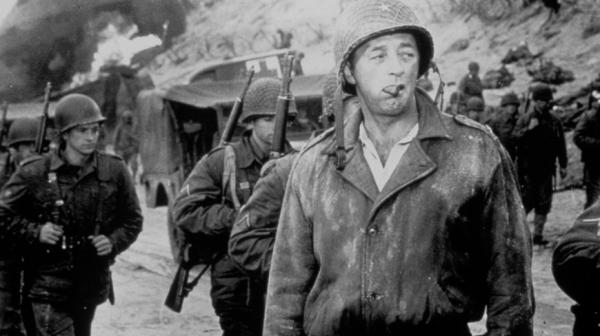
1962 The Longest Day Directed by Ken Anakin, Bernhard Wicki, Andrew Merton Production: USA
A non-fiction film depicting the Normandy landings from the day before to the end of the landing, it is highly acclaimed for its depiction of the true nature of war, including the ridiculousness of war, human cruelty, and the preservation of human dignity in the midst of such cruelty. It is not an ensemble piece, but a documentary-like film, which is also long at just under 3 hours.
The Star Spangled Banner for Fathers Letters from Iwo Jima
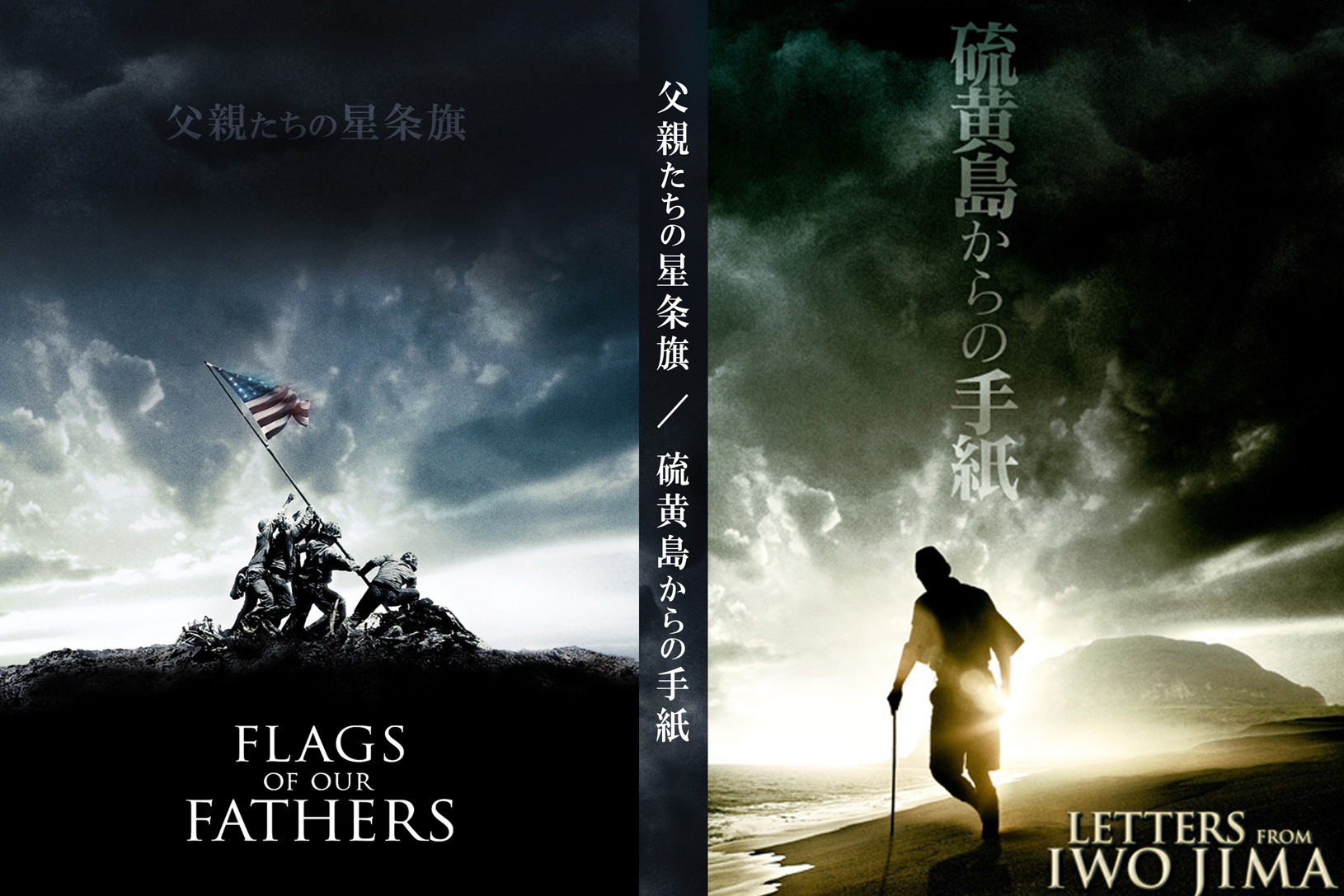
2006 Director: Clint Eastwood Production: USA
Catch Copy: "The one picture that ended the war. Iwo Jima" from a Japanese perspective.
An old man tries to end his life in Wisconsin. He served as a medic on Iwo Jima in 1945. The photographs he took there made him an American hero, but he never told his family and friends about them. His son traces the truth about the war and Iwo Jima through the photographs.
Hundreds of letters were found on Iwo Jima. They were letters from the men who died on Iwo Jima to their families, who would never receive them. After 61 years, the film traces the true faces of the men who perished on Iwo Jima and the true face of Iwo Jima through each letter.
The two films by the same director, which were released consecutively, do not portray both armies in one film, but rather two films in a little over two hours, which allows for an overly detailed portrayal of each soldier's true face, detailed direction, and emotional portrayal. Both films have not only received high acclaim, but are also well received by the people of both countries.
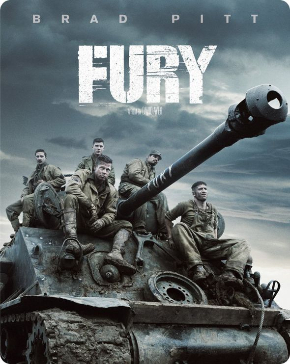
fury
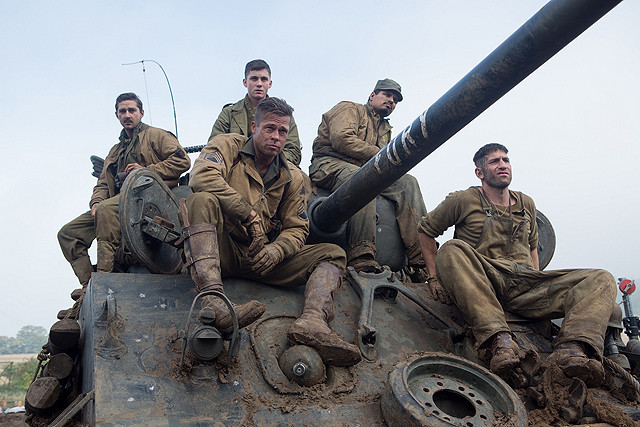
2014 Directed by David Ayer Produced by USA-UK co-production Starring Brad Pitt
Catch copy: "Five men crossed 300 German troops in a single tank during World War II."
In 1945, the Allies order the 66th Armored Regiment of the 2nd Armored Division to launch a final offensive against Nazi Germany. The Sherman "Fury" belonging to the regiment is manned by veterans of the war, but a new recruit, Norman, is dispatched as a replacement. Norman, who is new to the battlefield and tanks, develops an intense hatred for the retreating Germans, who make an example of the civilians and burn their own town to the ground, and engage in other battles involving civilians.
The 66th Armored Regiment of the 2nd Armored Division, entrusted with the defense of the small town, orders Fury's platoon to defend to the death an intersection they plan to pass through in case of German defiance. However, before they arrive, they encounter German tanks, leaving Fury as the only member of the platoon. Fury is also disabled when he steps on a landmine. The Fury is then confronted by nearly 300 German soldiers who are closing in on the disabled Fury in the middle of an intersection.
This film is more like an action film than a military film. It is more of an action film than a military film, and the realism of the battlefield shines through in the powerful direction of the film.
Grave of the Fireflies

1988 Director: Isao Takahata Production: Japan
The catch copy is "At the age of 4 and 14, I decided to live" and "I've come to deliver something I've forgotten.
In 1945, Seita and his sister Setsuko lost their mother and house in Kobe and moved in with their aunt. At first, the siblings are together, but gradually their food supply begins to run out, and Seita and Setsuko grow weaker and weaker.
This animated film produced by Studio Ghibli is based on the short story "Grave of the Fireflies," but it has been highly acclaimed overseas and has even been made into a live-action film in the UK. It can be said to be a work that emphasizes the repose of the souls of young siblings whose lives burn and burn, but who mercilessly and fleetingly scatter like fireflies.
Not a movie... the Band of Brothers series.
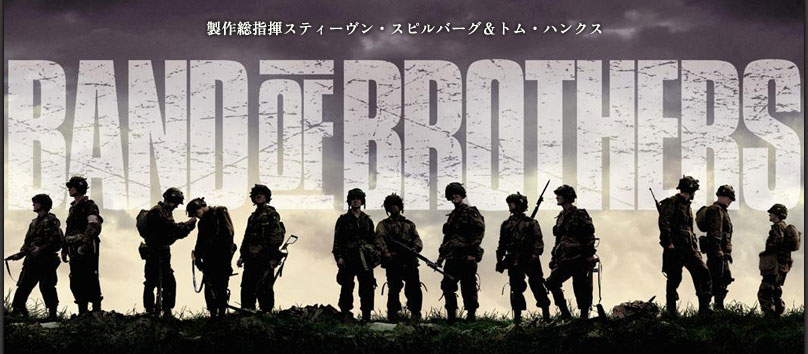
2001 Directed by Steven Spielberg, Tom Hanks Produced by USA, UK
This film depicts the real-life E Company, 2nd Battalion, 506th Infantry Regiment, 101st Airborne Division of the U.S. Army during World War II, from their training to their victory against Germany and the end of the war.
Although this work was produced as a BBC/HBO TV drama series, the quality and production cost are so extraordinary that it is hard to believe that it is a drama.
Although it is an ensemble drama, even the same team does not die in battle or play a major role, creating a scenario with a sense of reality.
What do you think? Recently, terrorism and conflicts have been discussed in the media, but I believe that many of us have never been exposed to the reality of war.
In fact, Japan is the only country to have experienced the atomic bombing, but the number of people who lived through that period is decreasing, and the opportunities to tell the story are also decreasing.
Although it is difficult to understand the true devastation in movies, if we consider that the reality is 100 times greater than what is conveyed in these films, we may be able to understand the harshness, tragedy, and cruelty of war.

Contents
- Private Ryan.
- Tiger tiger tiger!
- Pianist on the battlefield
- Merry Christmas on the battlefield
- Stalingrad
- The Great Escape
- Hitler -The Last 12 Days
- enemy in mind
- Thin Red Line
- Schindler's List
- Air Force Grand Strategy
- The Greatest Operation in History
- The Star Spangled Banner for Fathers Letters from Iwo Jima
- fury
- Grave of the Fireflies
- Not a movie... the Band of Brothers series.