
No matter if it's the New Year's holiday or not, you can still enjoy the Internet and games! How about stopping for a moment and reading a book? How about stopping for a moment and reading a book? Whether you say, "I read a lot in the fall," or not, here are some short novels that are not too long.
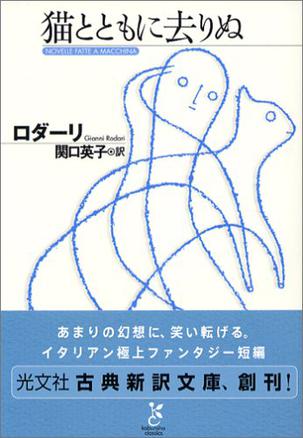
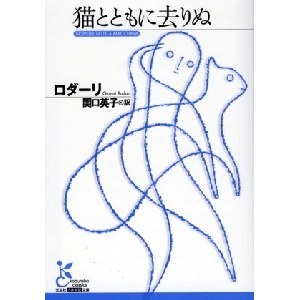
The Fisherman of Garibaldi Bridge" by Rodari (included in Kobunsha's "Gone with the Cat")
This is a story about a man who even uses a time machine to catch fish. I want to tell him to find another point, but I guess he is just stubborn. This book is full of other works that are either cute or profound.
The Terribly Old Man with the Big Wings" by Garcia-Marquez (included in Chikuma Bunko's "Erendira")
It is a story about an "angel" with wings on its back that suddenly appears one day. But it is not the story of an angel descending from the sky with a majestic light. Also, I don't know if any miracles related to him happened or not. We don't even know if he is an "angel" or not. It is a story about an "uncle" with wings who speaks in a strange language and is looked upon as a curiosity by his neighbors.
The Incredible Tale of Misery of the Innocent Erendira and Her Heartless Grandmother, ibid.
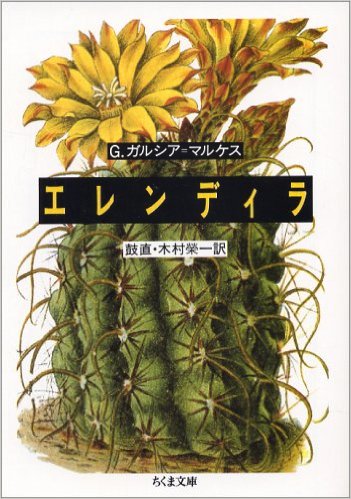
It is a long title, but the content of the book is generally as described in the title. The description of the mansion at the beginning of the story and the sleepwalking nature of the woman give the impression of being somewhat mysterious, despite the cold expressions used. Erendira, I want to tell her that she is too good a listener, or that she can be a little more toothy with the old lady.
The Little Tyrant" by Butzati (included in Koubunsha's "The Dog Who Saw God")
The main character is Giorgio, a selfish or rather hateful little boy who is spoiled by his grandparents, parents, and two housekeepers...but there is a reason why the adults fight to put him in a good mood. It's easy to say, "Scold him," but it's also a reason that I can relate to in a way... And then there's the toy milk truck that looks just like the real thing in the film. This was to become an important item in the production...Grandpa....
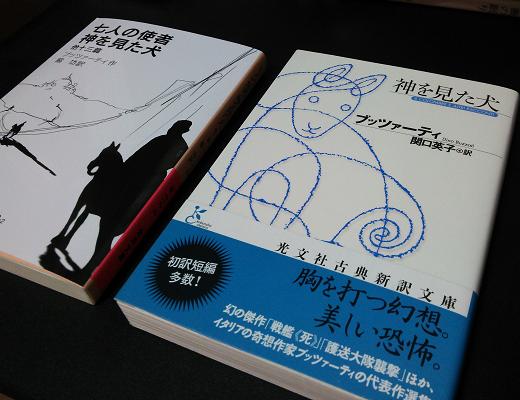
The Seventh Floor" (ibid.)
One man is hospitalized for a certain illness. It specializes in treating his illness and has a full staff and facilities. However, there was an unusual rule. The main character, who was admitted to the top floor of a seven-story hospital, heard from a man in the next room that his condition was worsening and that he would be moved to a lower floor. The protagonist, who was admitted to the top floor of a seven-story hospital, hears this from the man in the next room and feels superior to the patients below him...inappropriate, this guy. For various reasons, he is moved downstairs more and more, but every time he does so, he gets upset and says things like, "I'm not that bad! I'm not that bad!" and so on. But I would certainly have a hunch if I knew such a rule existed and was asked to "move down. No matter how much they say that it is a temporary measure or that there are better doctors downstairs.
The book also includes the title story, "The Dog Who Saw God," and "The Corridor of the Grand Hotel." Both of these two works skillfully depict human psychology. The latter, in particular, is like a comedy.
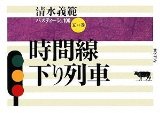
Togu Bros." by Yoshinori Shimizu (included in Chikuma Bunko's "Jikkou Sensen Kudan Ressha")
Yoshinori Shimizu is an author who writes novels and other works using a technique called pastiche. However, the novels mentioned here are "ordinary novels.
Set in a fictional country reminiscent of India, the film tells the story of Nalcha, the eldest daughter of a poor family where even a child of 9 or so has to work, but the story is not dirty, even if it is muddy and bloody. Tog, the older brother of Nalcha, is the one who, at the age of 11, preaches about the difference between the poor and the rich, speaks of his father as "unlucky," and refuses to accept "charity money. Is he a greenhorn or a virtuous man? After all, he is working in a factory at his age. Nalcha is a strong enough boy, but I am also impressed by the strength of his brother Tog and his sister Piblo.
The Old Holler" (ibid.)
A privately owned restaurant. The main interaction is between the master and Tokuzo Iwai, a regular customer of the restaurant, which is visited by office workers and office ladies during the day and by lovers and families at night. The "a la carte" dishes that are served to him are also very appetizing. This is despite the fact that the dish is not described in any particular detail. However, the main part of the story is the "horror story" that Mr. Iwai tells to the master.
Chikuma Bunko Publishing has published a six-volume collection of "Shimizu Yoshinori's Pastiche Novels," which also includes very ordinary novels such as the ones mentioned above. Some of them are unusual, such as "Annotated Tales," in which only annotations are used, and "Preface," which amusingly pokes fun at the "preface" written by a linguist at the beginning of a book, and many others that make you wonder how he came up with them. Especially the "Preface. The way the contents become more arrogant as he gets higher and higher, the way he speaks ill of the people involved...it's worth reading.
These are a collection of short stories.

Contents
- The Fisherman of Garibaldi Bridge" by Rodari (included in Kobunsha's "Gone with the Cat")
- The Terribly Old Man with the Big Wings" by Garcia-Marquez (included in Chikuma Bunko's "Erendira")
- The Incredible Tale of Misery of the Innocent Erendira and Her Heartless Grandmother, ibid.
- The Little Tyrant" by Butzati (included in Koubunsha's "The Dog Who Saw God")
- The Seventh Floor" (ibid.)
- Togu Bros." by Yoshinori Shimizu (included in Chikuma Bunko's "Jikkou Sensen Kudan Ressha")
- The Old Holler" (ibid.)