
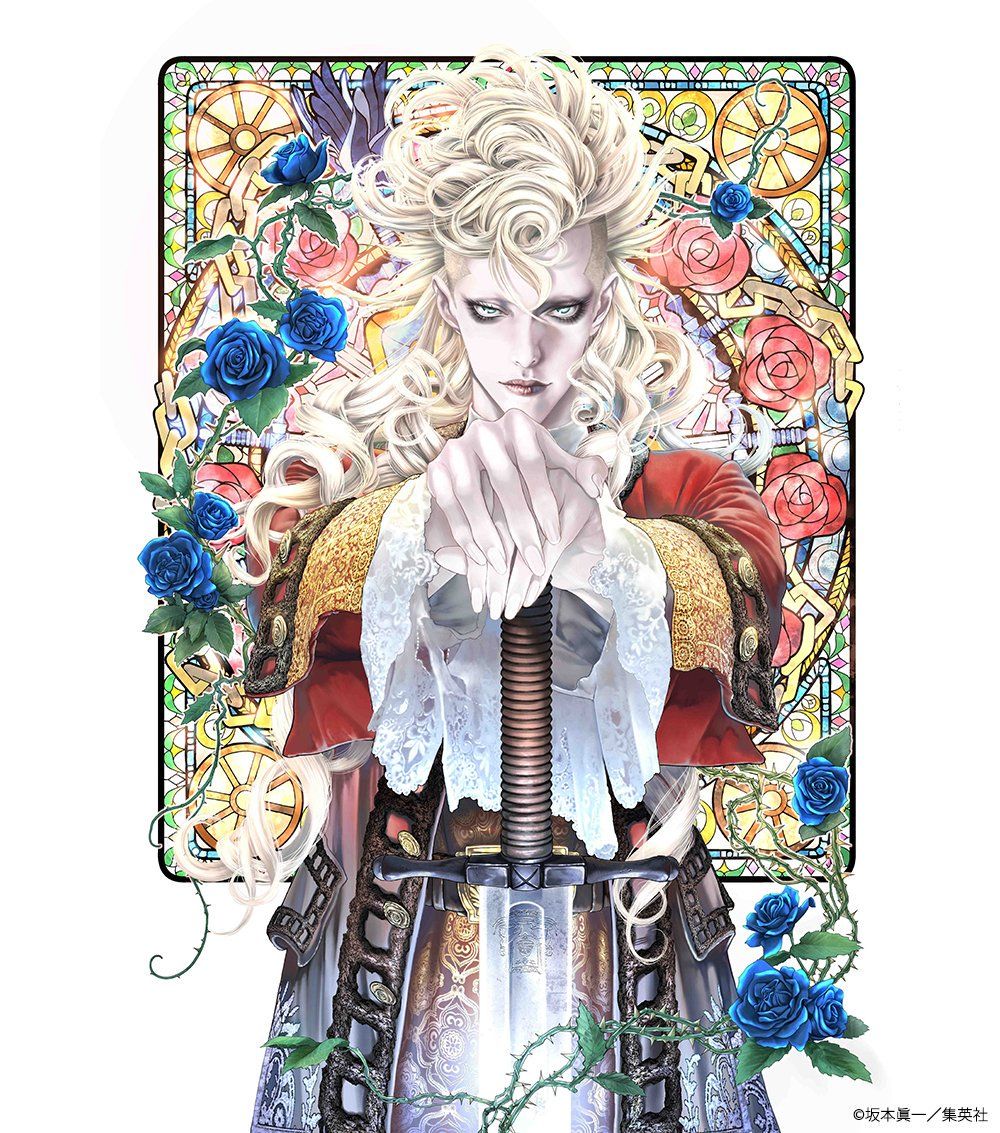
Innosan" is a historical manga work by Shinichi Sakamoto. The title "Innosan" means Innocent in French and English. Serialized in "Weekly Young Jump" (Shueisha) from issue 9, 2013 to issue 20, 2015, it tells the story of a young man born into an executioner's family in 18th century France. While being the king's direct executioner, he became a doctor and saved people, but the people of the Sanson family were despised as the grim reaper. This is the story of a young man who is not positive about the executioner's family business, but against his will, he leads a blood-soaked life as an executioner.
Overview of Inosan
"Inosan" is a historical comic book by Shin'ichi Sakamoto. The title "Inosan" means "Innocent" in French and "Innocent" in English. It was serialized in "Weekly Young Jump" (Shueisha) from the 9th issue in 2013 to the 20th issue in 2015, and the sequel "Inosan Rouge" was serialized in "Grand Jump" (published by the same company) from the 12th issue in 2015 to the 3rd issue in 2020. The main characters are Charles-Henri Sanson, a real executioner who led the beheading of the 16th Wang Rui of the country in the 18th century, and his younger sister, Marie-Joseph Sanson. It is highly regarded both in Japan and overseas as a work that artistically depicts the sensational content of "execution."
At the 17th and 21st Media Arts Festival of the Agency for Cultural Affairs, it was selected as a work recommended by the Judging Committee. Nominated for the Readers Award at the 18th Osamu Tezuka Cultural Award (sponsored by the Asahi Shimbun). Exhibited at the "Louvre Museum special exhibition" in 2017. A radio drama featuring Louis Kurihara playing the role of Charles was distributed on the Shueisha Voice Comic Station site. It is characterized by realistic depictions of episodes such as "execution," "torture," and "autopsy," as well as aesthetic figurative expressions that clearly depict human psychology. The theme of the painting is an executioner, but the overwhelming power of the painting ensures that none of the depictions are too gruesome, and all of the pages are dark and beautiful. The precise touch that does not seem to have been a weekly series creates a powerful impact.
Set in the midst of the French Revolution in the 18th century, the story of the tormented days of Charles-Henri Sanson, who was born to the Sanson family, a family that had worked as executioners for generations. Because the main character is the executioner, there are many grotesque depictions, but it is a fiction based on historical facts that still attracts readers. The execution of the Sanson family is an act of honor as a "guardian of justice" appointed directly by the king. Through daily research on the execution of criminals without suffering, the Sanson family has improved its techniques and knowledge of execution and acquired sufficient knowledge of medical care. With the honor of the king, the family also contributed to society by becoming a doctor beside the executioner and saving people.
However, because of the image of cruel execution, he was despised as a Reaper by the French people. Charles, who was kind and benevolent, was not willing to take over the executioner, and he was often tortured by his father and grandmother with instruments of torture. However, as the story progresses, he realizes that his own weakness has a great impact on his family, the nation, and even the king, and he leads a bloody life as an executioner against his will. His sister, Marie-Joseph Sanson, who is said to have had the most impact on Charles, was serialized in the sequel "Inosan Rouge."
Outline and story of "Inosan"
HE'S CALLED THE SHINIGAMI.
In the streets, passing through the people who had been sentenced to increased taxes, men appeared. Seeing the emblems on their jackets, the people gave way and retreated, saying, "Today is a bad day because I met the Reaper!" "It's rumored that if you touch Sanson, you'll be possessed by the devil!"
They are the father of the Sanssons, Batisto, and his son, Charles. As they passed by, buckets of water were sprinkled on the ground, as if to purify the filth. The reason they are despised is that they are members of a family that has carried out executions in France for generations. The father of the Sanssons, however, does not care about the rumor. He carries his son, who tends to look down all the time. This is the beginning of the heroic story of the Sanssons' last executioner.
Charles, who was discriminated against as a child, had no access to education like other children.
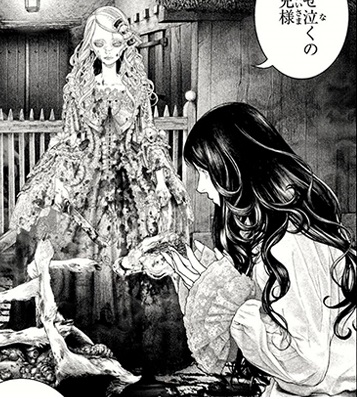
Charles (right) was heartbroken at the thought of taking a life.
Charles is hated by schools and tutors, so he can't get an education from anyone. His father, Batiste, looked for a place to get an education, but he never found one. Charles says, "It can't be helped because everybody despises and hates the people in this house," but his grandmother, Anne-Marto, says to him, "Our family business is an honorable profession entrusted by His Majesty the King. Just as a son of a king becomes a king, all Sanssons are destined to become executors."
Anne-Marto was proud to be a member of the executioner's family, and therefore, as to the fact that Charles could not receive an education from anyone, because he was an honorable person, he did not have to go to school and associate with ordinary people, and Anne-Marto strictly ordered Charles to accompany his father, Batiste, to the task of executing him to become Monsieur de Paris.
Charles's mother, Jeanne, is opposed to having Charles, who is only 14 years old, accompany her to the task of execution, but she is interrupted by Anne-Marto for being too spoiled. "The Sanson family is a profession that punishes sins with the sword of justice, so be proud." When she heard Anne-Marto's words, Charles objected to Anne-Marto. "Why are the people of the Sanson family despised when it is the sword of justice?" "Why do people have to kill people?" When she heard Anne-Marto's words, Anne-Marto clapped her hands together. At the sound, Batisto silently stood up and opened the door leading to the torture chamber. Batisto blamed Charles with a torture tool called lace-up shoes that has been handed down from generation to generation in the Sanson family. Charles realizes that he cannot escape from the destiny inherited from the first generation of the Sanson family by the repeated treatment in the torture chamber. With anger and sorrow in his heart, Jeanne took the sword to be used for execution.
Charles was 14 years old when he was first executed.
The month after he took the sword, the "Sun Jan Fire Festival" was being held. Charles and his father, Bachist, were invited to a banquet hosted by Count Chartwa. There was a young Jean whom Charles had once associated with him. Charles, who did not want to reveal his identity as a member of the executioner's family, was ordered by Chartwa to cut off the head of a lion he had prepared as an entertainment for the banquet.
So, instead of Batisto, who had fallen from a stroke, Charles came forward as "Monsieur de Paris the Fourth." Using his wit, he declared, "This lion is not a reproach. He cannot wield the sword of Sanson!" He dismissed the unreasonable order. "The reproach on the execution table has his back hair cut short so that he does not get entangled with the blade he swings down and fail to hit him. This golden back hair is the signature of his innocence. The sword of the Sanson family is the sword of justice kept by the King. It would be an insult to Your Majesty if he were told to turn it to the innocent." There was a round of applause around him when he heard this.
The lion's head was not cut, but his identity was revealed to Jean. However, Charles and Jean both understood the suffering of each other's natural destiny and promised to stand up to it resolutely. A few days later, an execution order was delivered to the Sunsons. The name of the accused was Jean de Shartwa. The charge against Jean was that the English Bible, regarded as treason in the French state, was kept in the study. In fact, the charge against Jean, the son of his, was placed in Shartwa's place. In fact, the charge against Jean was false because it was a conspiracy set up by a naval faction opposed to the Minister of War, Count Dangelnon, who was the main guest of the Summer Solstice, in order to trap the Minister of War, Shartwa. However, the executioner appointed by the Minister of War, without the means to overturn the decision once made, was Charles, a former friend who had just decided to stand up to destiny.
The first execution was a poor one
The moment the sensation of a sword touching the neck of his former friend was transmitted to Charles's brain, the days of dissecting a frog to train him as an executioner and the days of chastisement from his grandmother Anne Marto ran through his eyes like a running lamp. At that time, Charles's consciousness, which had been moving away with the yell of his grandmother, "Sha LeRoux!", returned to the execution table. "You are not dead yet, so strike your head firmly to the end." When he suddenly came to himself and looked at the tip of the sword, Jean was looking at him with a firm gaze and repeated shallow breathing, "Hugh, Hugh!" He pulled out the stuck sword and shook it down again, but his neck still could not be cut off. Jeanne, who was struggling with pain, had her legs flutter up in the air.
He never dared to choose such a method. However, it did not appear so in the eyes of the people. Despite the fact that Charles did not really want to be executed, he seemed to enjoy killing people. Although Charles was a guardian of justice who carried out his sentence under the law in France, he continued to be abused by the people such as "Shinigami!" and the front of the Paris City Hall in early summer became a lawless area where people were on the verge of rioting. The person who appeared there was Monsieur de Paris, the third, and Batiste, the father of Charles. Batiste's quick thinking declared the end of the execution and the place was closed.
Charles Determined to Succeed His Executioner Faces Another Grim Fate
Charles's continued blunders in execution and in his side business of medicine left Batisto disappointed and ruthlessly cut off his own son if he thought he was unfit to succeed in the family business. Seeing Batisto's fanaticism with his own eyes, Charles decided to kill his weak self and face the fate of the cursed family. By becoming Monsieur de Paris himself, he began to walk with the ideal of abolishing the death penalty.
If it was decided that way, he was able to carry out the execution of the sentence that he had been so hesitant about. One day, however, he learned that the Sanson family had a second daughter named Marie-Joseph. Oddly enough, that day was November 2, 1755, the day that Marie-Antoinette was born in Austria.
The following fall, Damian and his son, poor farmers whom Charles had met at church, visited the Sanson family. Damian was in awe of Charles's compassion for the execution at the execution table, and came to beg for the treatment of his sick son, Jack, who was in a very bad condition, suffering from scurvy due to malnutrition and terminal symptoms of infection, and was on the verge of death. Charles and the Sanson family did not collect medical fees from the poor.
However, Damian felt that his son's condition was so bad that he could not be saved so easily, so he went to his home to pay his medical expenses. Damian took Charles's hand and rode his horse to go to the farming village at the foot of Versailles. However, it was too late. There was only a trace of the property being taken away by the tax collector in the house of Damian, which was beyond the poverty zone that made him want to cover his eyes. While the Damians were on their way back disappointed, they saw the Palace of Versailles where the King of France lived. Damian shook himself about his destiny and ran away in the dark.
Three months after the event occurred, Anne-Mart informed Charles and his family of the execution order. This time, the name of the was Robert-François Damiens, the name of his father, Damian, who came to save his son. He was charged with the attempted murder of the 15th Wang Rui of the French State. There was a sudden uproar in the Sanson family over the execution of a grand execution called "Hachizure" which had not been carried out for 147 years since the last execution.
The penalty of not being able to turn back
On March 26, 1757, the execution of Damiens, a poor farmer, was decreed for the attempted assassination of King Louis XV. This was the first major execution in 147 years, and even the Sanson family, which had been in the business of executing death sentences for generations, was in an uproar. Charles' father, Baptiste, the third Monsieur de Paris, was ill, so his uncle Nicolas, the Prévote de l'Hôtel, the executioner at the Court of Versailles, was put in charge of the execution.
Charles rushed to the Conciergerie prison, where Nicolas and Damiens were imprisoned, to interview Damiens to ascertain the truth of the case. However, there was Damien, who had been tortured by the Soubise, a family of torturers for generations, just as Charles and his family were a family of condemned criminals, and had been left in a cruel state. Although Nicolas seemed to be acting with the same intentions as Charles, Nicolas himself was planning to use this great execution of the executioner of eight to take over from Charles the fourth generation of Monsieur de Paris, the pinnacle of executioners in France.
On the day of the execution, an enthusiastic crowd poured into the Place de Greve to watch the execution, which was to be seen only once in a lifetime. At the same time, Charles arrived at the prison conciergerie to greet Damien. Damiens remained tight-lipped during weeks of excruciating torture from Soubise. When Damien was taken to Notre Dame to confess his crimes before his execution, he saw his beloved son Jacques, whom he thought he could not save even with the medical skills of the Sanson family. Unbeknownst to Damien, Jack had survived a near-death crisis thanks to Batiste's resuscitation surgery and had been saved.
When Damien saw Jack, he began to tell the truth that he had stubbornly refused to tell until then. When Damien saw Jacques, he began to tell the truth that he had stubbornly refused to tell before his execution, which could no longer be avoided. He said that he had turned his blade on Louis XV without actually intending to kill him, but because he wanted to see if Louis XV, in the sunlit palace of Versailles, was really the same person as Damien and his children. Damien says that he wanted to prove that his poor, starving son Jacques had been killed by a human being, not some unknown monster. Charles, upon hearing this story, urged Damian to cancel the execution, saying that he had done it out of concern for the future of the French people, and that he should respect his wishes. But his uncle Nicolas said, "Once the ball has begun, it cannot be stopped." Charles' appeal was dismissed by his uncle Nicolas. Charles was heartbroken at the prospect of the execution, which could not be reversed, when Damian spoke to him. Damian's dream is to give bread to poor children. Charles's dream is to eliminate the death penalty from this world. But if we don't dance in the same step as the world, we will be kicked out of the dance circle." Charles vows to carry out the execution with all his heart and soul.
However, the horse to be used for the execution has been replaced with a useless horse by his uncle, who wants to put the blame for the failed execution on Charles and take his place as the next Monsieur de Paris. Because of this, even when the horse runs at full speed, its limbs are not shredded, and the execution comes to a standstill as the condemned man spends more and more time in agony. It seemed that Charles, in his predicament, had no solution. But then Marie-Josèphe, the second daughter of the Sanson family, appeared on the scene. Marie watched with a twinkle in her eye as Damiens was about to be torn limb from limb by a horse in a difficult execution. Marie shakes off the stillness and steps up to the execution table. Charles finished executing the great execution of Damian, who was in danger, taking Marie's advice that "if you cut the tendons, it will be easier to tear the limbs into a thousand pieces" as a clue. However, her grandmother Anne-Marthe pressed a trowel with the family crest on her chest in the torture room as a warning to Marie, who climbed up on the executioner's table as a woman. When Charles heard Marie's cries of pain, he immediately rushed to her aid. Charles hugged Marie and shouted, "A new era is ours. He then hugged Marie and shouted, "A new era is ours.
THE STORY GOES TO THE CRIMSON VERSAILLES.
The story goes into a new chapter, "The Crimson Versailles," in which two Sanssons, Charles and Marie, finally approach the Court of Versailles.
Five years after the Damian Octet, Marie held the post of executioner at the Palace of Versailles, プレヴォテ de L'Hotel, once held by her uncle Nicola. As she grew up, Marie was improving her swordplay skills.
In 1761, the French army was forced to retreat after losing 5000 lives in the battle of Willing Hausen against the allied forces of Great Britain and Prussia. Field Marshal Griffiths hoped for a follow-up force, but in vain he realized his future. If he returned to Paris from the battlefield, he would not be exempt from prosecution. What came to his mind was the image of his friend, executioner Batisto. "If I behead you, I promise you that I will do it with a single blow." The day will come when what two young men talked about for amusement will come true. Knowing that Batisto was sick, Griffiths decided to leave his fate to his successor and left the battlefield.
In the fall of 1762, at the Sanson residence, the executioner Marie was jubilant at the execution of Grifan. Grifan used to force young Marie to commit lewd acts while visiting the Sanson residence because she was a friend of Batisto. Grifan asked for Marie's body in exchange for a "high-ranking recommendation" that Marie needed to obtain to become an executioner. The executioner Marie's debut was the beheading of Army Marshal Grifan.
Originally, at the time of execution by beheading, Mary aimed her sword at the back of the neck to fear the death row, but with her own emotions, she shook the sword from the front of Grifan on the execution table. Her father, Batisto, who appeared there, stopped Mary despite her hemiplegia, went up to the execution table and performed a splendid beheading. Batisto changed the people's curses for Mary's folly as a executioner into a cheer for himself. Then, Batisto said to her daughter, Mary, "Hell is the only place to wait for a woman who has strayed from the path." At the same time that Mary was unable to complete her revenge on Grifan, a music concert was being held in Vienna, the capital of Austria. There was a figure of Marie-Antoinette, who had the same name as the executioner and would later become the Queen of France.
Two people involved in the fate of the Sanson brothers
A few months after the execution of Grifhan's sentence, his father, Batiste, became ill again and left Paris with his grandmother, Anne-Marto. Charles, now the head of the Sanson family, became aware of his responsibility, understood his position, and respected manners.
On the other hand, her sister, Mary, was still at her disposal at the execution table. In the midst of this, a summons was sent to her from the court. However, this was a trap for the Knight Corps, which was composed of former subordinates of Marshal Griffin, who were said to have been humiliated by the execution. Like the swordplay of the Knight Corps, Mary fought against the losers, but was driven into a corner. To help her out was Marie-Jeanne Becue, who had watched the execution of Charles from under the execution table for many years. No one knows now that she will be called Madame du Barry, the concubine of the 15th King.
On the other hand, Charles entered an off-limits room in the Sanson residence where his father and grandmother were gone. The room was dedicated to the number of crosses that his father had executed, and there was a scene where it was easy to imagine that his father prayed daily for redemption. For the first time, Charles learned that his father, like himself, had carried out the task of execution with anguish. When I was thinking about my father and my past, I suddenly looked back and saw a woman standing in love with Charles. As his father had said in the past, "People are all the same. Do not be afraid to associate with people and expand your capacity," Charles opened his door as a male for the first time in order to expand his potential.
That woman was Marie-Jeanne Becue, who had saved her sister Marie from the Knight's Trap. She was a seamstress at the time. Marie-Jeanne Bertin, who was also a third class colleague, was recognized for her serious personality and skills. Later, she became a modal dealer for the Queen Mary-Antoinette, and reached the pinnacle of Versailles in that field. When Marie-Jeanne Betcue, who had been looking for her all night long for Charles, and Marie-Jeanne Bertin, who had come to work early in the morning to take orders for her special seamstress due to her good taste, happened to pass by the roadside, a carriage with Versailles' emblem and gorgeous decorations ran through the road. It was the carriage of Louis Philippe II, Duke of Orléans, the Duke of Orléans, who had declared that he was more worthy than the head of the family to succeed to the royal family. Louis Philippe spent a long night in Paris, and in the carriage that ran home, she was thinking of a novel method of execution that would attract the attention of Versailles.
In France at that time, where the fate of a child is determined by which family he will be born to, his older brother Charles and younger sister Marie, each carrying their own harsh cross, march their way through the thorny path to achieve their "ideal." As if standing in the way, the power swirling around the Palace of Versailles causes a series of trials for both of them. Charles, whose blood boils as the fourth Monsieur de Paris by letting himself blossom as a male, comes into conflict with his younger sister Marie, who carries out executions freely.
Unprecedented order to execute
Charles, awakened to manly pleasure by the seamstress Marie-Jeanne Becue, exuded the energy and confidence of the head of the Sanson family, in which there was not a trace of the weakness he had once suffered from execution.
Her younger sister, Marie, was displeased with her older brother's transformation. She was about to be executed under a new execution order, but Charles took her away from her duties because her usual bravery was a risk factor for bringing misfortune to the family. She resisted and confined her. Marie thought that if she resisted any further, it would have a negative effect on her assistant, Andre, so she chose to be held quietly.
She is freed by André and regains the task she had taken away from Charles by signing a power of attorney for execution before Charles did. This was the task of standing beheaded, which was the idea of Louis Philippe Orleanne. Everyone there was horrified to imagine that the execution table would become a sea of blood by carrying out this unprecedented sentence. So was Latour, the condemned. However, Marie gave her lips to raise Latour, who could not stand up in fear. At the same time, she safely finished standing beheaded without making Latour aware of the execution. The execution was successful. However, Charles blamed Marie for playing with the heart of Latour, who was about to die. Therefore, Marie said, "The only way to believe is the crimson fate engraved on your heart!" and broke off with her brother Charles.
Open trial at the Palace of Versailles
A year later, while Charles enjoys hunting in the forest, he meets young Louis XVI, Duke of Berry, Louis Güstow.
Auguste longed for death and worshipped Charles. Au Güstow invited Charles to a luncheon at the Palace of Versailles. Charles appeared gallantly, wearing a blue jacket symbolizing the nobility.
But there was once the Marlene Marlene, who had spent the night with Charles. Charles had agreed to act, but she did not know that Charles was an executioner. Furthermore, she brought Charles to the High Court of Justice in order to get rid of the humiliation of seducing her, who would not have done anything if she had known that she was an executioner. Behind this appeal was the shadow of Louis Philippe, who was trying to gain the upper hand in the next throne. By disparaging Charles, she tried to slander Auguste, who had invited Charles to lunch. At the public trial of the Palace of Versailles, Charles stood up bright and strong with arguments that testified to his growth as an executioner.

Contents
- Overview of Inosan
- Outline and story of "Inosan"
- HE'S CALLED THE SHINIGAMI.
- Charles, who was discriminated against as a child, had no access to education like other children.
- Charles was 14 years old when he was first executed.
- The first execution was a poor one
- Charles Determined to Succeed His Executioner Faces Another Grim Fate
- The penalty of not being able to turn back
- THE STORY GOES TO THE CRIMSON VERSAILLES.
- Two people involved in the fate of the Sanson brothers
- Unprecedented order to execute
- Open trial at the Palace of Versailles
- Austrian bride and crown prince of France proclaiming the destruction of the monarchy
- The King's Brother Charles is Standing in the Face of Two Maries
- List of Inosan characters
- House of Sanson
- Charles-Henri Sanson (Charles-Henri Sanson)
- Marie-Joseph Sanson
- 0
- Charles-Jean-Baptiste Sanson (Charles-Jean Baptiste Sanson)
- Anne-Marto デュビュ Sanson
- Nicolas Charles Gabriel Sanson (Nicoles-Charles Gabriel Sanson)
- André ルグリ
- Jean Louis
- Henri Sanson (Henri Sanson)
- Gabriel Sanson
- Royal family
- Louis-Auguste Güstow
- Louis Philippe II, Duke of Orléans (Louis Philippe II)
- Marie Antoinette
- Military and aristocracy
- Jan
- Thomas-Arthur Griffan
- Georges de Latour
- Third class
- Marie-Jeanne ベキュー
- Marie-Jeanne Bertin
- Robert-François Damiens
- Alain Bernard Le Chevalier D'Eon de San Jerome
- Terms used in Inosan
- Monsieur de Paris
- Executioner
- Guillotine
- The Words, Lines and Scenes of "Inosan"
- Charles-Henri Sanson: "Imanari, IF IT'S A NECESSARY CLUE TO WHAT NEEDS TO BE DONE, WHETHER IT'S A MAN OR A WOMAN, WHETHER IT'S OLD OR YOUNG, I'LL LISTEN TO ANYONE!"
- Charles-Henri Sanson: "THE NEW ERA IS OURS, AND WHOEVER THREATENS OUR FUTURE WILL BE KILLED!"
- Inside Stories, Trivia, Small Stories / Episodes and Anecdotes of "Inosan"
- Performance in Paris of the legendary stage "Inosan"
- "Inosan Bleu," a book of paintings featuring Guillotine Marie with a beheading mark on her neck